
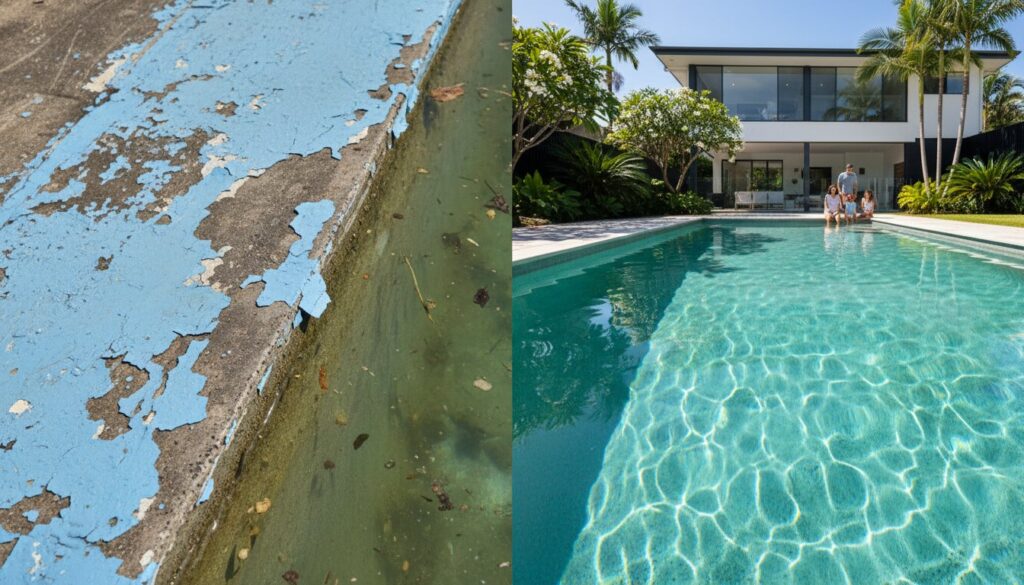
The most affordable way to refresh your backyard might actually be the most expensive mistake you make this year. While a fresh coat of pool paint looks like a brilliant, budget-friendly solution for a stained surface, our forty-year history in Southeast Queensland tells a different story. It’s completely understandable why homeowners reach for the roller when faced with high renovation quotes. You want a space that invites family memories, not one that looks neglected. However, what starts as a weekend DIY project often ends in a frustrating cycle of peeling, chalking, and bubbling within just six to twelve months of application.
At Rod Cameron Pools, we believe in craftsmanship that stands the test of time, ensuring your investment remains a source of pride rather than a maintenance burden. In this guide, you’ll discover why traditional coatings struggle against Brisbane’s intense UV levels and high humidity. We’ll explain the hidden risks of “concrete cancer” that a quick fix can hide and introduce you to the meticulous, professional alternatives that offer a truly seamless finish. By understanding the true cost of maintenance, you can choose a path that ensures your quality concrete pools remain beautiful, solid, and enduring for decades to come.
Key Takeaways
- Understand why South East Queensland’s high humidity and intense UV rays cause DIY coatings to chalk and fail far sooner than expected.
- Compare the upfront savings of pool paint against the hidden A$ costs of stripping and reapplying materials every three years.
- Learn how to perform a simple diagnostic “tap test” to identify hollow spots and early signs of concrete cancer within your pool’s structure.
- Explore the meticulous process of remarbling, a durable and aesthetic alternative that reflects our 50-year legacy of craftsmanship in Brisbane.
- Discover how to transition from a temporary “quick fix” to a seamless, enduring finish that protects your family’s lifestyle and property value.
Understanding Pool Paint Options for Brisbane & Gold Coast Pools
For over 40 years, our team has helped families across South East Queensland realize their dream of a backyard sanctuary. We understand the temptation to reach for a tin of pool paint when a concrete shell starts to show its age. It feels like a simple, cost-effective solution to restore that sparkling blue hue. In technical terms, this product is a topical coating, usually an epoxy or chlorinated rubber resin, designed to bond with the pool surface. It’s a surface-level aesthetic choice rather than a structural restoration.
Brisbane homeowners often choose this path because the immediate transformation is dramatic. You can take a stained, grey concrete floor and turn it into a Mediterranean blue masterpiece in a single weekend. This “quick fix” appeals to the budget-conscious, especially when compared to the investment required for a full structural resurface. However, understanding how these coatings interact with different pool construction methods is vital before you pick up a roller. The success of the finish depends entirely on the compatibility between the existing substrate and the new chemical layer.
Common Types of Pool Paint in Australia
The Australian market typically offers three main varieties of coatings, each with distinct chemical properties. Epoxy coatings are the most robust option available. They consist of a two-pack system that creates a hard, non-porous finish. While they’re durable, they’re notoriously sensitive to the 75% average humidity we often experience in the Gold Coast. Chlorinated rubber is an older technology, once the standard for concrete pools, but it lacks the longevity of modern alternatives. Finally, acrylic pool paints are water-based. These are the easiest to apply but often require recoating every 24 to 36 months, making them a temporary solution at best.
The DIY Allure vs. Professional Reality
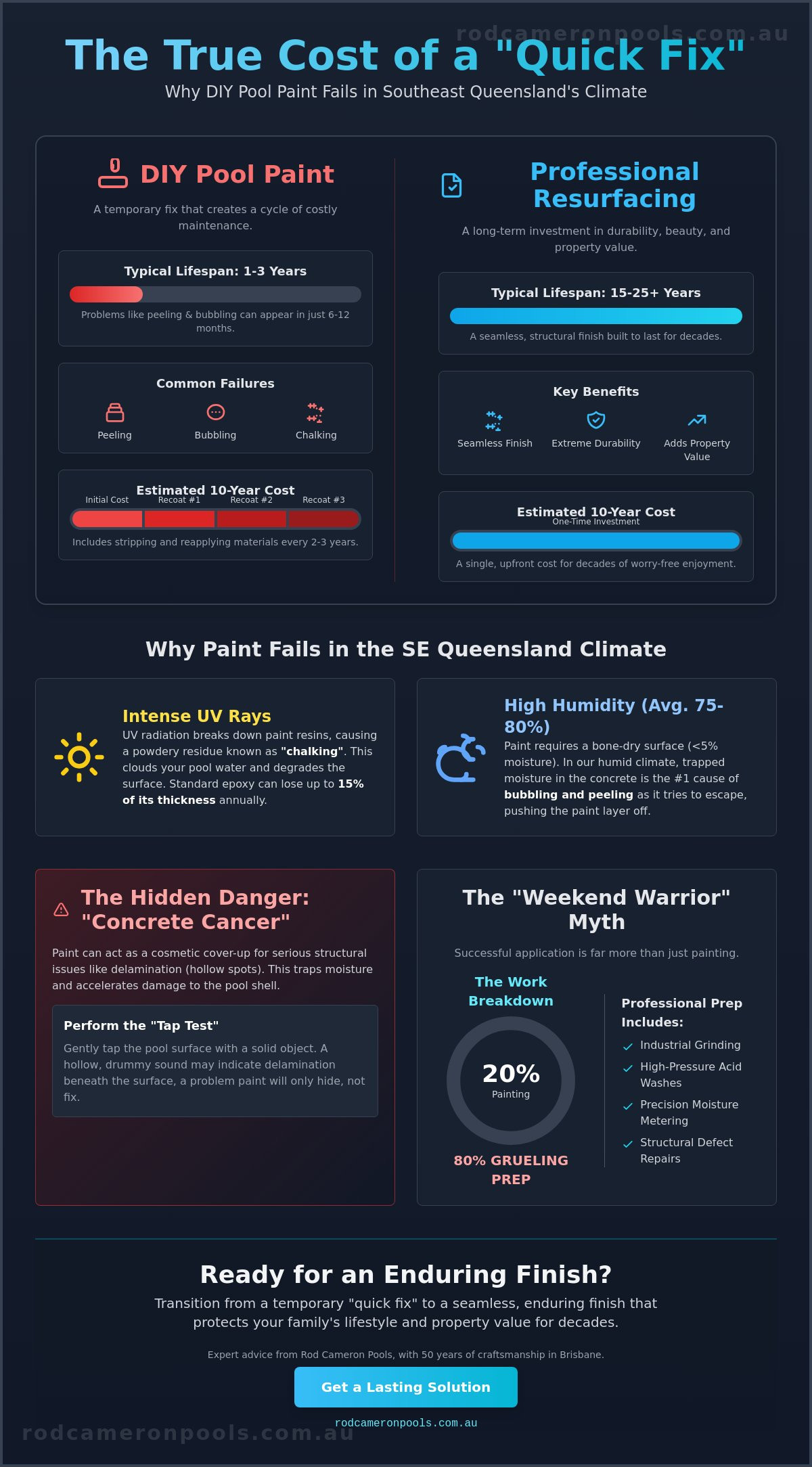
The “weekend warrior” myth suggests that painting a pool is as simple as painting a bedroom. It’s a misconception that often leads to frustration. In our experience at Rod Cameron Pools, the actual painting only accounts for 20% of the labor. The rest is grueling prep work. You’ll need industrial grinders, acid washes, and precision moisture meters to ensure the substrate is perfectly dry. If there’s even a 5% moisture level trapped in the concrete, the pool paint will bubble and peel within months. This is why our master tradesmen rarely recommend topical paints for long-term reliability. We believe in craftsmanship that lasts decades, not just a single summer season. A professional result requires professional equipment that most DIY kits simply don’t include.
The Hidden Reality: Why Pool Paint Struggles in the SE Queensland Climate
Brisbane’s weather is notoriously difficult for topical coatings. We’ve seen hundreds of backyard transformations over our forty-year history, and the recurring theme is that pool paint often fails to withstand the local elements for more than a few seasons. While a fresh coat looks brilliant for a month, the reality of Queensland’s 80% humidity and extreme UV levels quickly sets in. It’s a frustrating cycle for homeowners who want a lasting result but find themselves repainting every two or three years. This isn’t just a maintenance chore; it’s a symptom of a material that wasn’t designed for the unique environmental stresses of Southeast Queensland.
The ‘Chalking’ Effect and Water Chemistry
When intense UV rays hit the painted surface, they trigger a chemical breakdown of the resins. This creates a fine white powder known as chalking. You’ll notice your water turning cloudy as this residue enters the filtration system. In 2024, industry data indicated that standard epoxy coatings can lose up to 15% of their thickness annually due to this degradation. This process is accelerated by salt-water chlorinators and high chlorine levels required to keep water safe in the Brisbane heat. Balancing chemicals becomes a constant battle when the surface itself is dissolving into the water. A degrading surface creates a porous environment where algae can take root, making the pool harder to clean and more expensive to treat.
Adhesion Failures in High Humidity
Success with a topical coating depends entirely on a bone-dry substrate. In Southeast Queensland, our groundwater table is often high, and concrete is naturally porous. This leads to osmosis, where moisture is drawn through the shell, creating blisters and bubbles under the paint layer. If a sudden afternoon storm hits within the critical 24-hour curing window, the entire project is compromised. Common reasons for immediate failure include:
- Trapped moisture in the concrete slab caused by hydrostatic pressure.
- Surface temperatures exceeding 30°C during the application process.
- Unexpected rainfall during the seven-day full cure period.
Unlike a smooth marble or pebble finish that integrates with the structure, pool paint sits on top. It lacks the flexibility to handle the reactive clay soils found in areas like Ipswich or the Redlands. When the ground moves, the rigid paint cracks. We believe in building for the long term, which is why we focus on quality concrete pools that use meticulous finishing techniques rather than temporary covers. Choosing a finish that works with the climate, rather than against it, ensures your investment remains a source of joy rather than a recurring expense.
Cost Comparison: Pool Paint vs. Professional Resurfacing Over 10 Years
At first glance, a few tins of pool paint look like a budget-friendly weekend project. This initial price tag is often the primary reason homeowners choose epoxy over a structural renovation. However, when we look at the financial commitment over a decade, the “cheap” option reveals its true cost through a cycle of failure and repair. Brisbane’s intense UV levels and high humidity accelerate the degradation of chemical coatings, turning a one-time saving into a recurring expense. A quality finish should be an investment, not a chore you’re forced to repeat every few summers.
The Repainting Cycle
The first three years often feel like a success. This is the honeymoon phase where the finish remains vibrant and smooth. By year four, the reality of the Queensland climate sets in. Owners face the mandatory cost of draining the pool, performing a meticulous acid wash, and applying a new coat to cover peeling patches. By year seven, the layers of pool paint become too thick to bond effectively. This leads to “alligatoring,” where deep cracks form in the built-up epoxy. At this stage, you aren’t just repainting; you’re paying for professional sandblasting or grinding to strip the old layers back to the concrete shell. This process can cost thousands of A$ before the new finish even arrives, making the “quick fix” incredibly expensive in the long run.
Investment in Marble Resurfacing
Choosing to invest in remodeling a swimming pool with a smooth crushed marble finish represents a 15 to 20 year commitment to quality. Unlike paint, which sits on the surface, a marble finish is hand-trowelled to become part of the pool’s structure. It’s a choice that prioritizes durability, aesthetics, and long-term value. This decision eliminates several ongoing headaches:
- Maintenance savings: You’ll spend less on balancing chemicals because the surface is more inert.
- No chalking: You won’t find white residue on your skin or in your filters.
- Structural integrity: The finish protects the concrete shell rather than just masking it.
At Rod Cameron Pools, we provide the peace of mind that comes from a fixed-price approach and forty years of local heritage. We don’t believe in high-pressure sales, just honest advice from master tradesmen. A high-quality marble finish doesn’t just save on maintenance; it adds tangible resale value to a Brisbane home. It signals to potential buyers that the property has been maintained with meticulous care and enduring craftsmanship, ensuring your backyard remains a sanctuary for decades to come.
How to Assess Your Brisbane Pool’s Surface Health Before Deciding
Before you reach for a tin of pool paint, you need to know exactly what’s happening beneath the surface. Brisbane’s subtropical climate and shifting soils put immense pressure on concrete structures over time. A quick visual check often misses the real story. We recommend starting with the “tap test” to identify delamination. Walk around your pool and gently tap the walls with the handle of a screwdriver or a small mallet. If you hear a hollow, drum-like sound, the render has separated from the concrete shell. This air pocket means the surface is no longer structurally sound; any coating applied over it will inevitably bubble and peel within months.
The Danger of Hiding Structural Issues
Applying pool paint over a failing shell is like putting a band-aid on a broken leg. It might look refreshed for a single season, but the underlying decay continues. You should look closely for rust stains or “spalling” where small chunks of concrete have popped off. These are the classic symptoms of concrete cancer. This occurs when the internal steel reinforcement rusts and expands, cracking the concrete from the inside out. If your pool is older than 15 years, a professional inspection is essential. Ignoring structural leaks while focusing on cosmetics can lead to soil erosion and even subsidence, turning a simple renovation into a major engineering project. We’ve seen 20-year-old pools in suburbs like Ascot and Hamilton that appeared fine on the surface but required significant structural remediation once the old coating was stripped back.
Candidate for Paint or Resurfacing?
Is your concrete base solid enough for a new finish? We use a meticulous checklist to help homeowners decide if their pool is a candidate for a simple refresh or needs a complete overhaul:
- Structural Integrity: Zero hollow spots during the tap test across the entire surface.
- Surface Condition: No visible rust spots, weeping cracks, or active leaks.
- Bonding Strength: The original render is firm and isn’t “chalking” or turning to powder when rubbed.
Many Brisbane homeowners with older pebblecrete finishes wonder is it still the best choice for a modern renovation. While pebblecrete has served Queenslanders for decades, its rough texture makes it a poor candidate for painting. The paint often fails to bond in the deep crevices between the stones, leading to a patchy appearance. For a truly enduring result, smooth marble finishes represent the gold standard for Brisbane renovations. They provide a seamless, luxurious feel that stands up to our harsh UV levels. We design, restore, and protect quality concrete pools to ensure they remain a source of family memories for another forty years.
Beyond the Brush: The Rod Cameron Approach to Enduring Pool Finishes
For over 50 years, our family has watched Brisbane backyards evolve from simple swimming holes into sophisticated outdoor retreats. Since the early 1970s, Rod Cameron Pools has remained committed to a single philosophy: if a job is worth doing, it’s worth doing for the long haul. While pool paint might offer a temporary splash of color, it rarely survives the intense Queensland climate for more than a few seasons. We choose to stand by marble finishes because they offer the structural integrity and timeless beauty that a “quick fix” simply cannot match.
Our remarbling process is a meticulous transformation that breathes new life into tired structures. We focus exclusively on quality concrete pools, ensuring every renovation we undertake adds genuine value to your home. By removing failed coatings and applying a seamless, high-density marble interior, we create a surface that is designed to last for decades rather than months. It’s a permanent investment in your lifestyle, backed by half a century of local expertise and a reputation built on honesty and hard work. For homeowners looking to apply this same level of quality to their interior spaces, you can discover Cabinet refinishing Denver to learn about professional kitchen cabinet restoration.
The Craftsmanship of Smooth Marble
The difference between a painted surface and a marble finish is immediately apparent the moment you step into the water. Marble provides a silky, tactile experience that feels significantly better underfoot than the abrasive texture of pebble or the often-slippery nature of pool paint. It’s the gold standard for luxury Brisbane backyards, offering a natural luminosity that reflects the light with sophisticated clarity. Our finishes are engineered to withstand the relentless Gold Coast sun without fading, chalking, or blistering, ensuring your investment looks as good in year ten as it did on day one.
- Structural Integrity: Remarbling bonds directly to the concrete shell, creating a unified, leak-resistant barrier.
- Thermal Comfort: Natural marble remains cooler than darker, synthetic coatings during peak 35-degree summer days.
- Aesthetic Longevity: A marble interior maintains its elegance for 20 to 30 years with basic water chemistry maintenance.
Your Stress-Free Renovation Journey
We understand that a pool renovation can feel like a daunting task, which is why we’ve refined a process that is methodical and reassuringly steady. As a family-owned business, we handle every detail from the initial consultation through to the final handover. We specialize in managing difficult site access, utilizing specialized equipment and decades of experience to navigate tight Brisbane blocks where other contractors might struggle. We take pride in our ability to design, construct, and maintain spaces that bring families together.
Every project begins with a clear vision and ends with a solid, finished result that your family will enjoy for generations. We don’t believe in hidden costs or surprises; we provide you with a fixed-price quote that reflects the true value of a permanent resurfacing solution. If you’re tired of the cycle of temporary repairs and want a finish that stands the test of time, we’re ready to partner with you. Contact us for a professional pool resurfacing assessment to start your transformation today.
Invest in a Finish That Lasts Beyond the Season
Choosing a surface for your Brisbane pool is a decision that impacts your home’s value and your family’s leisure time for a decade or more. While pool paint might seem like an affordable shortcut today, the intense Southeast Queensland sun often causes these coatings to chalk and peel within just 24 months. Our experience shows that homeowners who opt for professional resurfacing avoid the repetitive costs and chemical imbalances associated with failing temporary finishes. Since 1968, our family-owned and operated business has focused on delivering integrity through meticulous craftsmanship. We specialize in durable smooth marble finishes that stand up to the local climate, ensuring your pool remains a source of pride rather than a maintenance burden. With over 40 years of Southeast Queensland expertise, we’ve refined a methodical process to design, restore, and maintain your aquatic retreat. Don’t settle for a temporary patch when you can secure a lifetime of memories. Let’s evaluate your pool’s health together and plan a restoration that truly lasts.
Book Your Professional Brisbane Pool Assessment Today
Frequently Asked Questions
Is pool paint a good idea for concrete pools in Brisbane?
Pool paint serves as a temporary cosmetic enhancement rather than a permanent structural solution for Brisbane’s concrete pools. While it provides an immediate refresh, 2024 Queensland climate data indicates that high UV exposure and humidity often lead to surface degradation within 24 months. For a finish that stands the test of time, we recommend materials that bond deeply with the concrete shell to ensure lasting integrity.
How long does epoxy pool paint actually last in Queensland?
You can typically expect epoxy coatings to last between 2 to 5 years in Queensland before they require a full recoat. This lifespan is considerably shorter than traditional renders because the intense sun and chemical fluctuations in our local waters cause the finish to chalk and fade. Maintenance records from our 40 years of local expertise suggest that a painted surface needs three times more frequent attention than a pebble finish.
Can I paint over my old pebblecrete pool surface?
You can apply a coating over pebblecrete, but it’s a technical risk that often leads to premature failure. The uneven texture of pebblecrete makes it difficult for pool paint to achieve a uniform, airtight bond; this often leaves microscopic voids where water can seep in. This moisture trap usually results in the coating delaminating from the stones within 18 months, creating a patchy and abrasive surface for swimmers.
What is the best alternative to pool paint for a long-term finish?
A high quality pebble interior or a fully tiled finish represents the most durable alternative for Brisbane homeowners seeking longevity. These materials are engineered to last 15 to 25 years, providing a seamless and resilient surface that resists chemical damage and algae growth. Choosing a pebble finish means you’re investing in a meticulous construction process that ensures your family’s pool remains a beautiful, low-maintenance asset for decades to come.
Why is my pool paint peeling and bubbling so soon after application?
Peeling and bubbling usually occur because of osmotic pressure or improper moisture testing before the pool paint was applied. If the concrete shell contains more than 5% moisture content during application, the heat from the Brisbane sun draws that vapor out and pushes the film away from the surface. This creates unsightly blisters that eventually burst, leaving the underlying concrete exposed to the elements and potential structural damage.
Does pool paint protect against concrete cancer?
No, a topical coating provides no protection against concrete cancer and can actually mask the early warning signs of internal steel corrosion. Concrete cancer occurs when the internal reinforcement rusts and expands; this is a serious issue that requires structural repairs rather than a thin layer of paint. Covering cracks with paint is a temporary mask that often leads to a 30% increase in repair costs if the underlying problem is ignored.
How much does it cost to professionally resurface a pool vs painting it?
While painting might cost A$3,000 to A$6,000 initially, a professional resurface with pebble or tile typically ranges from A$8,000 to A$20,000 depending on the pool’s dimensions. Industry data from 2025 suggests that while the upfront cost of resurfacing is higher, it’s more cost-effective over a 10 year period. Painting requires multiple reapplications and professional stripping, which often doubles the total expenditure over the first decade of ownership.
Can you paint a pool yourself or do you need a professional?
You can paint a pool yourself, but achieving the meticulous finish required for a lasting bond is exceptionally difficult for most homeowners. Professional application involves specialized equipment like industrial grinders and precision moisture meters to ensure the surface is perfectly prepared. Without this level of technical accuracy, 85% of DIY projects see surface failure within the first 12 months, leading to a more expensive professional restoration to fix the errors.