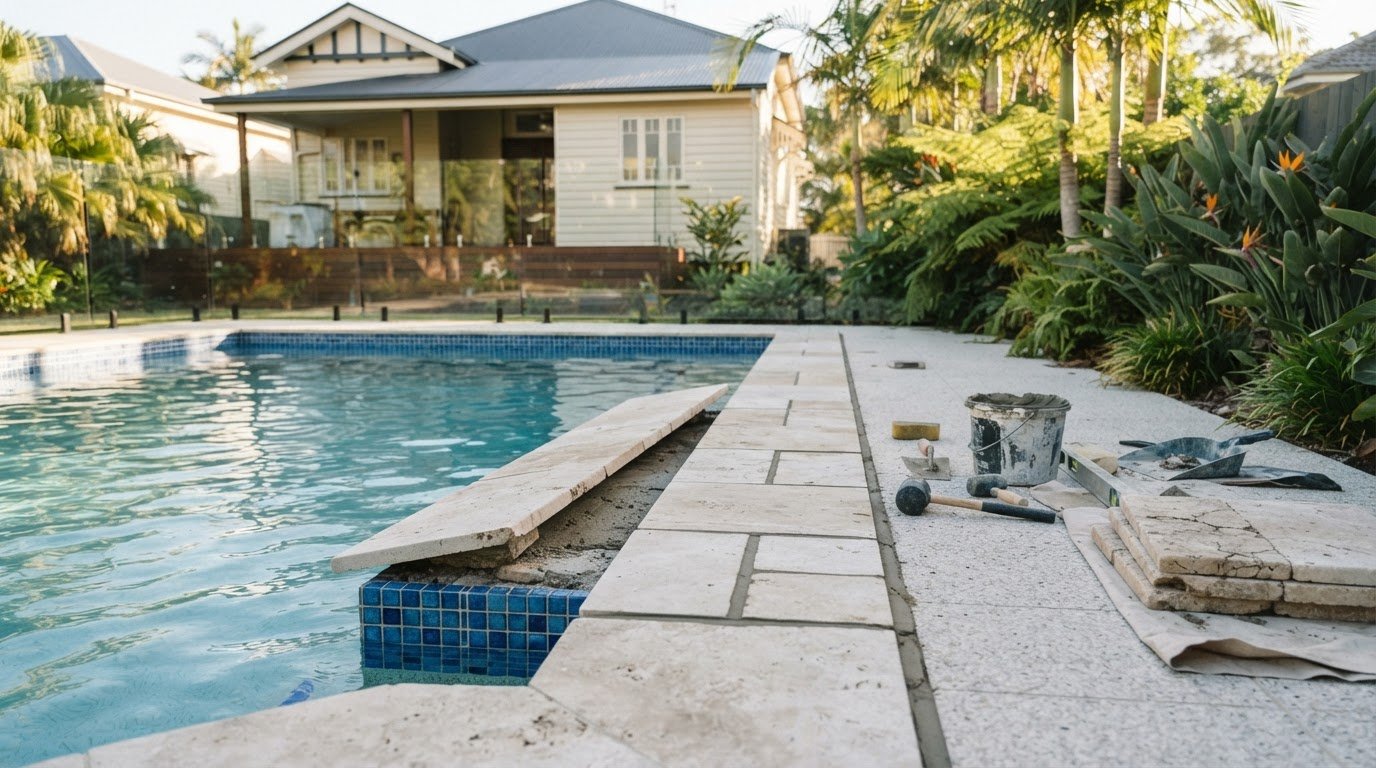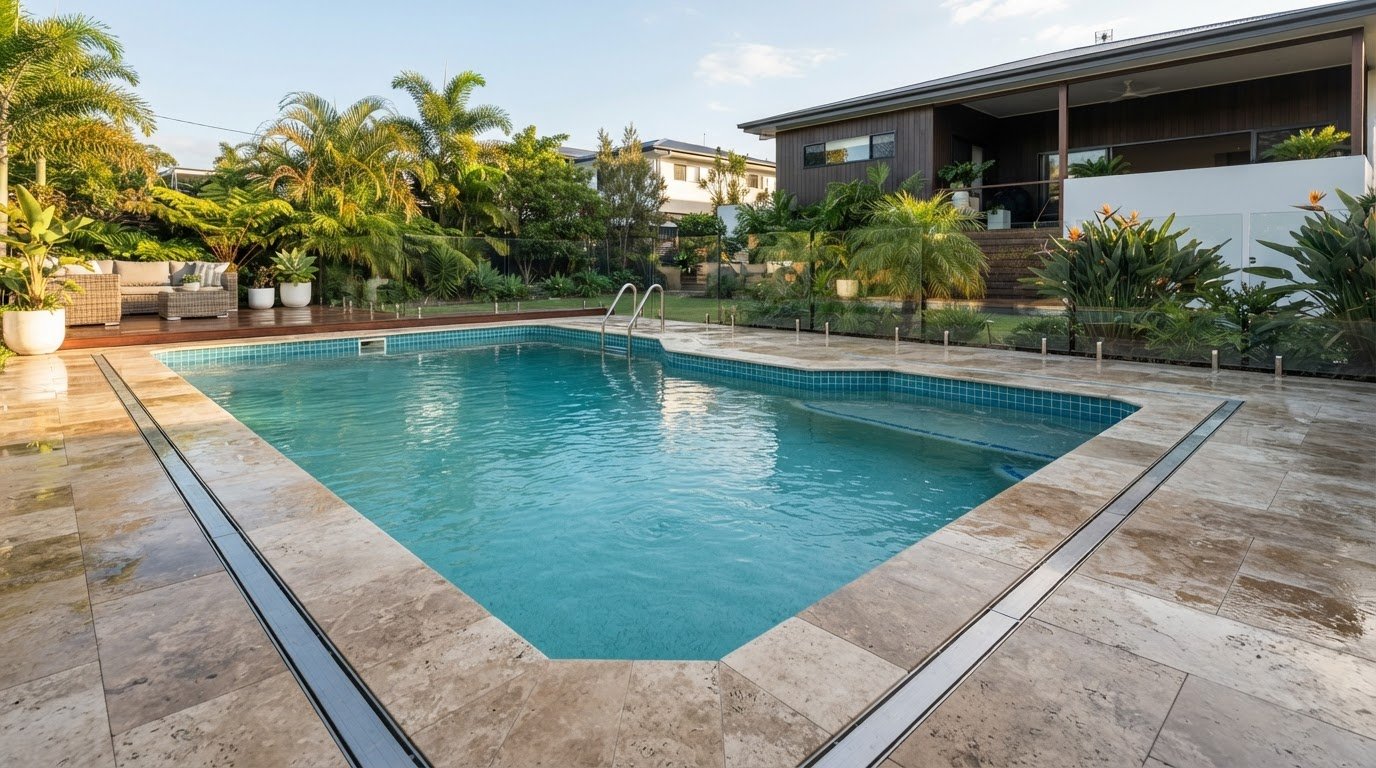

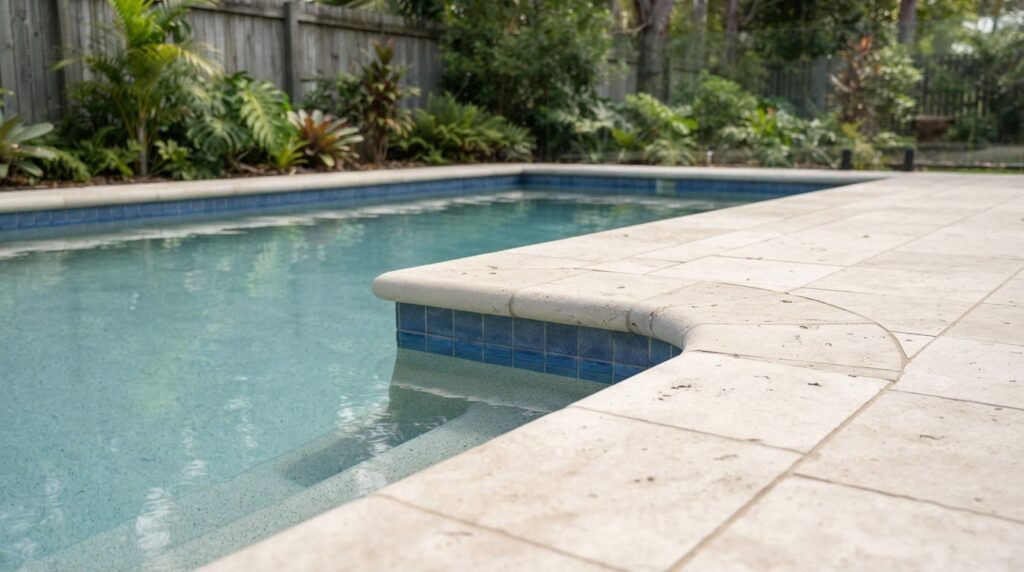
The pool’s edge deserves as much design attention as the paving around it. For pool coping and paving in Brisbane, consider them as one composition: coping forms the finished rim between the pool and deck, while paving completes the surrounding surface. Together, their material, colour and profile shape the look and feel of the pool area.
It’s easy to focus on the broad paved area, but coping frames the water and creates a clear transition to the surround. A well-matched finish helps the whole space feel considered and cohesive.
This guide explains what coping does, how stone and paving finishes differ, and what to consider when choosing materials for a Queensland pool surround. You’ll also compare bullnose, drop-face and square-edge profiles, with practical guidance on appearance, use and long-term care.
Key Takeaways
- Compare stone finishes by appearance, texture and how they suit your pool’s surroundings, including exposure to salt air.
- Choose a coping profile that complements the pool’s shape and creates the edge detail you want.
- Understand how bullnose and drop-face coping differ before settling on a finish for the pool rim.
- Coordinate coping and paving through colour, texture and scale for a more cohesive pool surround.
- Consider how stone type and pool use affect sealing and ongoing care.
Pool paver materials and finishes
Choose pool pavers by considering the finish, pool area and surrounding materials together. In Brisbane, format, salt exposure and drainage also influence a practical choice.
Pavers for Different Budgets
Compare materials by finish, maintenance needs and suitability for the pool area, rather than appearance alone. Natural stone has distinct colour and texture variation, while manufactured paving can look more consistent. When comparing quotes in Brisbane Bayside, check that they cover the same scope: preparation, paver supply, installation, coping junctions, drainage and sealing. These details help explain differences beyond the headline total.
A useful quote describes the selected pavers, measured area, installation scope, surface preparation and how the edges meet the coping. It should also set out drainage work, sealing and exclusions so you can compare like with like. Brisbane City Council rules for drainage and barriers depend on the work and site. Plan to avoid ponding and keep the barrier line clear, unobstructed and compatible with gate operation. Don’t assume a specific council rule or approval threshold from the paving quote alone.
Paver Formats and Sizes
Pool pavers commonly range from 400x400mm to 600x600mm, with larger formats also used around pool decks and coping. Smaller units create more joints and can suit tighter curves or detailed layouts; larger units create broader visual planes. Before choosing, consider the pool’s shape, corners, drains and cutting needed at edges. A consistent format can help the coping and paving read as one design.
Pool pavers need a finish suited to wet feet and regular splashing. Non-slip tiles are suitable for pool surrounds, and the surface texture should match the area’s intended use. Licensing or certification requirements depend on the specific work, not simply the phrase “pool paving”. The quote should identify credentials relevant to its stated scope, rather than imply that one credential covers every task.
Salt-Resistant Paver Options
For Queensland pool properties within 2km of salt air, basalt and granite are denser choices that resist salt penetration better than softer stones. That makes them worth comparing for exposed surrounds, where salt spray can affect material selection. Still, stone type is only one decision: assess colour, texture, finish and how the pavers relate to the pool’s coping and surrounding architecture.
Seal natural stone with a penetrating impregnator sealer rather than a surface coating. Use the sealer and care method suited to the selected stone, and keep debris off the pool area to help prevent marks. Make sure the project scope clearly describes sealing and ongoing care, especially when the paving combines different stone types.
Bullnose, corner and rebated drop-face coping
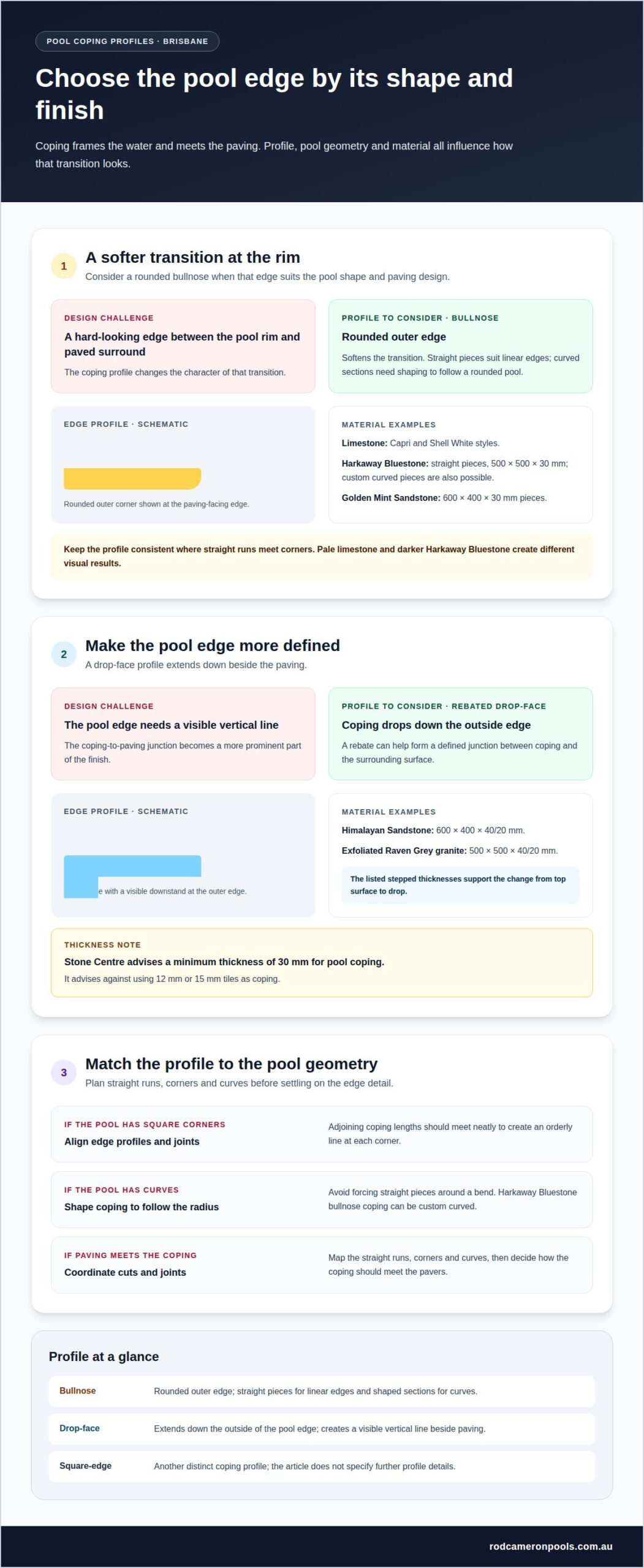
A coping profile changes the pool edge’s appearance and how it meets the paved surface. Bullnose, drop-face and square-edge profiles each create a distinct finish for Brisbane pool surrounds.
Bullnose pool coping
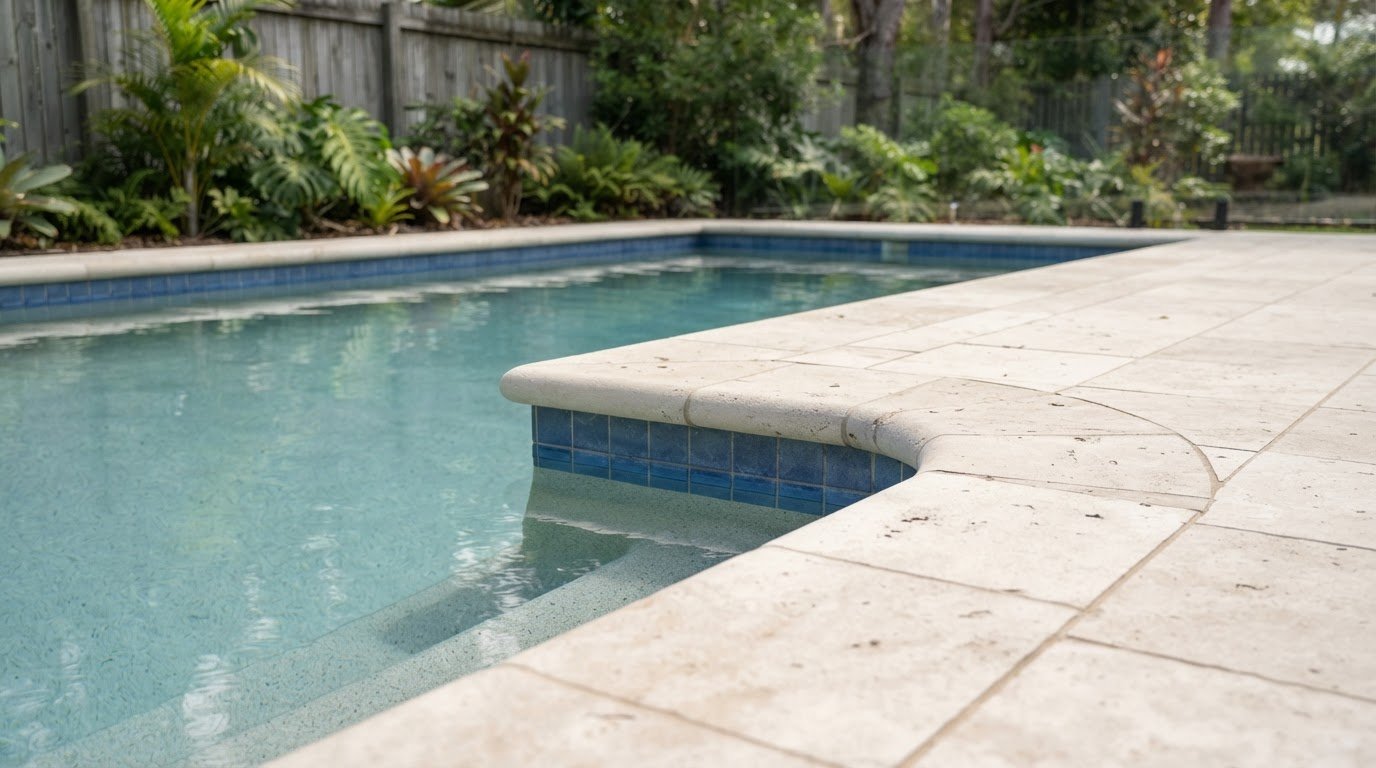
Bullnose coping has a rounded outer edge, softening the transition between the pool rim and paving. Limestone is one option, including Capri and Shell White styles. Other examples include straight Harkaway Bluestone bullnose pieces measuring 500 mm × 500 mm × 30 mm, and Golden Mint Sandstone pieces measuring 600 mm × 400 mm × 30 mm.
Choose bullnose when a rounded profile suits the pool’s shape and paving design. Straight pieces work along linear edges, while curved sections need shaping to follow a rounded pool. Material colour and surface texture also affect the result: pale limestone looks different from darker Harkaway Bluestone. Keep the profile consistent where straight runs meet corners.
Rebated drop-face coping
Drop-face coping extends down the outside of the pool edge, creating a visible vertical line beside the paving. A rebated detail can help form a defined junction between the coping and the surrounding surface. For example, stocked drop-face pieces include Himalayan Sandstone at 600 mm × 400 mm × 40/20 mm and Exfoliated Raven Grey granite at 500 mm × 500 mm × 40/20 mm.
The stepped thickness in these examples supports the profile’s change from top surface to drop. Stone Centre advises a minimum thickness of 30 mm for pool coping, and advises against using 12 mm or 15 mm tiles as coping. Match the drop-face material to the paving carefully, especially where contrasting colours make the edge more prominent.
Corner pieces and profile transitions
Pool corners need adjoining coping lengths to meet neatly. On square pools, align edge profiles and joints at each corner for an orderly line. On curved pools, shape the coping to follow the radius rather than forcing straight pieces around the bend. Harkaway Bluestone bullnose coping, for example, can be custom curved.
Before selecting a profile, map the pool’s straight runs, corners and curves, then decide how the coping should meet the pavers. This helps coordinate cuts, joints and the finished edge. For a wider surround update, pool re-tiling and paving can be considered alongside coping choices, so the materials work together as one finish.
What is pool coping?
Pool coping is the finished edge around a pool, bridging the waterline and surrounding surface. Its colour and profile help define the character of the pool area.
Coping Colour and Design Choices
Start with the pool interior and paving colour, then choose coping that connects them. Capri White Limestone creates a pale, clean edge, while Pearl Grey Limestone gives the surround a cooler tone. Shell White Limestone can suit a light, coastal palette. Travertine offers another natural-stone look, with its own pattern and colour variation.
Natural stone samples help you compare tones and surface details before choosing. View each sample in the pool area’s natural light, beside the paving and pool interior. Stone can vary from piece to piece, so a sample shows its general character, not every variation in the finished surround.
Consider the edge profile as well as colour. Bullnose creates a rounded outline, while a square edge gives a more defined line. Drop-face makes the pool rim more prominent. For a cohesive result, keep the palette restrained: one main stone colour, one complementary paving tone and a profile that suits the pool’s shape.
Tumbled Coping Options
Tumbled coping has a softened, gently textured appearance that contrasts with crisp-cut edges. Shell White Limestone and Pearl Grey Limestone are examples of tumbled-edge coping options. Their different tones influence the overall mood, so compare them with the paving rather than choosing coping in isolation.
When reviewing samples, inspect the edge as well as the top surface. A tumbled finish gives the perimeter a less formal look than a sharply defined square edge. Compare pieces when dry and wet, since water can deepen stone colour and change how texture appears around the pool.
Samples also show differences between natural stone pieces, including visible grain and shade variation. Lay them beside the intended paving to judge whether the transition feels balanced. For delivery planning, consider the chosen stone, order quantity and access to the pool area. These details affect how materials reach the worksite and where they can be staged.
Before settling on coping, compare colour, edge treatment and paving together. This helps keep the waterline, pool rim and surrounding finish visually connected.
Price can also help narrow the choices. Compare the listed amounts with the colour and edge treatment that best connect the pool rim to the surrounding paving.
A price comparison doesn’t replace viewing samples in the pool area’s light or beside the paving. Consider the material, finish and practical delivery needs before making your final selection, so the coping works as part of the whole surround.
What is the best natural stone for a Queensland pool surround?
No single stone suits every pool. Compare the stone’s finish, coping profile and exposure to outdoor conditions, then match them to the pool’s shape and paving.
Natural Stone Coping Materials
Natural stone options include limestone, sandstone, granite and bluestone. Each gives the pool edge a different colour, grain and character. Consider the stone alongside the paving, rather than treating coping as a separate detail. Pale limestone, for example, can create a light perimeter, while grey granite makes the edge more defined.
Queensland pool stone can heat to more than 60°C in summer before cooling overnight. That change makes the surface and its location relevant to material selection. In a sunny outdoor area, compare stone colour and texture in place, then consider how the coping will feel underfoot during typical pool use. The best choice balances appearance with practical comfort.
Coping Profiles and Materials
Natural stone pool coping is available in bullnose, drop-face and square-edge profiles. Bullnose rounds the outer edge, square edge creates a crisp line, and drop-face coping extends down the pool wall. Choose a profile to suit the pool’s shape and the look you want where coping meets paving.
Thickness matters too. Stone Centre advises a minimum thickness of 30 mm for pool coping and advises against using 12 mm or 15 mm tiles as coping. This distinction helps separate thin paving tiles from coping made to finish the pool edge. The material, thickness and profile need to work together as one specification.
Drop-face coping gives the pool perimeter a visible vertical detail. Light Teakwood Sandstone drop-face pieces, for example, are stocked in 600 mm × 400 mm × 40/20 mm sizes. That stepped thickness forms the top and descending face. For a curved pool, the coping also needs to follow the curve cleanly, so the edge remains consistent around the perimeter.
Compare the drop-face colour with the pool interior and surrounding paving. Light Teakwood Sandstone can contrast with darker surfaces, while stone closer in tone to the deck creates a quieter transition. Check how the profile meets corners and straight runs. Accurate alignment helps the finished edge look deliberate rather than pieced together.
For a considered selection, first identify the pool shape and preferred edge profile. Then compare natural stone samples with the paving in the actual outdoor setting. Finally, consider exposure, thickness and the finished junction. These steps help narrow the options without treating one stone as best for every Queensland pool.
Matching coping and pool paving
A cohesive swimming pool surround connects the coping edge with the paved area. Match material, scale and colour, then plan the junction so both finishes work together.
Measuring and Preparing the Pool Area
Measure each straight pool edge, corner and curve separately, then map the paved area and fixed features. Include drains, steps and access points in the layout. This gives the material selection a clear basis and helps locate cuts before installation. A Brisbane renovation paired Harkaway Bluestone drop-face coping, 1000 mm × 350 mm × 100 mm, with white granite pavers, 500 mm × 500 mm × 16 mm.
Preparation also means considering the existing concrete, levels and water flow. Mark where paving meets coping, walls and other surfaces, then identify uneven or damaged sections. A sound plan allows for cuts and joints while keeping drainage paths clear. The measured layout should show how each material meets the pool edge, rather than leaving the transition to chance.
Installation Process and Timeframe
Installation typically moves from preparation and setting out to laying coping and paving, then finishing joints and surfaces. The timeframe depends on the work involved: pool size, curves, access, cutting and the existing base all affect progress. Custom curved pieces also need separate fabrication time, so coordinate them with the project sequence.
A straight rectangular pool, for example, needs a different layout from a curved pool that requires shaped coping. Confirm the sequence before work begins: prepare the area, establish levels and drainage, fit the edge pieces, then lay the surrounding pavers. Let each installation stage finish properly before starting the next. No single timeframe suits every pool surround.
Cracking, lifting and poor drainage can follow movement, uneven support or water collecting beneath the paved surface. A carefully measured layout helps identify low points and transitions before work starts. During installation, check that coping sits evenly and paving slopes towards intended drainage paths. These checks help prevent raised edges, rocking pavers and persistent puddles.
Material coordination matters at the junction. The Harkaway Bluestone and white granite example uses different colours and formats, creating a deliberate contrast. Its coping measures 1000 mm × 350 mm × 100 mm, while the pavers measure 500 mm × 500 mm × 16 mm. The takeaway is simple: compare actual pieces together, then align their edges, joints and levels within one plan.
Planning a new surround or addressing worn pool finishes? Discuss your pool surround project as part of a considered renovation.
Rod Cameron Pools
Rod Cameron Pools can help when a pool surround upgrade is part of a wider pool renovation. If the pool surface also needs attention, Pool Restoration, Pool Resurfacing and Remarbling are options for renewing the pool as a whole. The right scope depends on whether the project centres on the pool interior, the surrounding finish or both.
Considering coping and paving alongside the pool’s condition can help shape a coordinated renovation plan. Rod Cameron Pools also provides Commercial Pool Services, with the work planned around the pool’s needs and intended use.
For advice on your pool renovation, contact Rod Cameron Pools.
Shape a pool surround that feels like yours
A pool area’s lasting character comes from choices that work together and suit how you want to use the space. Before work begins, bring your preferred stone, finish and edge profile into one considered plan for pool coping and paving in Brisbane. This gives the project clear direction, from the pool’s perimeter to the details that complete the outdoor setting.
If the pool itself also needs attention, Rod Cameron Pools offers Pool Resurfacing, Remarbling and Pool Restoration. These services address the pool’s finish as part of a broader renovation, alongside decisions about the surrounding space. Start with a conversation about the pool’s condition, your priorities and the result you’re aiming for.
Contact Rod Cameron Pools to discuss your pool and take a considered first step towards a surround designed for your home.
Frequently Asked Questions
What materials are best for pool coping and paving in Brisbane’s climate?
Choose materials according to sun exposure, salt air and the pool’s intended use. For properties within 2km of salt air, basalt and granite are denser options that resist salt penetration better than softer stones. In a sheltered inland setting, compare other natural stones by their finish and care needs. Consider coping and paving together, since different materials can weather and look different over time.
How much does pool coping and paving cost per square metre in Brisbane?
There’s no single per-square-metre figure for every pool project. The total depends on the selected material, paved area, site preparation, access, cuts and the amount of coping required. Curves, corners and drainage work can also affect the scope. A project quote should separate supply from installation and clearly describe preparation, finishing and additional work, so you understand what the quoted amount covers.
What are the most popular pool paving options in Brisbane, and how do they compare?
Natural stone and non-slip tiles are options for Brisbane pool surrounds, each with different looks and surface characteristics. Limestone offers varied tones, while granite and basalt are denser choices in salt-exposed locations. Tiles offer another way to coordinate colour and texture across the pool area. Compare samples where they’ll be used, and consider how each option works beside the coping and existing surfaces.
Which pool coping materials stay cool and provide good slip resistance?
No material should be assumed to stay cool under Brisbane summer sun. Queensland pool stone can exceed 60°C in summer, so consider sun exposure and how the surface will be used. For slip resistance, a non-slip finish is a practical choice for pool surrounds; texture matters as well as stone type. Compare the coping’s surface with nearby paving, since both are walked on when wet.
What are Brisbane City Council rules for pool surrounds, drainage and barriers?
Brisbane City Council requirements for drainage and barriers depend on the work and site. Plan to prevent ponding and keep the barrier line clear and unobstructed, while preserving gate operation.