
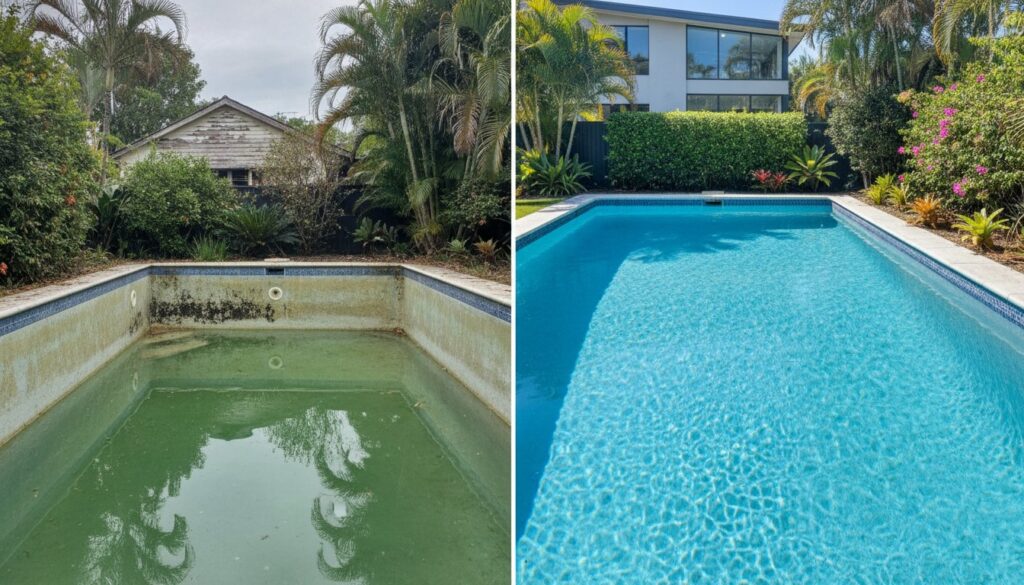
What if the rough, discoloured surface of your pool isn’t just a sign of age, but a structural signal that your backyard oasis has reached a critical turning point? For many families across Brisbane and the Gold Coast, the joy of a summer swim is often dampened by the reality of marblesheen pool problems like sharp surface abrasions and persistent black spot algae. It’s exhausting to spend your weekends scrubbing a finish that seems determined to fight back; it’s even more stressful when you begin to worry about the hidden risks of asbestos in older materials applied decades ago.
We understand that your pool is more than just a concrete vessel; it’s a place for shared memories and quiet relaxation. You deserve a long-term solution that prioritises both safety and craftsmanship rather than a temporary patch that will fail within a few seasons. This guide will help you identify the root causes of finish degradation and discover the most durable restoration paths available today. We will walk you through the essential safety standards for SE Queensland, explain why certain modern materials offer superior longevity, and show you how a professional restoration can return that smooth, inviting feel to your water for years to come.
Key Takeaways
- Recognize the early warning signs of marblesheen pool problems, such as surface grit in your filter and skin abrasions from rough walls.
- Understand the safety implications of older pool finishes and why professional testing is a critical first step for any SE Queensland renovation project.
- Learn why temporary solutions like pool paint often fail on degraded marble and how moisture trapped beneath the surface causes unsightly peeling.
- Discover the methodical restoration process required to return your pool to a smooth, clean state through expert remarbling and structural assessment.
- Find out why local experience and a legacy of craftsmanship since 1968 are essential for managing complex site access and ensuring a durable finish.
Common Marblesheen Pool Problems: Identifying the Warning Signs
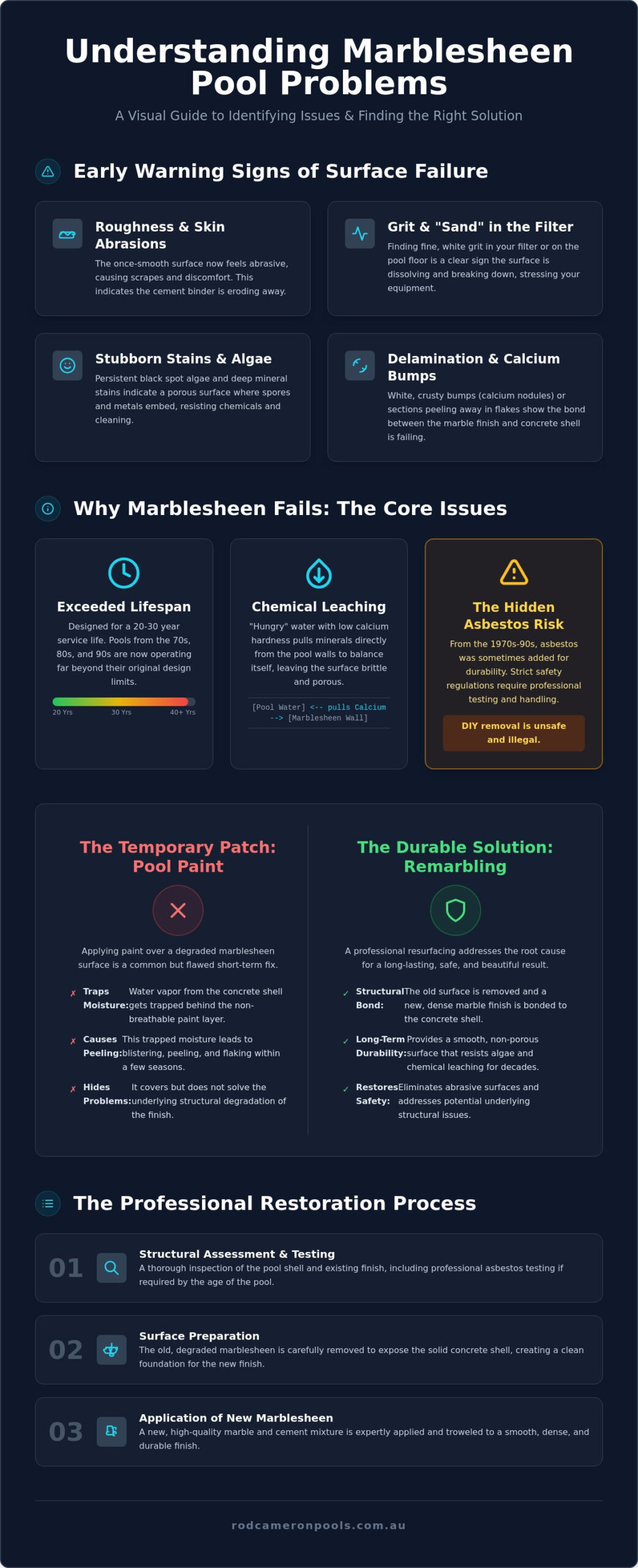
Owning a pool in the vibrant climate of Brisbane or the Gold Coast is a source of immense pride, yet even the most meticulously maintained surfaces eventually show their age. Recognizing marblesheen pool problems early is the key to preserving the structural integrity of your concrete shell. You might first notice small, white, crusty bumps known as calcium nodules forming on the floor, or perhaps sections of the finish are starting to delaminate, peeling away from the underlying structure in large flakes. These aren’t just aesthetic concerns. They are clear indicators that the bond between the marble and the concrete is failing, often due to decades of service and environmental exposure.
A healthy pool surface should feel smooth and inviting underfoot. When that texture changes, it signals a shift in the material’s chemical stability. Identifying these signs early allows for a more managed restoration, a safer swimming environment, and a significant reduction in long-term repair costs. Ignoring these warnings can lead to deeper structural issues that are far more complex to resolve than a standard resurfacing project.
The “Sand” in Your Filter: Surface Erosion
Staining and Algae: Beyond the Surface
Stubborn black spot algae is perhaps the most frustrating of all marblesheen pool problems because it roots itself deep within the porous matrix of the aging material. Unlike a new, dense finish, older marble develops microscopic pits that act as tiny bunkers for algae spores. These spores are shielded from chlorine and algaecides, making it nearly impossible to maintain a consistent chemical balance. You may also notice deep-seated mineral staining that refuses to budge with standard scrubbing. These dark patches often signal that moisture is moving through the finish, bringing metallic salts to the surface and creating a cycle of staining that traditional cleaning simply cannot break.
Why Marblesheen Fails: Age, Chemistry, and the Asbestos Factor
Understanding the root causes of marblesheen pool problems requires a look back at the construction methods of previous decades. Most traditional marble finishes were engineered to provide a reliable service life of approximately 20 years. If your Brisbane or Gold Coast home was built during the housing booms of the 1970s or 80s, your pool surface is likely operating well beyond its original design limits. Over these long years, the structural bond between the crushed marble and the cement binder naturally weakens. This leads to the erosion, roughness, and “sanding” that eventually makes the pool uncomfortable for your family to use.
Water chemistry acts as a silent but persistent force in this degradation. When pool water maintains low calcium hardness, it becomes chemically “hungry” for minerals. It seeks to balance itself by drawing those minerals from the most accessible source: your pool walls. In the context of pool plaster, leaching is the chemical process where water physically pulls calcium out of the marble finish to reach equilibrium. This leaves the surface brittle, porous, and prone to the deep-seated algae issues we discussed earlier. It is a slow, structural thinning of the finish that cannot be reversed with chemicals alone.
The Asbestos Risk in Older Brisbane Pools
For many families, the most significant concern during a renovation is the potential for asbestos. Between the 1970s and 1990s, asbestos fibers were occasionally incorporated into marblesheen mixes to enhance durability and structural strength. Queensland government regulations, specifically the Work Health and Safety Regulation 2011, dictate very strict protocols for handling these materials. It’s not a task for an unlicensed contractor or a DIY attempt. Because we’ve been specialized in this niche since 1968, our team understands exactly how to manage the safe assessment and removal of these older coatings. Every pool restoration we undertake is grounded in this commitment to safety and local compliance, ensuring your backyard remains a secure environment for your children.
Climate Impacts in SE Queensland
The subtropical climate of South East Queensland places immense stress on masonry. Our intense summer sun causes the concrete shell and the marble finish to expand at slightly different rates. Over decades, this thermal movement can cause the finish to “pop” or delaminate from the shell. Additionally, our heavy seasonal rainfall can suddenly shift your pool’s pH levels. This disruption often accelerates the binder breakdown, making the surface feel sharp and abrasive much sooner than it would in a milder environment. We see this often in Gold Coast properties where high humidity and salt air add another layer of complexity to the aging process of the marble matrix.
The True Cost of Patching: Why Pool Paint Often Fails Marblesheen
When faced with mounting marblesheen pool problems, the allure of a quick, colourful coat of pool paint can be incredibly tempting for many homeowners. It promises an immediate transformation at a fraction of the cost of a full restoration. However, our decades of experience across Brisbane and the Gold Coast have shown that this approach often serves as a temporary mask rather than a genuine solution. While paint provides a clean aesthetic for a few months, it fails to address the underlying structural health of the pool, eventually leading to a cycle of expensive, repetitive maintenance that far outweighs the initial savings.
The fundamental issue lies in the compatibility between a porous masonry surface and a topical coating. A professional restoration prioritises the bond between the finish and the concrete shell, ensuring the two materials move as one. Paint, by contrast, sits on the surface as a separate film. This creates a point of failure that is almost guaranteed to react poorly to the high humidity and intense UV levels we experience in SE Queensland. Choosing a long-term path means looking past the immediate shine to consider the durability and ease of care your pool will require over the next twenty years.
Delamination and Blistering
The primary reason paint fails on older marble surfaces is the “bubble” effect caused by trapped moisture. Because marblesheen is a porous material, it naturally holds a certain level of hydration from the surrounding ground and the pool itself. When you apply an impermeable layer of paint over this damp substrate, you create a barrier that prevents the concrete from breathing. Hydrostatic pressure then builds up behind the paint film, physically pushing it off the wall. This results in unsightly blistering, flaking, and peeling that leaves your pool looking patchy and neglected within just two or three seasons. The hidden costs of frequent repainting, combined with the intense labour required to strip failing layers, quickly exceed the price of doing the job correctly the first time.
The Resurfacing Alternative
Choosing a full resurface is the only reliable way to address structural cracks and the deep-seated degradation we’ve discussed. Unlike a surface coating, a professional restoration involves removing the compromised layers and applying a fresh, high-quality finish that bonds directly to the concrete shell. This creates a unified, durable structure capable of withstanding the sun for decades. If you are weighing up your options, our Pebblecrete vs. Smooth Marble guide provides a detailed look at how different materials perform in our local climate. We view a proper resurface as a 20-year investment in your home’s value and your family’s lifestyle. Once paint is applied, future restorations become significantly more complex and labour-intensive, as every trace of that failing film must be removed before a new marble finish can be successfully bonded.
Restoring Your Pool: The Remarbling and Resurfacing Process
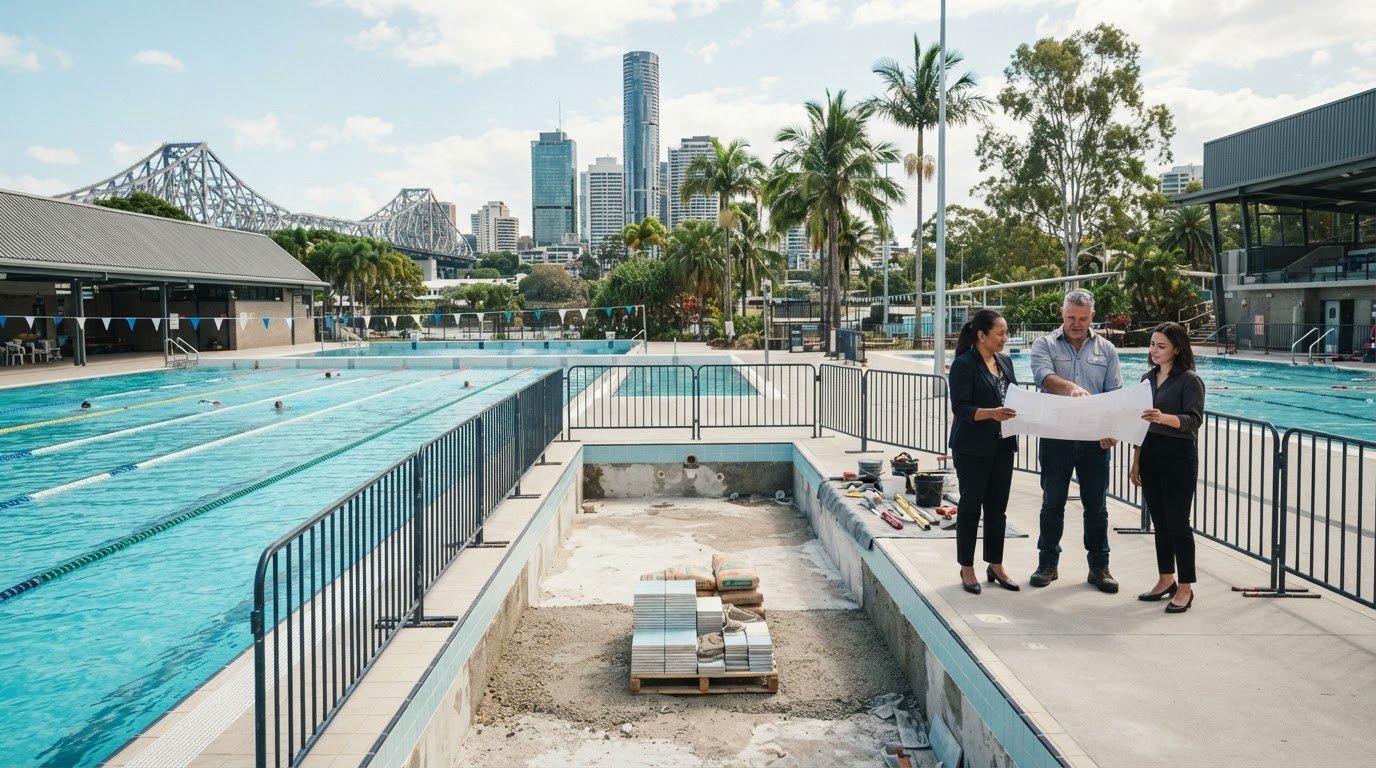
Restoring a pool is a methodical journey that begins with a clear understanding of the structure beneath the surface. Once we drain the water, we conduct a comprehensive structural assessment to identify any hidden issues that the old finish may have been masking. This stage is critical for addressing long-standing marblesheen pool problems, as it allows us to examine the concrete shell for signs of “concrete cancer” or structural cracks that require specialized repair before the new surface is applied. Our team approaches this phase with the patience and care developed over decades of local service, ensuring the foundation is sound before we move forward.
The removal of the degraded layer is handled with meticulous care, especially given the historical context of materials used in SE Queensland. We ensure all compromised material is stripped away safely, creating a clean, sound substrate for the new finish. This isn’t just about demolition; it’s about preparation. A perfectly prepared shell is the only way to guarantee the longevity and aesthetic value of the final result. By addressing these marblesheen pool problems at the structural level, we provide a permanent solution rather than a temporary patch, reflecting our commitment to honesty and hard work.
The Art of the Trowel: Applying Smooth Marble
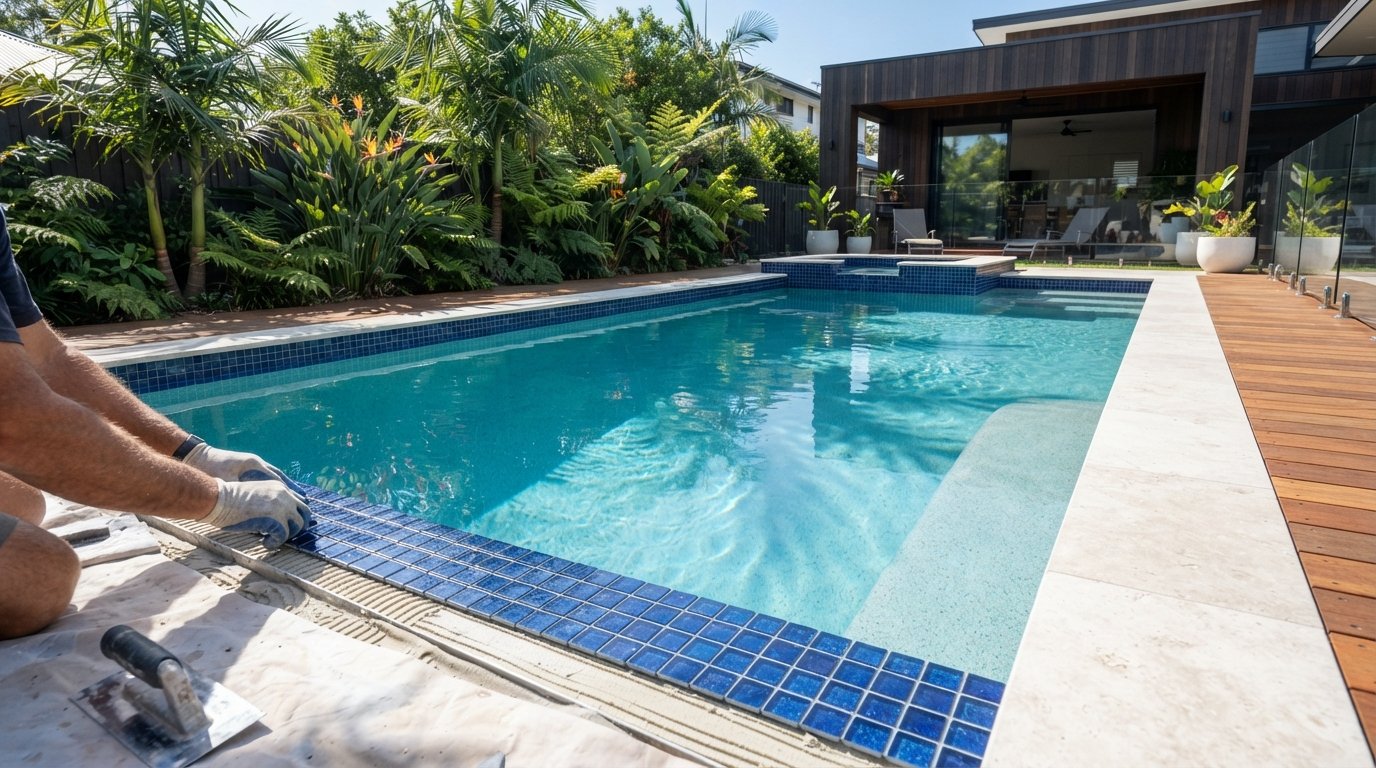
Achieving a flawless, inviting surface is where our decades of experience truly shine. A hand-trowelled finish is an artisan skill that cannot be replicated by machines or less experienced hands. We utilize modern, high-grade white cement binders that offer superior bonding strength and resistance to the chemical leaching mentioned in previous sections. This technical precision, combined with our signature “soft-touch” application, results in a pool that feels as luxurious as it looks. It is a process that demands patience, attention to detail, and a deep respect for the materials to create a surface that will stand the test of time.
Fixed-Price Peace of Mind
We believe that a renovation should be a frictionless transition for the homeowner, which is why we provide fixed-price quotes for even the most complex projects. This transparency ensures you understand the full scope of the investment without the stress of unexpected variations or hidden fees. For a broader look at the possibilities for your home, our Pool Renovations Brisbane Guide offers a complete overview of the journey. Following the application, we guide you through the initial water balancing and handover process, ensuring your new finish is protected from day one. If you are ready to begin your transformation, our team is here to provide a professional smooth crushed marble pool finish assessment tailored to your specific site.
Choosing a Specialist for Your SE Queensland Pool Renovation
Selecting a partner for your pool restoration is a decision that impacts your home’s value and your family’s lifestyle for decades. While we’ve discussed the technical nature of marblesheen pool problems, the success of your project ultimately rests on the hands that apply the finish. A local reputation built over generations isn’t just a marketing claim; it’s a testament to consistent quality and moral consistency in every trowel stroke. Since 1968, our team has focused on the fine details of pool resurfacing, ensuring that every project reflects our pride in craftsmanship and our commitment to honest, expert advice.
Serving Brisbane, Gold Coast, and Sunshine Coast
Our extensive history in South East Queensland has given us unique expertise in navigating the challenges of tight suburban blocks. Whether you have a heritage home in Brisbane or a contemporary property on the Gold Coast, we understand how to manage difficult site access without compromising the project’s timeline. As a family-owned business, we value the trust our community places in us. We invite you to explore our guide on Concrete Pools Brisbane to see how our construction and finishing standards set us apart in the industry. It’s this deep local knowledge that allows us to provide reliable solutions for even the most persistent marblesheen pool problems.
Your Next Steps to a Revitalised Pool
The first step toward a smooth, clean pool surface is a professional assessment of your current finish. We’ll examine the condition of your marble, check for structural concerns, and provide a clear path forward. When reviewing your options, always look for a fixed-price renovation contract. This ensures that the price you are quoted is the price you pay, providing peace of mind as we transition your pool from a source of frustration back into a backyard oasis. Our goal is to make this process as frictionless as possible, moving with a deliberate pace that suggests mastery and care. If you’re ready to restore the beauty and safety of your swimming environment, contact Rod Cameron Pools for a quote and let us help you create new memories in a pool built to last.
Restore the Heart of Your Backyard Oasis
Your pool should be a place of relaxation and shared memories, not a source of constant maintenance stress. By identifying marblesheen pool problems early and choosing a craft-led restoration over temporary paint patches, you are making a twenty-year investment in your home’s value. We understand the complexities of older SE Queensland pools, from the safety requirements of asbestos-era renovations to the technical precision needed for a smooth crushed marble finish. Our family-owned and operated team has been dedicated to this specialized craft since 1968, providing the honest advice and technical expertise your project deserves.
A revitalised pool surface does more than just look beautiful; it returns comfort and safety to your daily swim. If you’re ready to move past the rough surfaces and persistent algae, our seasoned experts are here to guide you through a managed and frictionless transition. Get a Fixed-Price Quote for Your Pool Resurfacing and take the first step toward a smoother, cleaner future for your Brisbane or Gold Coast pool. We look forward to helping you create a space where your family can thrive for many summers to come.
Frequently Asked Questions
Is it safe to swim in a pool with deteriorating marblesheen?
It is generally safe for your health if the water chemistry is balanced, but a deteriorating surface poses physical risks to swimmers. The most common marblesheen pool problems involve rough walls that cause skin abrasions and “sand” in the filter that can damage equipment. Additionally, the porous nature of an aging finish allows algae to hide from chemicals, making it harder to maintain a sanitary environment for your family.
How do I know if my marblesheen pool contains asbestos?
Professional laboratory testing is the only definitive way to confirm the presence of asbestos in your pool finish. Marblesheen applied before 1990 is likely to contain asbestos fibers used for structural reinforcement. In Brisbane, a single sample test typically costs between $60 and $180, while a full site inspection by a licensed professional generally ranges from $400 to $700. We recommend testing before any demolition begins. To better understand how licensed abatement teams manage hazardous substances safely, educational guides from industry specialists like TSIAC International provide helpful insights into regulatory compliance and remediation procedures.
Can I just plaster over the old marblesheen surface?
Plastering over an existing finish is not a recommended practice because the new layer will only be as strong as the one beneath it. If the old marble is already delaminating or porous, the new surface will eventually bubble and peel away. A professional restoration involves stripping the compromised material back to the concrete shell to create a reliable, long-term bond that lasts for decades.
How long does a pool resurfacing project typically take in Brisbane?
A standard residential pool resurfacing project in Brisbane or the Gold Coast usually takes between 7 and 14 days to complete. This timeline depends on the weather and the complexity of the site access. The process includes draining the pool, preparing the surface, applying the new finish, and allowing the materials to cure properly before the final handover and water balancing.
What is the difference between marblesheen and pebblecrete?
The primary difference lies in the texture and the materials used for the final finish. Marblesheen uses fine, crushed marble for a smooth, “soft-touch” feel, while pebblecrete consists of larger river stones or pebbles. While pebblecrete is a durable choice, smooth crushed marble often lasts 20 years or more and offers a more comfortable surface for families with young children.
Why are black spots appearing on my marble pool floor?
Black spots are typically a hardy form of algae that has anchored itself deep within the microscopic pits of the marble. As the cement binder erodes over time, the surface becomes more porous, providing a sanctuary for spores that chlorine cannot reach. These spots are a clear signal that the protective integrity of the finish has been compromised and that the material is nearing the end of its lifespan.
Can marblesheen be repaired without draining the pool?
While minor underwater patches are possible, they are only temporary fixes for significant marblesheen pool problems. To achieve a durable result, the pool must be drained to allow for a thorough structural assessment and the safe removal of degraded material. This ensures that the new finish bonds correctly to the concrete shell without the risk of future delamination or peeling.