
What if those small rust spots on your pool floor aren’t just stains, but the first signs of a structural emergency hiding beneath the surface? For many Brisbane families, the discovery of concrete cancer often leads to a deep-seated fear that their backyard oasis is slowly failing. It’s unsettling to think that the steel reinforcing your pool might be corroding, especially when your home’s foundations are at stake. You want to know if your pool is safe, if it can be saved, and how to fix it without the stress of unpredictable costs.
We understand that your pool is more than just a concrete shell; it’s a centerpiece for family gatherings and shared memories. In this 2026 guide, you’ll discover how to identify structural issues before they compromise your property. We’ll explain the professional repair process that restores stability and show you how to prevent future spalling. From understanding the impact of coastal salt air to the benefits of a smooth crushed marble finish, you’ll gain the clarity needed to make an informed decision for your home. We’ll outline a methodical path to restore your pool’s longevity with the precision, honesty, and care it deserves.
Key Takeaways
- Learn how to identify “tea staining” and hollow delamination before minor surface cracks evolve into significant structural failures.
- Understand why Brisbane’s unique humidity and coastal salt air make local pools particularly vulnerable to internal steel oxidation.
- Discover the methodical excavation and treatment process required to permanently halt concrete cancer and protect your home’s foundation.
- Explore why a smooth crushed marble finish is the gold standard for sealing repairs and ensuring the long-term durability of your pool.
- Gain peace of mind by learning how fixed-price restoration projects can remove the fear of unpredictable repair bills.
What is Concrete Cancer in Swimming Pools?
The Science of Spalling and Submerged Steel
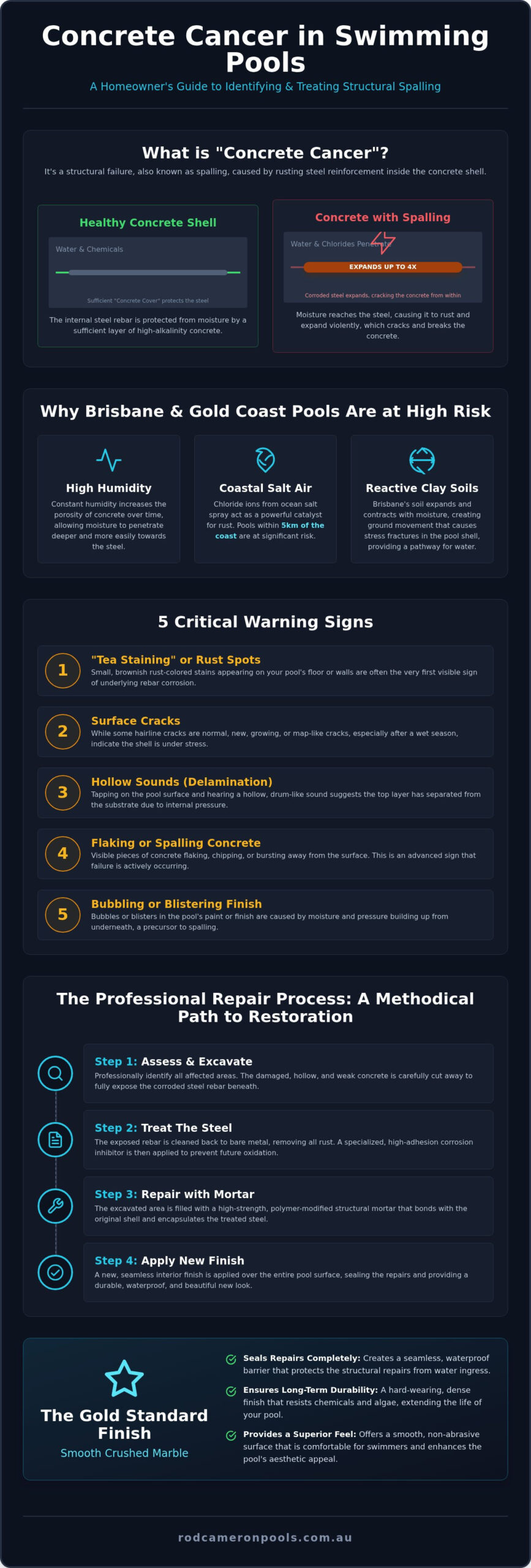
The long-term health of a pool shell depends on “concrete cover.” This is the distance between the steel rebar and the pool water. In many older Brisbane pools, this protective layer is often insufficient. Over decades, chloride ions from salt and chlorine systems migrate through the porous concrete. This can trigger an Alkali-silica reaction, which creates an expansive pressure that further weakens the structure. Carbonation is the gradual lowering of concrete alkalinity that allows rust to start on the internal steel. Once the concrete loses its high pH level, the moisture-rich environment of a swimming pool provides the perfect catalyst for rapid, uninhibited corrosion.
Why Pools Fail Faster than Buildings
A pool shell faces challenges that standard buildings don’t. It’s under constant hydrostatic pressure. The sheer weight of the water pushes moisture deep into even the smallest fissures. Once the rust takes hold, it creates a “wicking” effect. This is where the corrosion travels along the entire length of a rebar line, turning a single rust spot into an extensive structural nightmare. We often see this in pools where the rebar was placed too shallow during construction. It was a common issue in many older projects. Since 1968, we’ve seen how these construction shortcuts eventually lead to early-onset failure. Repairing these structures requires a methodical approach that respects the original craftsmanship while introducing modern durability.
Why Brisbane and Gold Coast Pools are Prone to Spalling
South East Queensland offers an enviable outdoor lifestyle, but the very elements we love, the warmth, the humidity, and the proximity to the ocean, create a perfect storm for pool degradation. Brisbane and the Gold Coast experience high humidity levels that increase the porosity of concrete over time. When concrete is porous, it allows moisture and oxygen to migrate toward the internal steel reinforcement more easily. Many of the pools we see today were built during the massive “pool boom” of the 1970s through to the 1990s. These structures are now reaching a critical age where the original protective alkaline barrier of the concrete has naturally depleted, leaving the steel vulnerable to concrete cancer.
Coastal Corrosion in South East Queensland
If you live near the water, your pool faces an even greater challenge. Salt spray from the Pacific Ocean carries chloride ions that act as a powerful catalyst for the electrochemical reaction of rust. In the Gold Coast and Sunshine Coast regions, this salt air can accelerate the corrosion process significantly compared to inland suburbs. For properties within 5km of the coast, standard construction often isn’t enough. These pools require deeper concrete cover over the rebar to provide an adequate buffer against the saline environment. Canal-front properties in areas like Broadbeach or Hope Island are at the highest risk, as they’re constantly enveloped in a salt-rich mist that penetrates the concrete shell around the clock.
The Impact of Ground Movement and Soil
Brisbane’s geography presents its own set of hurdles, particularly the presence of highly reactive clay soils. This soil expands when wet and contracts when dry, causing the ground to shift beneath your pool. This constant movement places immense structural stress on older concrete shells, often resulting in small fractures. While these cracks might seem minor, they act as direct highways for water to reach the steel. Once moisture finds the rebar, the cycle of concrete cancer begins. Heavy rain cycles or minor earth tremors in Queensland can trigger the final “bursting” of the concrete, turning a dormant issue into a visible spalling problem. If you’ve noticed new cracks appearing after a wet season, it’s often a sign that the shell is under duress. Our team at Rod Cameron Pools has spent over five decades studying these local soil patterns to ensure our repairs are built to withstand Brisbane’s unique geological temperament. We focus on stabilizing the structure first, ensuring that your investment remains a source of joy rather than a source of anxiety.
5 Critical Warning Signs of Pool Concrete Cancer
Recognising the early symptoms of structural decay can be the difference between a straightforward repair and a complete shell failure. While some issues are merely aesthetic, others point to the internal oxidation of steel reinforcement. Identifying these signs early allows for a methodical restoration that preserves the integrity of your investment. Since 1968, we’ve helped Brisbane homeowners navigate these technical challenges with honesty and precision. Here are the five most common indicators that your pool may be suffering from concrete cancer.
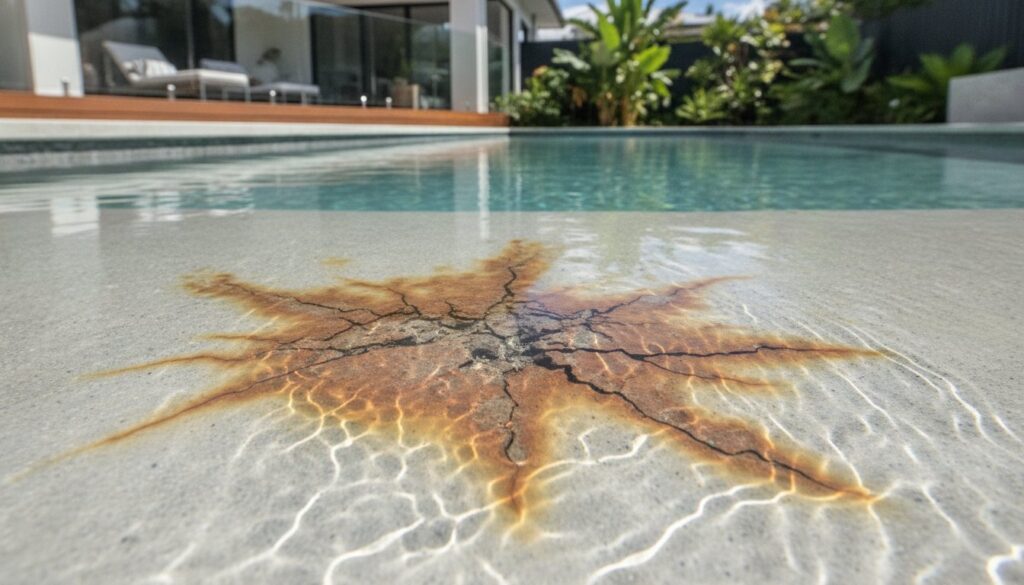
- Rust-Coloured Tea Staining: These are brown or orange spots that seem to “weep” from the pool floor or walls, often appearing in clusters.
- Delamination: This occurs when the surface finish separates from the concrete shell, creating a hollow sound when tapped.
- Lifting or Popping Tiles: Tiles along the waterline or coping that suddenly dislodge often indicate internal pressure from expanding steel.
- Heaving Cracks: Unlike fine settlement lines, these are large, jagged fissures that appear to be pushing outward or “heaving” from the shell.
- Unexplained Water Loss: A sudden drop in water levels can suggest that a structural crack has finally breached the entire thickness of the concrete.
Identifying Rust Stains and Telltale Spots
Distinguishing between a harmless surface stain and a structural emergency is crucial. A dropped hair tie or a rogue screw might leave a small, isolated rust mark that can be scrubbed away. However, concrete cancer typically manifests as “tea staining” that originates from within the plaster itself. These spots often appear near the steps or in the deep end where the concrete cover might be thinner. If you see rust that seems to bleed out from a tiny pinhole in the finish, it’s likely that the internal reinforcement is already beginning to expand. This “weeping” effect is a clear signal that moisture has reached the steel and the oxidation process is well underway.
Physical Deformation and Surface Failure
The “drummy” test is one of the most reliable ways for a homeowner to check for hidden damage. By gently tapping the pool surface with a blunt object, you can listen for a hollow, drum-like sound. This sound indicates an air pocket where the render has detached from the concrete shell due to internal pressure. When the concrete eventually flakes off entirely, a process known as spalling, the structural steel is left exposed to the water. For a more detailed look at identifying general wear versus structural failure, you can explore our guide on the 7 signs your Brisbane pool needs resurfacing. Catching these issues at the delamination stage, before the concrete actually bursts, ensures a cleaner and more cost-effective repair process.
The Professional Repair Process: How We Save Your Pool
Treating concrete cancer is a surgical process that requires patience and technical precision. It isn’t enough to simply cover the damage; we must eliminate the source of the oxidation to ensure the structural integrity of your pool for years to come. Since 1968, we’ve refined a methodical five-step approach that prioritises durability and craftsmanship. This structured journey moves from careful investigation to a solid, finished result that protects your family’s backyard oasis.
- Step 1: Excavation and Exposure. We begin by carefully removing the surface finish and excavating the concrete around the visible rust spots to expose the underlying rebar.
- Step 2: Steel Treatment. Every trace of oxidation is removed from the steel reinforcement using specialised tools, followed by the application of high-grade anti-corrosive primers.
- Step 3: Concrete Breakout. We continue to remove “cancerous” concrete along the rebar line until we reach a section of steel that is completely clean and unaffected by corrosion.
- Step 4: Structural Patching. The void is filled with high-strength, non-shrink structural mortars that are engineered to bond permanently with the original shell without creating new stress points.
- Step 5: Waterproofing and Resurfacing. Finally, we apply a professional-grade waterproof membrane and resurface the pool to seal the entire structure against future moisture ingress.
Why DIY Patching Always Fails
Managing groundwater pressure is a critical safety component when dealing with a submerged structure. Emptying a pool with concrete cancer requires expert supervision, as external water pressure can cause an empty shell to “pop” or lift out of the ground if the hydrostatic valve fails. We take great care in monitoring these pressures, especially when managing pool repairs on difficult access sites or in Brisbane’s reactive clay soils. This methodical pace builds confidence that your project is being handled with the necessary technical mastery. If you’re concerned about the stability of your pool shell, request a fixed-price structural assessment from our seasoned professionals.
Restoring Longevity with Smooth Marble Finishes
Once the source of the concrete cancer has been neutralised, the final stage of your pool’s recovery involves applying a protective skin that is as resilient as it is beautiful. Remarbling stands as the gold standard for sealing a repaired concrete pool shell. It’s more than just a cosmetic upgrade; it’s a structural necessity that provides a final, dense barrier against the elements. This transformation turns what was once a “cancerous” eyesore back into a luxury backyard oasis where your family can create new memories with confidence. Our 50-year history in Brisbane ensures that your repair isn’t just a temporary patch but a restoration built to last another generation.
The Durability of Crushed Marble
Protecting your pool from a recurrence of concrete cancer requires a finish that resists chemical penetration and water ingress. Unlike pool paint that flakes under UV stress or thin liners that can tear, a smooth crushed marble pool finish provides a dense, mineral-based shield. This material has remained the expert choice since 1968 because of its unique ability to bond with the concrete shell while remaining gentle on swimmers’ feet. The low porosity of marble ensures that salt, chlorine, and moisture stay where they belong: in the pool, not in the concrete. This final waterproof layer is the most critical defence for your structural repairs, acting as a permanent seal that preserves the health of the internal steel reinforcement.
Fixed-Price Peace of Mind for Brisbane Families
We know that structural renovations can feel intimidating, especially when you’re worried about hidden costs or escalating repair bills. That’s why we provide fixed-price quotes for our restoration projects. This approach removes the “unknown cost” fear that often prevents homeowners from addressing early signs of spalling. Choosing a family-owned, local expert means you’re partnering with a team that has a legacy to protect in the Brisbane community. We aren’t a faceless corporation; we’re a group of real people who value honesty and hard work. You can trust that the process will be managed carefully from the initial vision through to the final, solid result. If you’ve noticed rust spots or hollow sounds in your pool, don’t wait for the damage to spread. Take the first step toward a permanent solution and Contact Rod Cameron Pools for a fixed-price structural assessment.
Protecting Your Backyard Legacy
Your pool represents a significant investment in your family’s lifestyle and your property’s long-term value. Recognising that concrete cancer is a manageable structural challenge rather than a terminal failure is the first step toward a successful restoration. By identifying warning signs like tea staining or hollow delamination early, you can transition from uncertainty to a methodical plan that prioritises stability. Our structured repair process ensures every trace of oxidation is removed before we seal the shell with a timeless, smooth crushed marble finish.
Since 1968, our family-owned and operated team has served as a trusted partner for Brisbane homeowners, and we’ve refined our process to handle even the most complex sites. We specialise in heavy-duty restorations and take genuine pride in the craftsmanship that allows your pool to last another generation. You deserve the peace of mind that comes with a fixed-price approach and seasoned expertise that’s been developed over five decades.
Book a Fixed-Price Pool Renovation Consultation with Rod Cameron Pools today to secure your pool’s future. We look forward to helping you restore the beauty and integrity of your backyard oasis.
Frequently Asked Questions
Is concrete cancer in a pool dangerous?
Yes, it poses both structural and safety risks to your property. If left untreated, the expanding steel can cause the pool shell to leak, potentially undermining the foundations of your home or surrounding structures. From a swimmer’s perspective, spalling concrete creates sharp, jagged edges that can cause injury. Addressing concrete cancer early prevents these hazards from escalating into a more complex and hazardous backyard emergency.
Can I just paint over the rust stains in my pool?
Painting over rust stains is a temporary cosmetic fix that often leads to more expensive repairs later. While it might hide the staining for a few months, the internal oxidation of the steel continues to expand. This pressure will inevitably cause the new paint to bubble and burst as the rust grows. Professional treatment requires removing the affected concrete and neutralising the steel to stop the cycle of decay at its source.
How much does it cost to fix concrete cancer in a Brisbane pool?
Repair costs vary significantly based on the depth of the corrosion and the accessibility of your pool site. Industry reports for South East Queensland suggest that structural repairs are a significant investment, often calculated by the square metre or the number of affected rebar points. We provide fixed-price quotes for our restoration projects to ensure you have complete financial clarity before any work begins, protecting you from the stress of hidden unknown costs.
Does concrete cancer mean I need a new pool?
How long do concrete cancer repairs usually take?
A typical structural repair and resurfacing project usually takes between two to four weeks to complete. This timeline allows for the careful excavation of damaged areas, the curing time required for structural mortars, and the application of a new finish. While we move with a steady, methodical pulse to ensure precision, the exact duration depends on the extent of the damage and the weather conditions during the renovation process.
Will my home insurance cover pool concrete cancer?
Most standard home and contents insurance policies in Australia do not cover concrete cancer. Insurers generally view spalling as a maintenance issue or the result of long-term wear and tear rather than a sudden, accidental event. It’s always wise to review your specific Product Disclosure Statement or consult an advisory firm like Putney Insurance Group to understand your property coverage, but you should expect to fund structural repairs as part of your home’s ongoing maintenance and preservation strategy.
Can I still swim in a pool that has signs of spalling?
We don’t recommend swimming in a pool that shows active signs of concrete failure. Beyond the risk of cuts from flaking render, the presence of rust indicates that the pool’s waterproofing has been breached. Swimming in a damaged shell can introduce more salt and chemicals into the cracks, accelerating the corrosion of the internal steel. It’s better to keep the pool closed until a professional assessment confirms the structure is safe.
How can I prevent concrete cancer from returning after a repair?
Prevention relies on creating a permanent moisture barrier between your pool water and the internal steel. We recommend a high-quality smooth crushed marble pool finish, which provides superior density and protection compared to thinner coatings. Ensuring your pool’s water chemistry remains balanced also helps maintain the alkalinity of the concrete. Since 1968, we’ve found that combining expert structural repairs with a durable marble surface is the most reliable way to protect your investment.