
What if the scratchy, uncomfortable surface of your pool isn’t just a sign of age, but a fundamental failure of the material’s chemical bond? For many Brisbane families, the dream of a backyard oasis has been replaced by the reality of scraped toes and pebbles constantly clogging the filter. You’ve likely noticed that no matter how much you scrub, those persistent black spots simply won’t budge. These common pebblecrete pool problems are often more than skin deep, as the cement matrix holding the stones together begins to break down after its typical fifteen to twenty year lifespan.
We understand that your pool is the heart of your home’s lifestyle, and you deserve a surface that’s as inviting as it is durable. This 2026 guide will help you identify the root causes of surface failure and discover the most reliable, long-term solutions for a total transformation. We’ll walk you through the decision between minor repairs and a full resurface, while introducing you to the lasting elegance of a smooth crushed marble finish. By the end of this article, you’ll have a clear roadmap to a crystal clear, maintenance-free pool that feels as good as it looks.
Key Takeaways
- Identify the early warning signs of surface deterioration, including the “toe-grader” texture and persistent algae growth that signals a breakdown in the cement matrix.
- Understand how chemical imbalances in the water can leach minerals from your pool’s interior, leading to the gradual loss of pebbles and surface integrity.
- Learn how to apply the “10% Rule” to determine if your pebblecrete pool problems are best solved with a targeted repair or a complete, high-quality resurfacing.
- Follow a step-by-step DIY inspection guide designed for Brisbane homeowners to evaluate the condition of their pool’s waterline tiles and substrate.
- Discover the long-term benefits of a smooth crushed marble finish, which provides a silk-like feel and a modern aesthetic that traditional pebble finishes cannot match.
Identifying the 5 Most Common Pebblecrete Pool Problems
Pebblecrete has been a staple in Brisbane backyards for decades, prized for its natural look and initial durability. However, time and the harsh Queensland sun eventually take their toll on the cement binder. Understanding these pebblecrete pool problems is the first step toward restoring your outdoor sanctuary to its former glory. Over our decades of experience since 1968, we’ve identified five primary issues that signal a surface is reaching the end of its functional life.
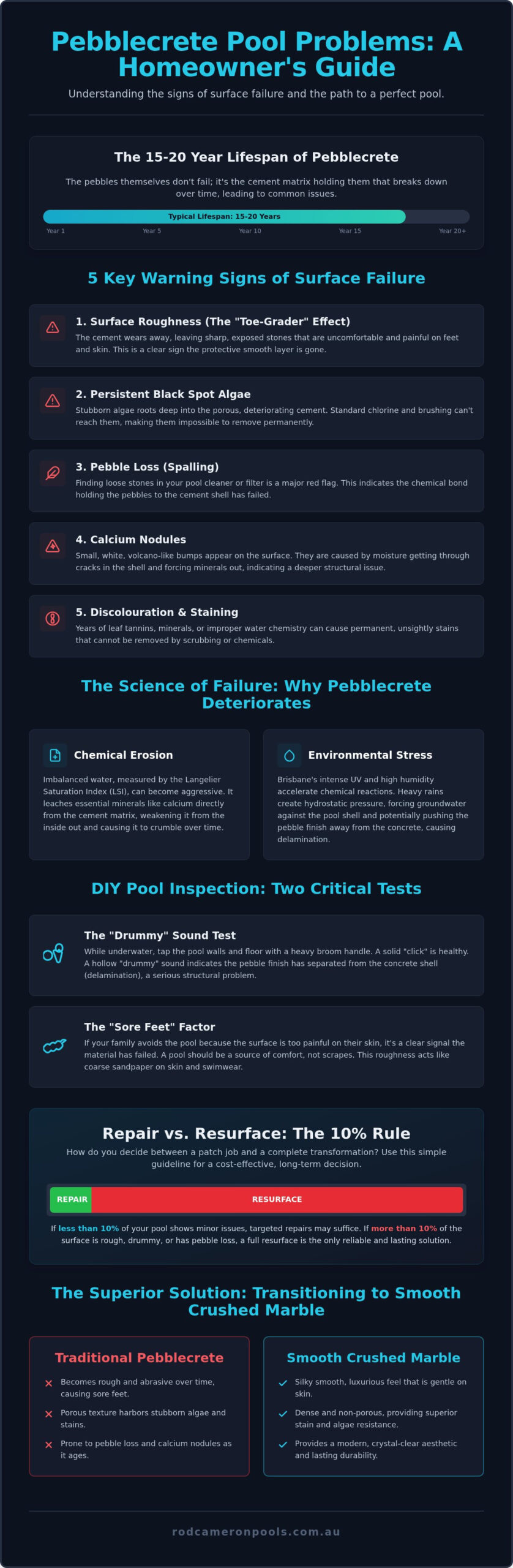
- Surface Roughness: Often called the “Toe-Grader” effect, this occurs when the cement matrix wears away and leaves sharp, exposed stones.
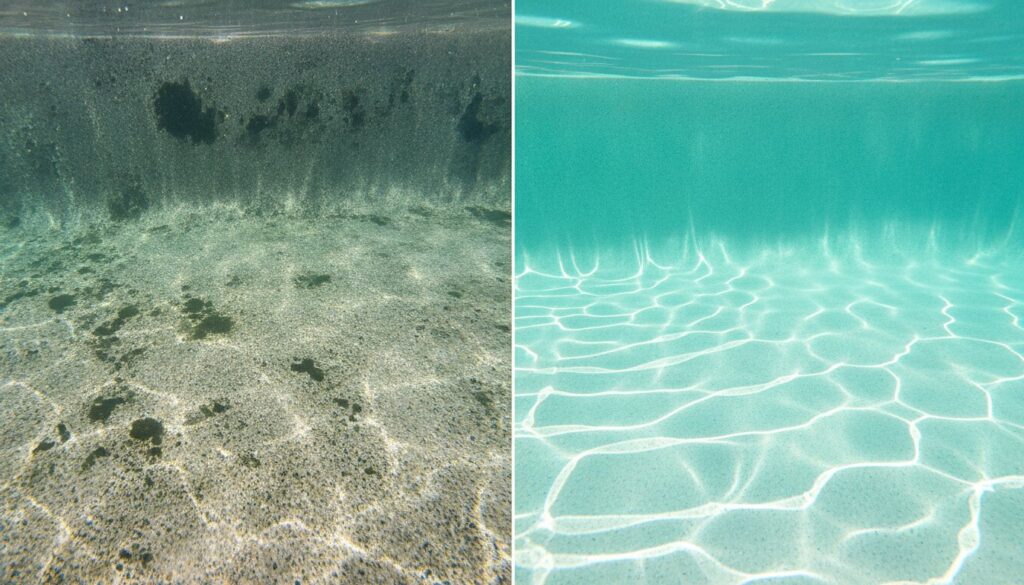
- Persistent Black Spot Algae: These stubborn organisms root themselves deep within the microscopic crevices of the finish, where standard chlorine levels and brushing cannot reach them.
- Pebble Loss (Spalling): If you find small stones accumulating in your pool cleaner or filter box, the bond between the pebbles and the cement has likely failed.
- Calcium Nodules: These small, white, volcano-like bumps are caused by moisture migrating through cracks in the shell, creating internal pressure that forces minerals to the surface.
- Discolouration and Staining: Years of leaf tannins, heavy mineral content, or improper chemical balancing can leave permanent, unsightly marks that no amount of scrubbing will fix.
While internal stains often require professional resurfacing, maintaining the hygiene of your pool surrounds and outdoor hardscapes is a vital preventative measure; for those looking for high-quality maintenance resources, you can visit Platinum Power Washing to discover how professional exterior cleaning protects your property’s long-term value.
The texture of a deteriorating pool often mimics the historical application of Roughcast and pebbledash, where exposed aggregate is used for a rugged aesthetic. While that look works for external walls, it creates a hostile environment for swimmers. When the smooth cement that once cushioned these stones disappears, the pool becomes a liability for both comfort and hygiene.
The “Drummy” Sound: Testing for Adhesion Failure
One of the most reliable ways to check for serious pebblecrete pool problems is the sound test. Take a heavy broom handle and gently tap across the floor and walls of your pool while underwater. A healthy surface will produce a sharp, solid click. If you hear a hollow, “drummy” sound, it indicates that the pebble finish has delaminated from the concrete shell. These air pockets can eventually lead to large-scale cracking or chunks of the surface breaking away entirely.
Roughness and the “Sore Feet” Factor
We often speak with families who have stopped using their pools because the surface has become too painful for children’s sensitive skin. This roughness is a direct result of the cement matrix eroding over time, often accelerated by aggressive acid washes or poor water chemistry. Once the stones are fully exposed, they act like coarse sandpaper on skin and swimwear. It’s a clear sign that the material is no longer providing the lifestyle benefits you deserve.
The Science of Failure: Why Pebblecrete Deteriorates
To understand why a pool surface begins to fail, we must look past the stones and examine the “glue” that holds them together. This binder, known as the cement matrix, is the foundation of any pebble finish. While the pebbles themselves are incredibly hardy, the cement surrounding them is a porous, reactive material. Over time, environmental factors and chemical reactions work in tandem to dissolve this bond, leading to the common pebblecrete pool problems we see across South East Queensland. It is a slow, invisible process that eventually manifests as physical damage you can feel underfoot.
Our local climate plays a significant role in this degradation. Brisbane’s intense UV levels and high humidity create a volatile environment for water chemistry. High temperatures accelerate chemical reactions, meaning that a small imbalance in your water can cause damage much faster here than in cooler climates. Additionally, hydrostatic pressure from our heavy summer rains can force groundwater against the back of the pool shell. This pressure often pushes the finish away from the concrete, leading to the “drummy” spots and delamination discussed earlier. While many believe the surface is simply wearing out, it is often being attacked from both the front and the back.
Chemical Erosion and the Langelier Saturation Index (LSI)
The Langelier Saturation Index is essentially a measure of your water’s “appetite” for minerals. When pool owners struggle with imbalanced water chemistry, the water becomes “hungry” for calcium. To satisfy this hunger, the water leaches minerals directly out of the cement matrix of your pool. This process thins the binder until it can no longer hold the weight of the pebbles. Aggressive water is the #1 killer of pebble surfaces. Understanding these technical shifts is a core part of our pool restoration philosophy, ensuring your next surface is built to withstand these unique environmental pressures.
Algae Infiltration in Older Surfaces
As the cement matrix erodes, it leaves behind microscopic pits and jagged valleys between the stones. These tiny gaps become “fortresses” for black spot algae. Once the algae roots itself deep within these crevices, standard algaecides and chlorine treatments often fail to reach the base of the organism. This is why older pools seem to require significantly higher chemical doses just to stay clear; you aren’t just treating the water, you’re fighting a battle inside the porous surface itself. Eventually, the chemical levels required to kill the algae end up causing even more damage to the already weakened pebblecrete.
Repair vs. Resurface: When is it Time for a Complete Transformation?
Deciding whether to patch a small area or commit to a full restoration is a crossroad every pool owner eventually faces. It’s tempting to look for a quick fix, especially when only a few small sections seem to be failing. However, we’ve found that localized repairs often act as a temporary band-aid rather than a lasting cure. Because the surrounding cement matrix is the same age as the failed spot, it’s only a matter of time before the next section gives way. We typically advise the “10% Rule”: if more than 10% of the surface area is affected by the pebblecrete pool problems we’ve discussed, such as spalling or delamination, patching is no longer a sound investment.
A patch might buy you two or three years of time, but a professionally executed resurface offers a lifespan of fifteen to twenty years. Beyond the longevity, there is the matter of structural integrity. If you notice rust-coloured stains or deep, radiating cracks, you may be dealing with concrete cancer. This occurs when the steel reinforcement inside the concrete shell begins to rust and expand, requiring specialized attention that a simple surface patch cannot provide. Since we started in 1968, we’ve seen how these small signs can grow into major structural concerns if they aren’t handled with care and expertise.
Many homeowners ask about pool paint as a budget-friendly alternative for aged surfaces. While it might look fresh for a single season, paint often fails to bond properly with the porous, uneven texture of old pebblecrete. It can also trap moisture behind the coating, which actually accelerates the delamination of the original finish. It’s a short-term mask that rarely addresses the root cause of surface failure, often leading to more expensive repairs down the road.
The Pitfalls of Patching
One of the biggest frustrations with repairs is the visual result. Matching the colour of old, UV-faded pebblecrete is nearly impossible. Even if we use the exact same stone mix, the new cement will be a different shade than the weathered original, leading to a distracting “checkerboard” appearance across your pool floor. Additionally, the process of chipping out old material to create a patch can create new stress points in the brittle surrounding finish, often triggering new cracks just months later. We focus on full transformations because they provide the moral consistency and high-quality finish our clients expect for their homes.
Resurfacing for Long-Term Value
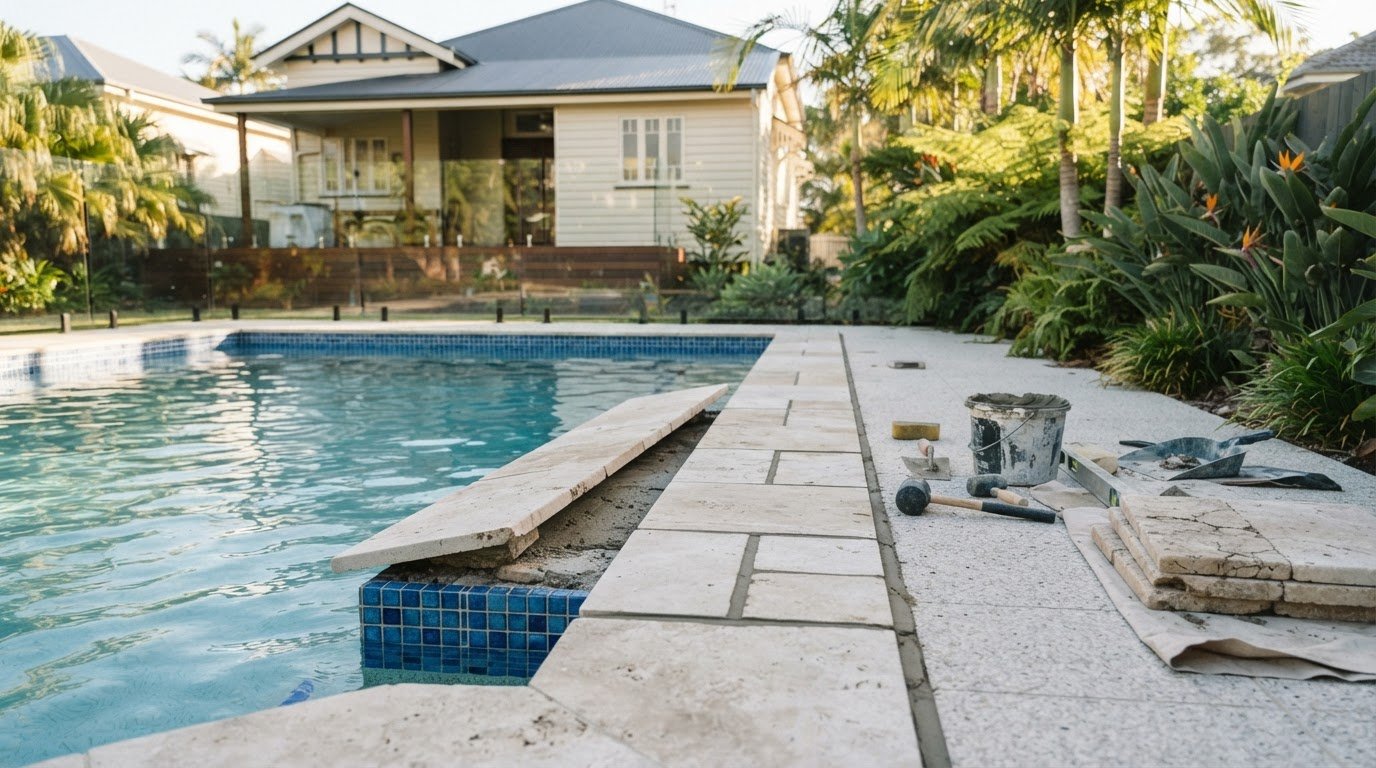
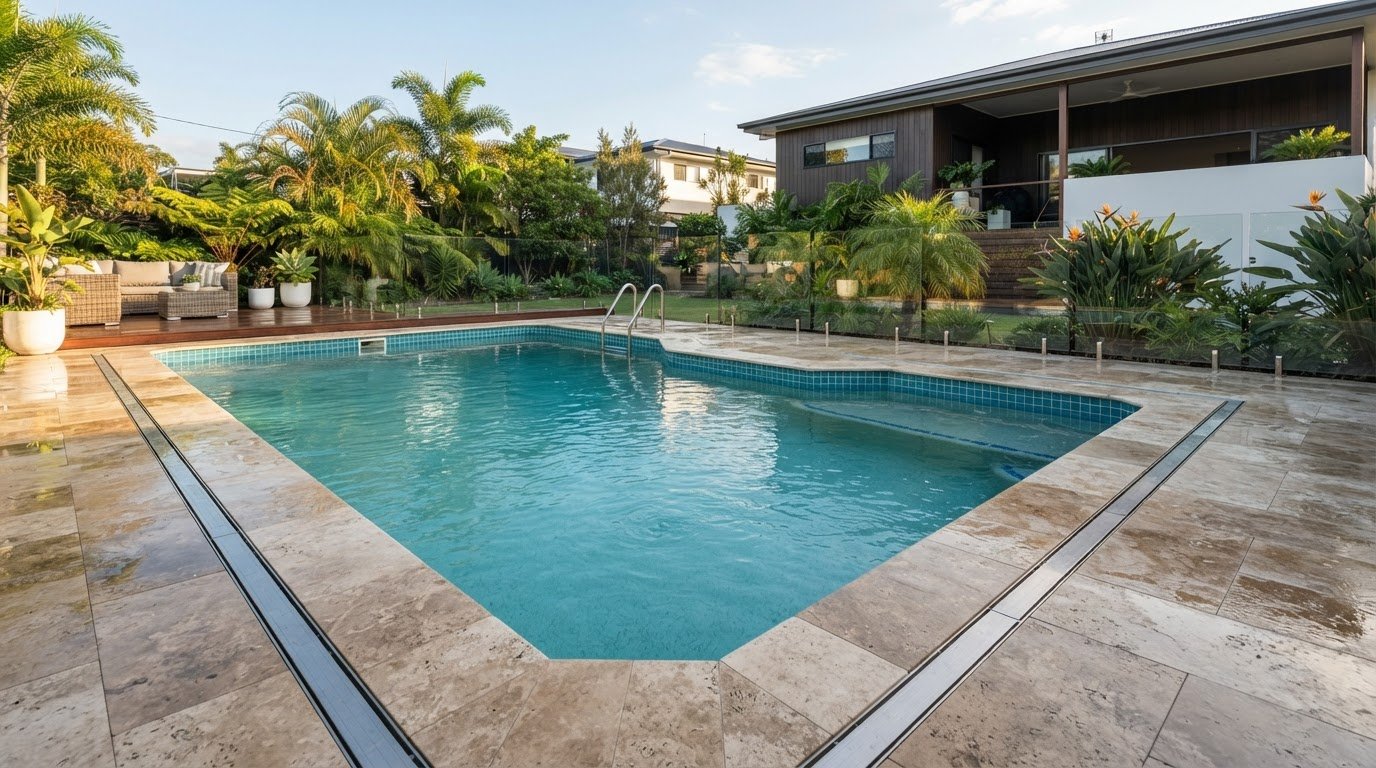
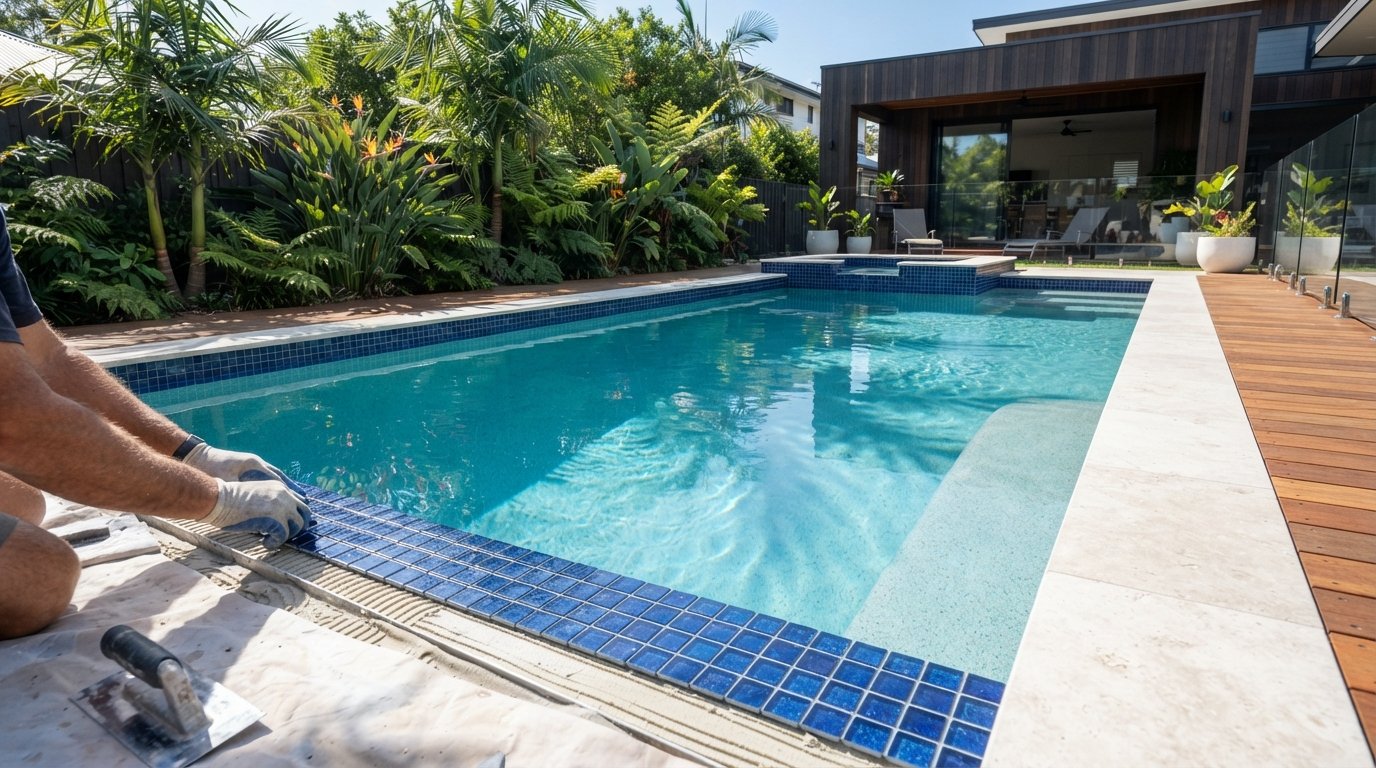
A full resurface allows us to strip away the entire failing matrix, ensuring the new finish bonds perfectly to a clean concrete shell. This is also the ideal moment to consider updating your waterline tiles or coping stones to match a more modern aesthetic. By choosing a comprehensive approach, you eliminate the cycle of constant repairs and the anxiety of rising maintenance costs. We provide a Fixed-Price quote model to ensure you have total clarity before the project begins. For those looking to breathe new life into their entire outdoor area, our guide to pool renovations brisbane provides a deeper look into the possibilities of a total backyard transformation.
Assessing Your Brisbane Pool Condition for 2026
Taking a proactive approach to your pool’s health can save you from costly structural repairs down the track. While the interior surface often grabs your attention, the perimeter of your pool tells a deeper story about its structural health. We recommend conducting a thorough DIY inspection at least once a year, particularly after the heavy SE QLD summer storm season. Regularly checking for these pebblecrete pool problems ensures that minor surface wear doesn’t evolve into a major structural failure that compromises your backyard sanctuary.
Begin your assessment at the waterline. Look closely for tiles that have shifted, cracked, or sounds hollow when tapped with a fingernail. Movement in the waterline tiles often suggests that the substrate behind them is expanding or that the bond beam is under stress. Similarly, evaluate the coping stones that form the edge of your pool. If you notice gaps in the grout or stones that feel loose underfoot, moisture may be seeping into the shell. This moisture is a primary catalyst for concrete cancer, where the steel reinforcement inside the concrete oxidizes and expands, eventually causing the pebble finish to “blow out” from the inside.
The Visual Inspection Checklist
As you walk around the pool, keep a keen eye out for these specific markers of deterioration:
- Rust Spots: Small, concentrated brown or orange stains that seem to emerge from beneath the pebble finish. These are often the first visible signs of corroding internal steel.
- Crazing: Fine, spider-web-like cracking patterns across the surface. While initially cosmetic, these “cobwebs” allow water to bypass the cement matrix.
- Calcium Weeping: White, crusty deposits that look like stalactites growing from the walls. This “efflorescence” indicates that water is moving through the concrete and leaching minerals as it goes.
When to Call a Professional
Distinguishing between a simple surface stain and a structural leak requires a seasoned eye. If you find yourself topping up the water level more than usual or noticing rust spots that return after cleaning, it is time for an expert assessment. This is especially vital for pools built before the 1990s, as the construction standards and materials used decades ago may be reaching their natural limit. Our team brings a legacy of over 50 years in assessing Brisbane pools, providing the technical precision needed to identify hidden issues before they escalate. If you are concerned about the integrity of your surface, we invite you to book a professional pool restoration consultation to receive a clear, fixed-price evaluation of your pool’s condition.
The Superior Solution: Transitioning to Smooth Crushed Marble
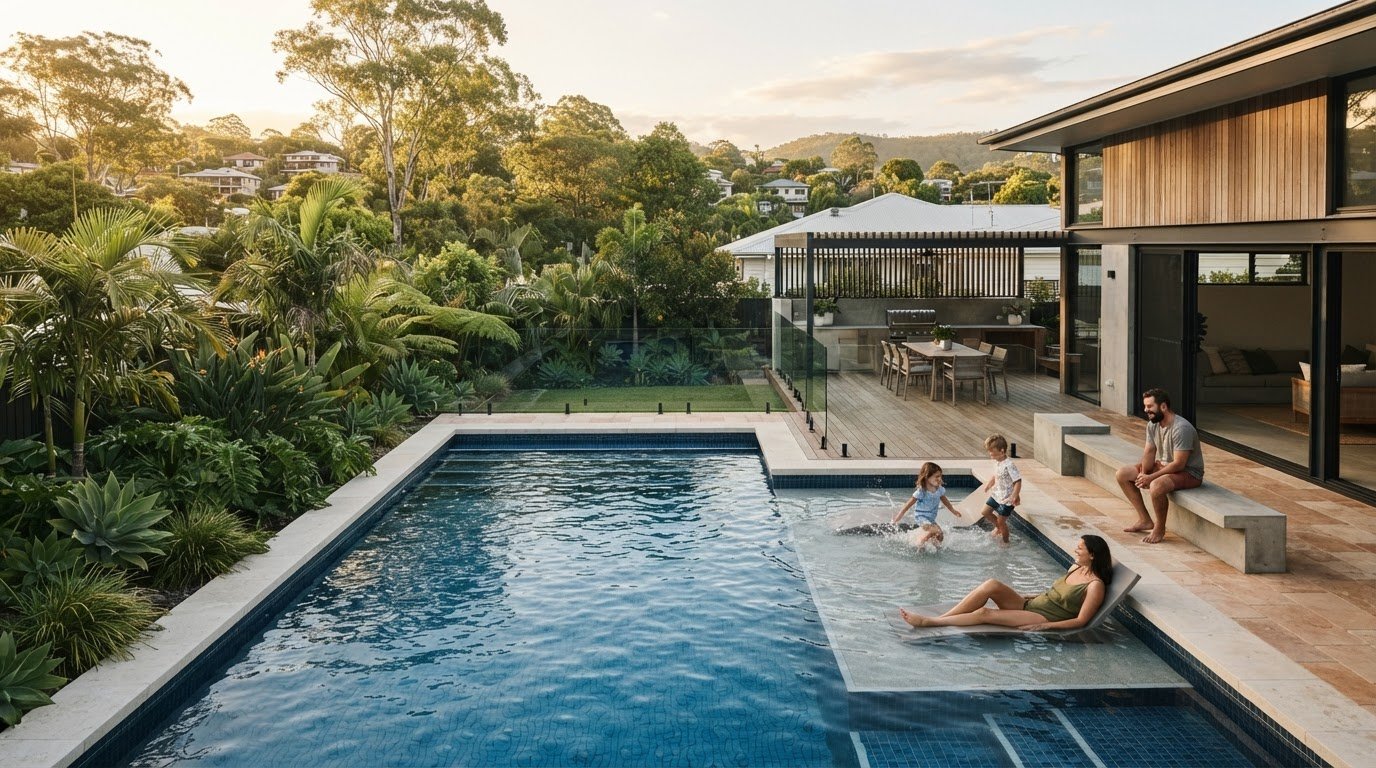
Transitioning from an aged, abrasive surface to a smooth crushed marble pool finish is more than just a repair; it’s a lifestyle transformation. While traditional pebble finishes have served Brisbane backyards for decades, the evolution of pool technology has introduced materials that prioritize both durability and swimmer comfort. By choosing a denser, more refined interior, you effectively eliminate the recurring pebblecrete pool problems that turn routine maintenance into a chore. This premium finish offers a sophisticated, timeless aesthetic that enhances the value of both residential and commercial properties alike.
The experience of a marble finish is often described as “silk-like” underfoot. It provides a gentle, non-slip texture that protects children’s sensitive skin and prevents the snagged swimwear common with older, sharp surfaces. Beyond the comfort, the aesthetic appeal is undeniable. A smooth marble interior reflects light with a soft, consistent glow, creating a high-end look that remains stylish for decades. It’s a grounded, sincere investment in the longevity of your home and the quality of the memories you’ll create there.
Why Smooth Marble Outlasts Modern Pebble
The longevity of our smooth marble finish stems from its superior bonding properties and the use of modern cement additives. Unlike traditional pebble finishes that rely on larger stones held in a vulnerable cement matrix, crushed marble creates a flatter, more cohesive surface. This structural density leaves significantly less room for algae to take root, making your pool much easier to clean and more efficient with chemical use. For a detailed breakdown of how these materials perform in our local climate, see our pebblecrete swimming pools comparison guide.
Your Frictionless Renovation Process
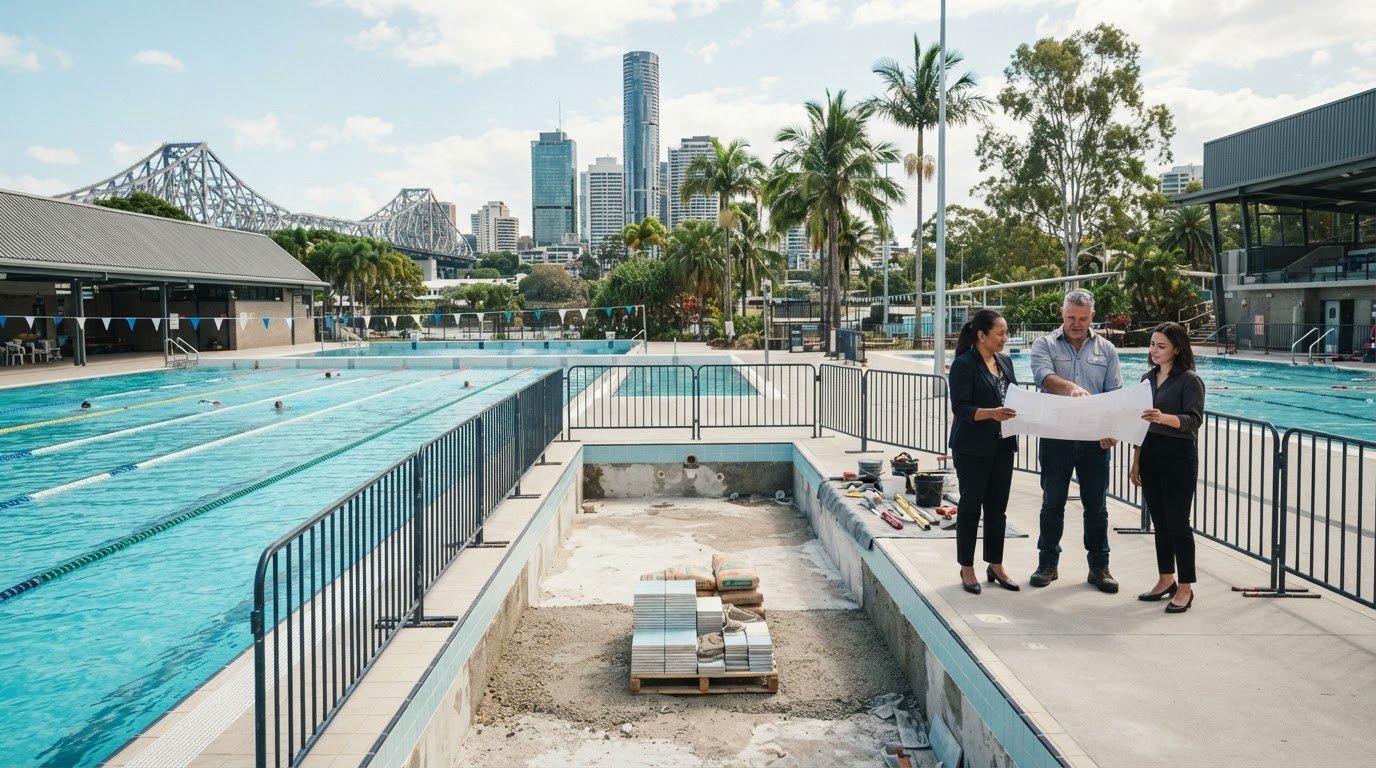
We believe that a high-value luxury purchase should be accompanied by a steady, reliable process. Our team specializes in difficult renovations where access is limited, ensuring that even the most challenging Brisbane sites are handled with patience and care. From the initial vision through to the final, solid result, we manage every stage to ensure the transition is easy for you. This methodical approach builds confidence, as it’s backed by a legacy of craftsmanship that began in 1968. To provide complete peace of mind and reduce financial anxiety, we offer a Fixed-Price quote model that eliminates surprises. If you’re ready to leave the discomfort of an old surface behind, we invite you to Get a fixed-price pool resurfacing quote and begin your journey toward a smoother, more beautiful outdoor life.
Restoring Your Backyard Oasis for the Long Term
Your pool should be a source of relaxation rather than a recurring list of maintenance chores. By identifying the root causes of pebblecrete pool problems, from chemical erosion to the persistent growth of black spot algae, you can finally make an informed decision about your home’s future. We’ve seen how the right choice today, such as transitioning to a smooth crushed marble finish, prevents the cycle of temporary patches and provides a surface that’s as kind to your skin as it is to your schedule.
Just as a quality pool surface is essential for your backyard, professional care for your home’s walls ensures lasting aesthetic appeal; you can discover Eleven Coats Painting to see how expert exterior painting complements a well-maintained property.
As a family-owned and operated team since 1968, we take immense pride in helping Brisbane families rediscover the joy of their outdoor living spaces. We’ve spent over 50 years mastering the art of pool restoration across South East Queensland, specializing in smooth, durable marble finishes that stand the test of time. Our methodical process and fixed-price model are designed to provide you with absolute clarity and peace of mind throughout your renovation. When you’re ready to transform your rough surface into a silk-like sanctuary, Request your fixed-price pool restoration quote from Brisbane’s experts. We look forward to helping you create a beautiful, lasting legacy for your home.
Frequently Asked Questions
Can I just paint over my old pebblecrete pool?
While you can apply pool paint, it is rarely a long-term solution because the porous nature of aged pebblecrete often leads to peeling and bubbling within a season or two. Paint acts as a mask that traps moisture against the old cement matrix, which can actually accelerate the delamination of the original finish. We recommend a full resurface to ensure a permanent bond and a professional result that reflects the quality your home deserves.
Why is my pebblecrete pool surface so rough and sharp?
Roughness occurs when the cement matrix that once cushioned the stones has eroded, leaving the sharp edges of the aggregate fully exposed. This erosion is typically caused by years of chemical wear, intense UV exposure, or aggressive acid washes. When the binder thins, the pool floor begins to feel like coarse sandpaper, which is a clear sign that the material has reached the end of its functional life and requires attention.
What causes black spots in a pebblecrete pool?
Black spots are usually a hardy type of algae that roots itself deep within the microscopic pits and crevices of an aged surface. Because these organisms are protected by the texture of the stone, standard chlorine levels and manual brushing often fail to reach their base. This persistent growth is one of the most frustrating pebblecrete pool problems for homeowners in South East Queensland’s humid climate, often requiring a total resurface to eliminate the roots permanently.
How much does it cost to resurface a pebblecrete pool in Brisbane?
The total investment for resurfacing depends on several factors, including the pool’s size, the choice of material, and the condition of the underlying concrete shell. While industry averages provide a general range, we focus on providing a fixed-price quote after a thorough site inspection. This model ensures you have complete clarity on the project scope without the worry of hidden costs or unexpected variations during the renovation process.
How long should a pebblecrete pool finish last?
A well-maintained pebble finish typically has a lifespan of fifteen to twenty years before it begins to show significant signs of structural wear. Factors such as water chemistry balance, local weather patterns, and the quality of the original installation will influence this timeline. If your pool was built before the 1990s, it’s likely that the surface is currently nearing or past its expected durability limit and should be professionally assessed.
What is the “drummy” sound in my pool and is it dangerous?
A drummy sound indicates that the interior finish has delaminated, or detached, from the concrete shell beneath it. While not immediately dangerous to the pool’s structure, these hollow spots represent air pockets where water can collect and cause further damage. If left unaddressed, these sections can eventually crack or break away in large chunks, leading to more extensive pebblecrete pool problems and potential leaks that compromise the shell’s integrity.
Is it possible to repair just a small section of pebblecrete?
Small repairs are possible, but they are often difficult to execute because matching the colour of aged, UV-faded stone is nearly impossible. Additionally, the process of chipping out a failed area can often weaken the brittle surrounding finish, leading to new failures nearby. We generally recommend the “10% Rule,” where a full resurface is more cost-effective than multiple, mismatched patches that only offer a temporary fix for a few years.
What is the best alternative to pebblecrete for a pool renovation?
We recommend a smooth crushed marble pool finish as the premium alternative for homeowners seeking a blend of durability and comfort. This material provides a silk-like texture that’s gentle on skin while offering superior resistance to algae growth due to its high density. It creates a timeless, high-end aesthetic that traditional pebble simply cannot match, making it an ideal choice for both residential and commercial pool restorations across Brisbane.