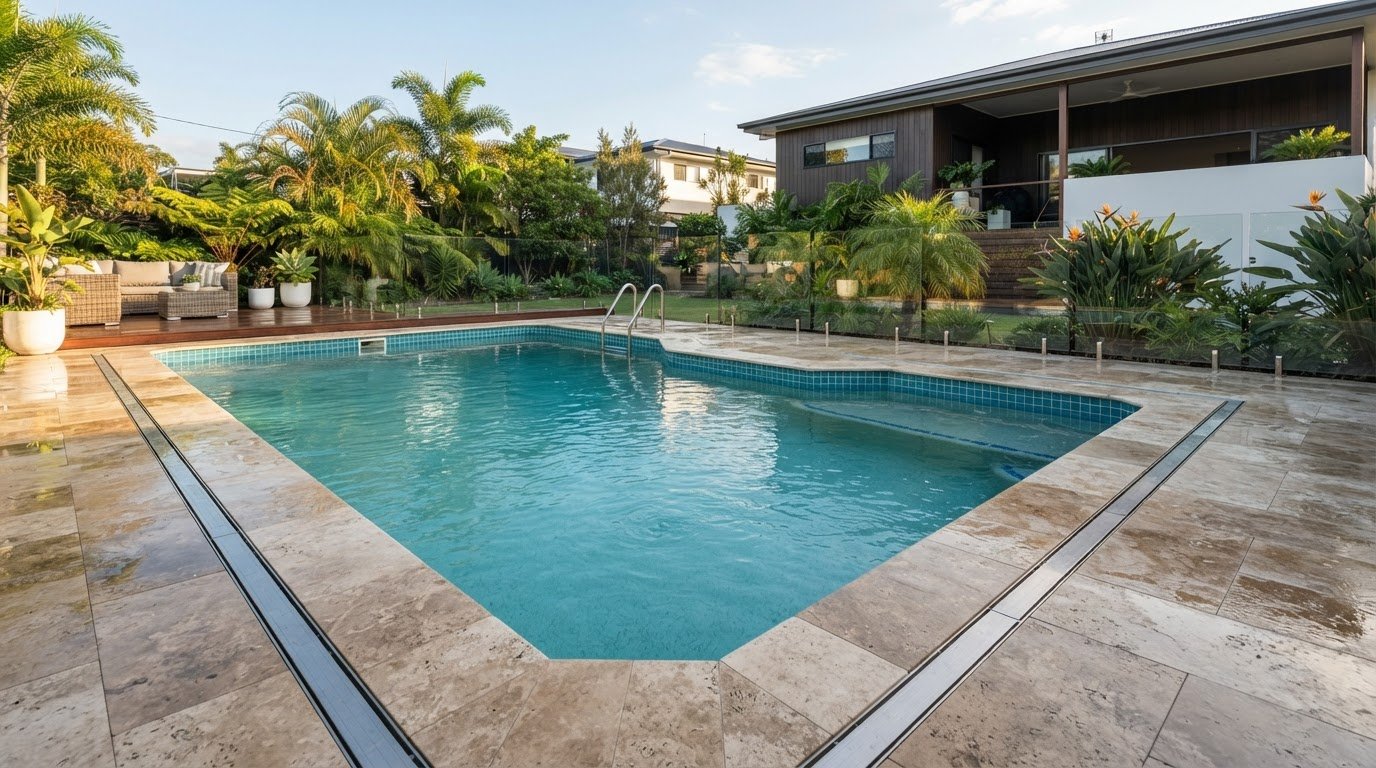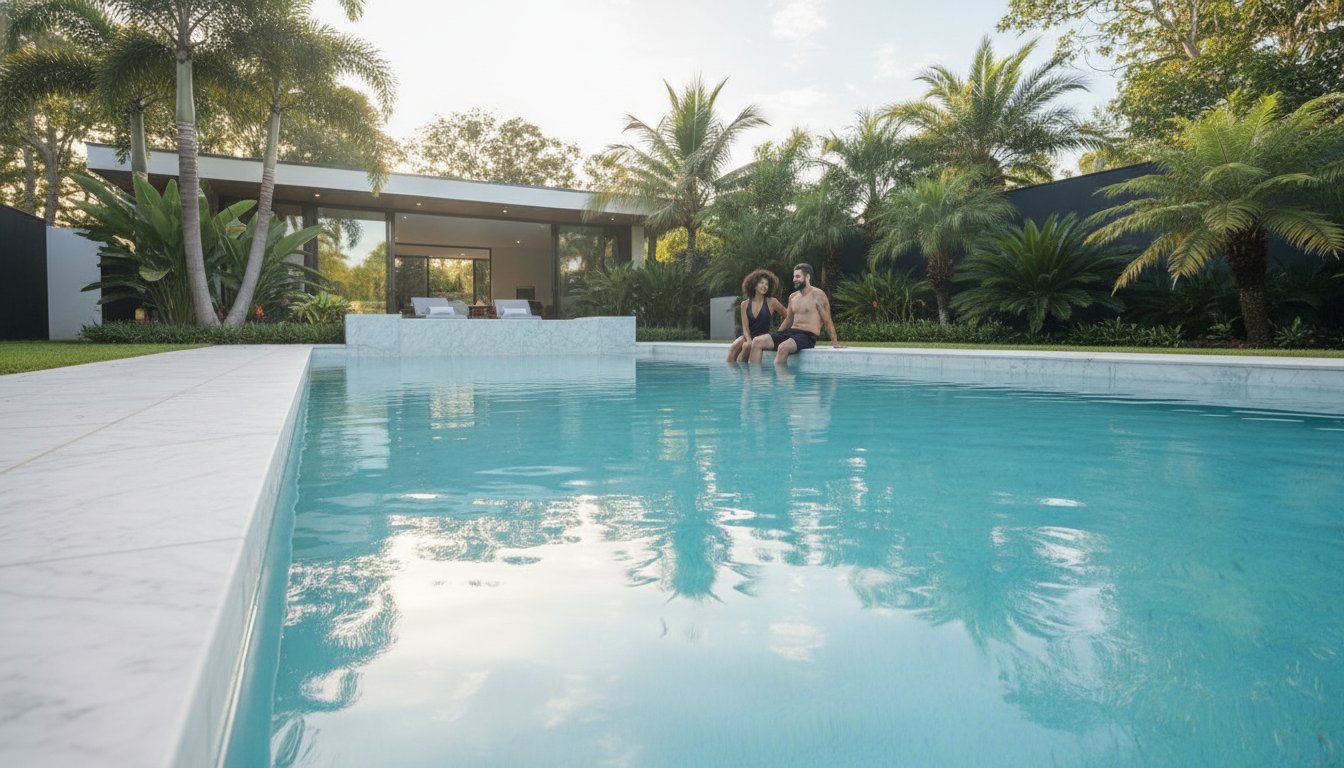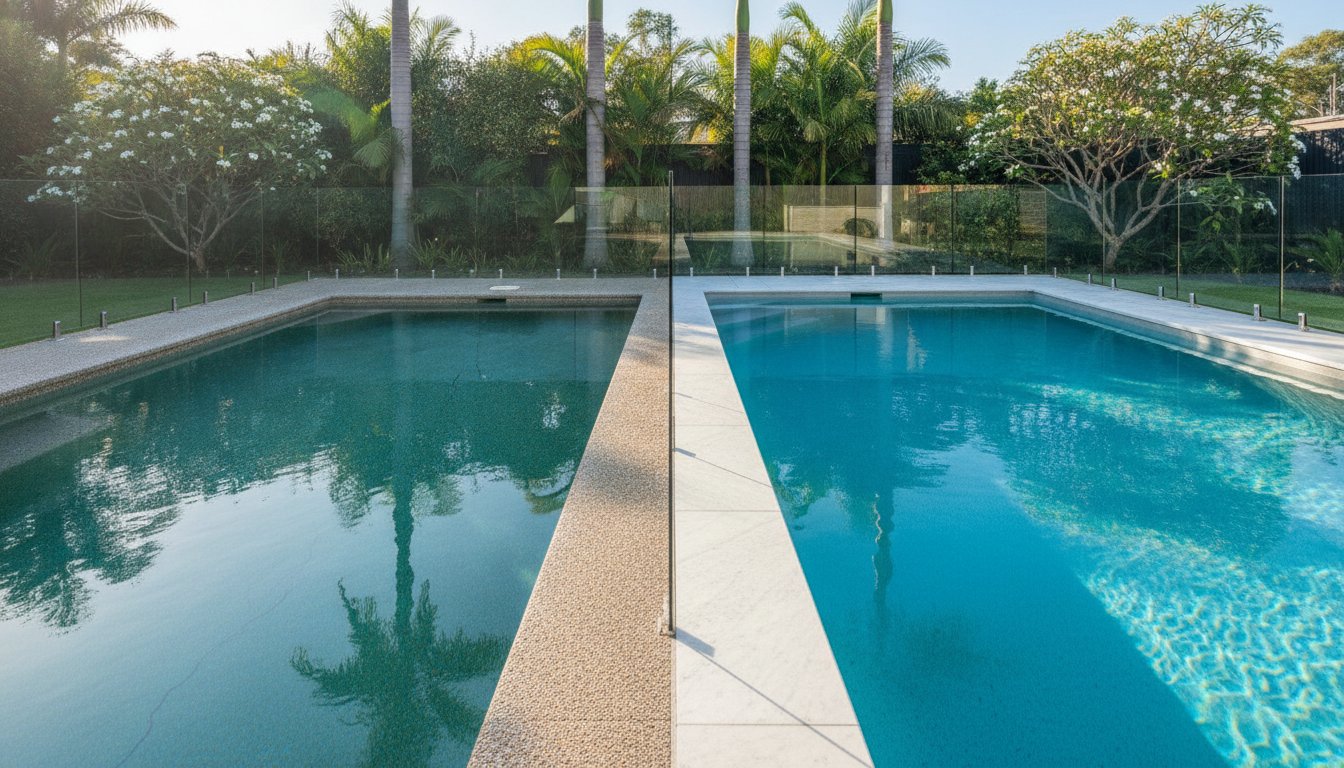

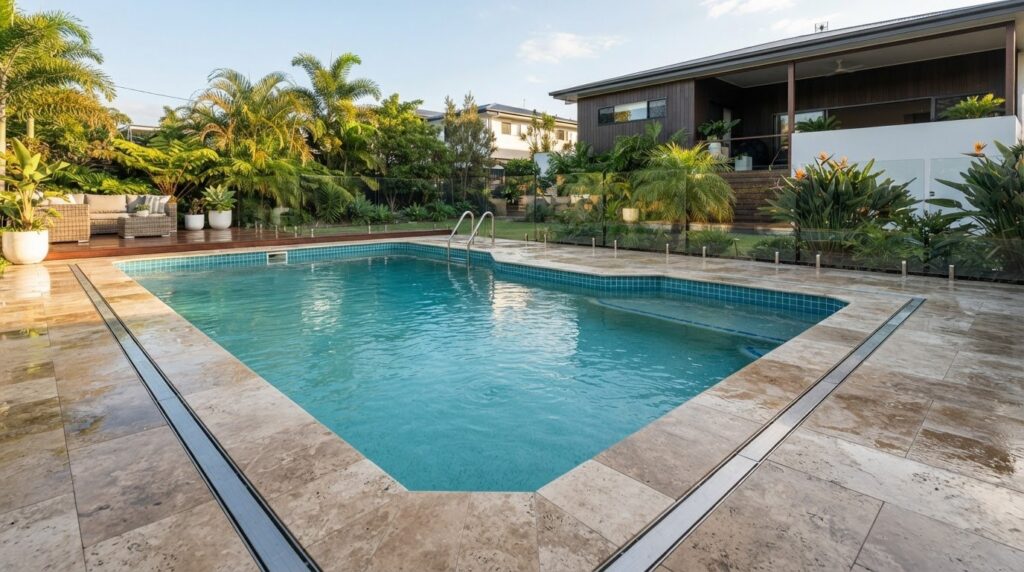
The best-looking pool paving isn’t always the best choice for a Brisbane backyard. When planning pool paving Brisbane homeowners should consider how the surface feels underfoot, handles water and meets the pool edge, not just how it looks in a sample.
It’s understandable to want a surround that feels inviting and suits your home, while also being practical in Brisbane’s sun and wet conditions. The right choice depends on the whole setting: the paving surface, drainage, slip resistance and the joins between the surround, coping and pool tiles.
This guide explains how to weigh appearance against everyday performance, what to assess before paving begins, and how to coordinate paving with pool repairs, re-tiling or resurfacing. Rod Cameron Pools has worked in the pool industry since 1968. Our Re-Tile Plus Pavers service brings the pool and its surround into one renovation plan. Assessing the site and pool together helps shape a cohesive result that suits the property and how you use it.
Key Takeaways
- Pool paving is the finished surface around the pool. Consider how it supports everyday access, manages water movement and meets the pool edge.
- Compare material options by appearance, texture and upkeep. A product label alone does not establish wet-area suitability.
- Use a site checklist to note water-flow concerns, uneven transitions, access constraints and existing damage before work begins.
- Plan pool paving Brisbane projects in sequence, assessing the pool and surround before coordinating repairs, resurfacing, tiling and coping.
- A managed renovation plan can bring paving and pool work together, from assessment through to handover.
Pool paving Brisbane: what makes a pool surround work well?
A well-planned pool surround does more than frame the water. It provides the surface people move across, connects the pool visually with the outdoor area and influences where water travels around the pool edge. The right choice depends on the site, how the area is used and whether other pool work is planned.
Pool paving is the finished surface around the pool; coping is the treatment at the pool’s edge; the pool finish is the surface inside the pool basin. Each has a distinct role, but their meeting points affect how complete the finished area looks and functions. For broader background on pool structures and construction, see Swimming pool construction.
How paving, coping, and the pool finish fit together
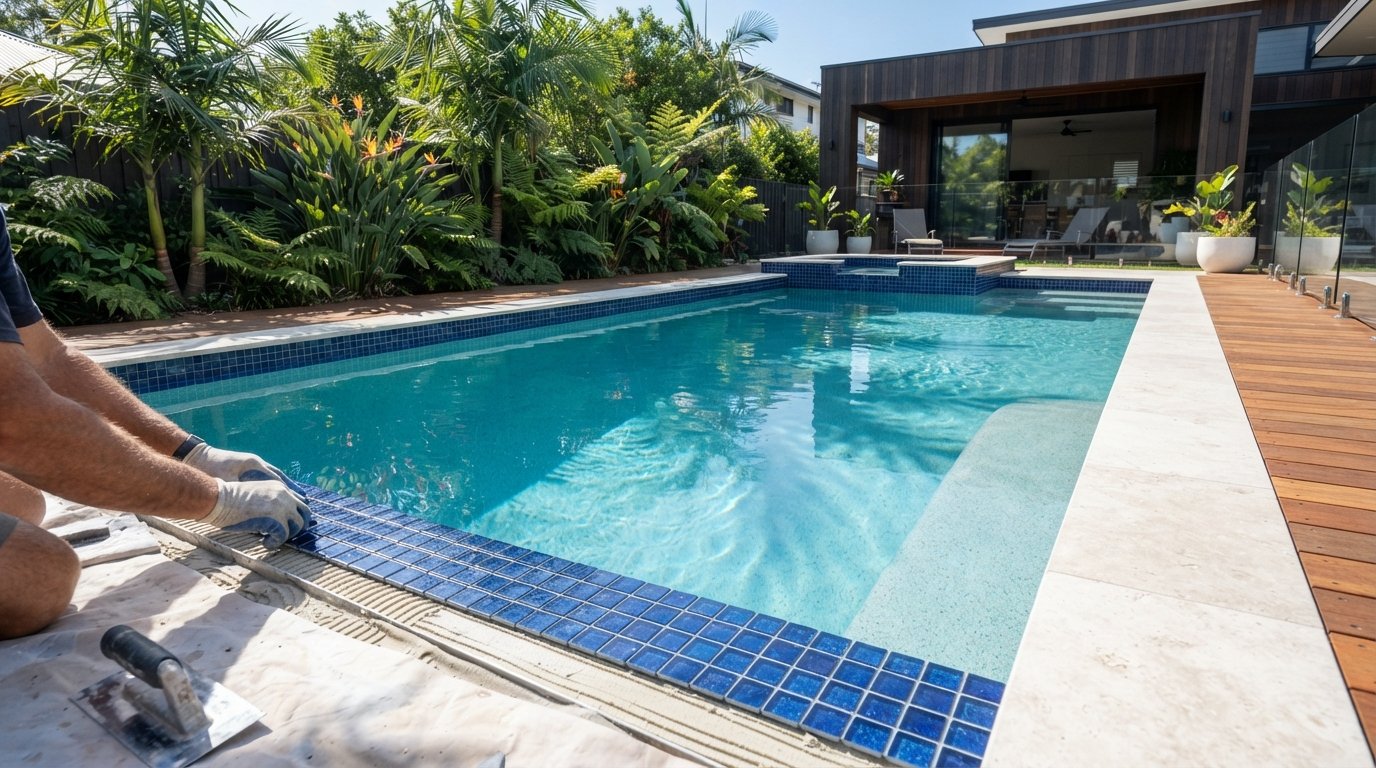
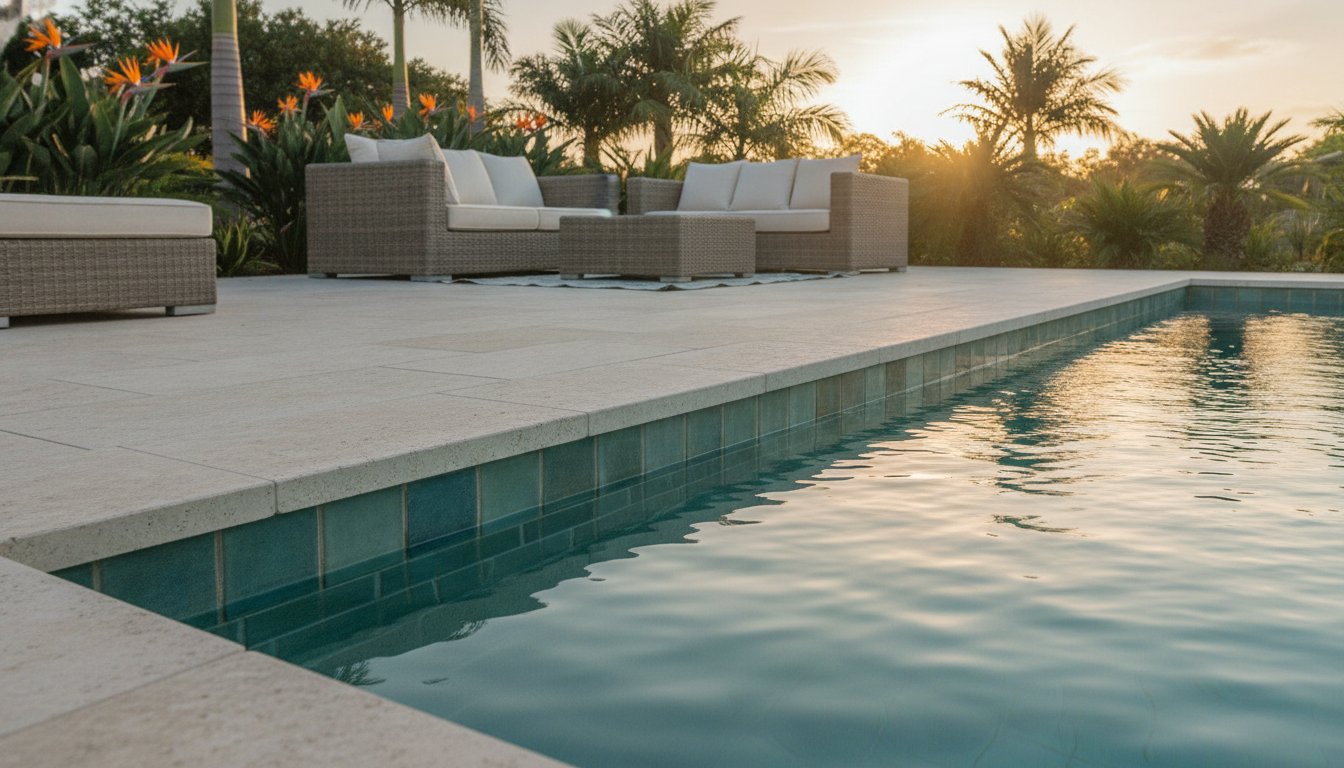
Paving covers the surrounding area, while coping forms the immediate edge between the paving and the pool. Inside the basin, tiles or a resurfacing finish provide the pool’s interior surface. The join between these elements matters visually and practically, so a change to one may affect how the others sit together.
If you’re planning repairs, resurfacing or re-tiling, include the coping and paving in the same renovation discussion. Considering these elements together helps create a more considered transition and avoid a new surface looking disconnected from the pool.
What Brisbane pool owners should assess first
Start with how your household uses the space. Map the routes between the house, pool and outdoor entertaining areas, and note where people enter and exit the water. Then inspect the existing surround. Mark damaged sections, uneven transitions and places where water collects or runs.
Brisbane’s sun and rain also belong in the planning. Note which parts of the surround receive direct sun or stay shaded, and how the area is used in different weather. These observations help you assess the paving in the context of your actual site, rather than choosing on appearance alone.
- Use: Identify everyday walking routes, pool access points and entertaining areas.
- Condition: Record visible damage, changes in level and the condition of the pool edge.
- Water movement: Notice where water runs, gathers or appears to pond around the surround.
- Adjoining work: Include planned tiling, coping, repairs or resurfacing in your project assessment.
These first checks give pool paving Brisbane decisions a practical foundation. They also help clarify whether the surround can be considered on its own or should be planned alongside work to the pool itself.
How to assess pool paving materials for Brisbane conditions
A paving sample can look right in a showroom and feel different in the full pool setting. For pool paving Brisbane projects, compare materials by appearance, texture and care requirements. Then consider how each option fits the site, household and adjoining pool surfaces. No single material category suits every pool area.
Which paving material suits the look and use of your pool area?
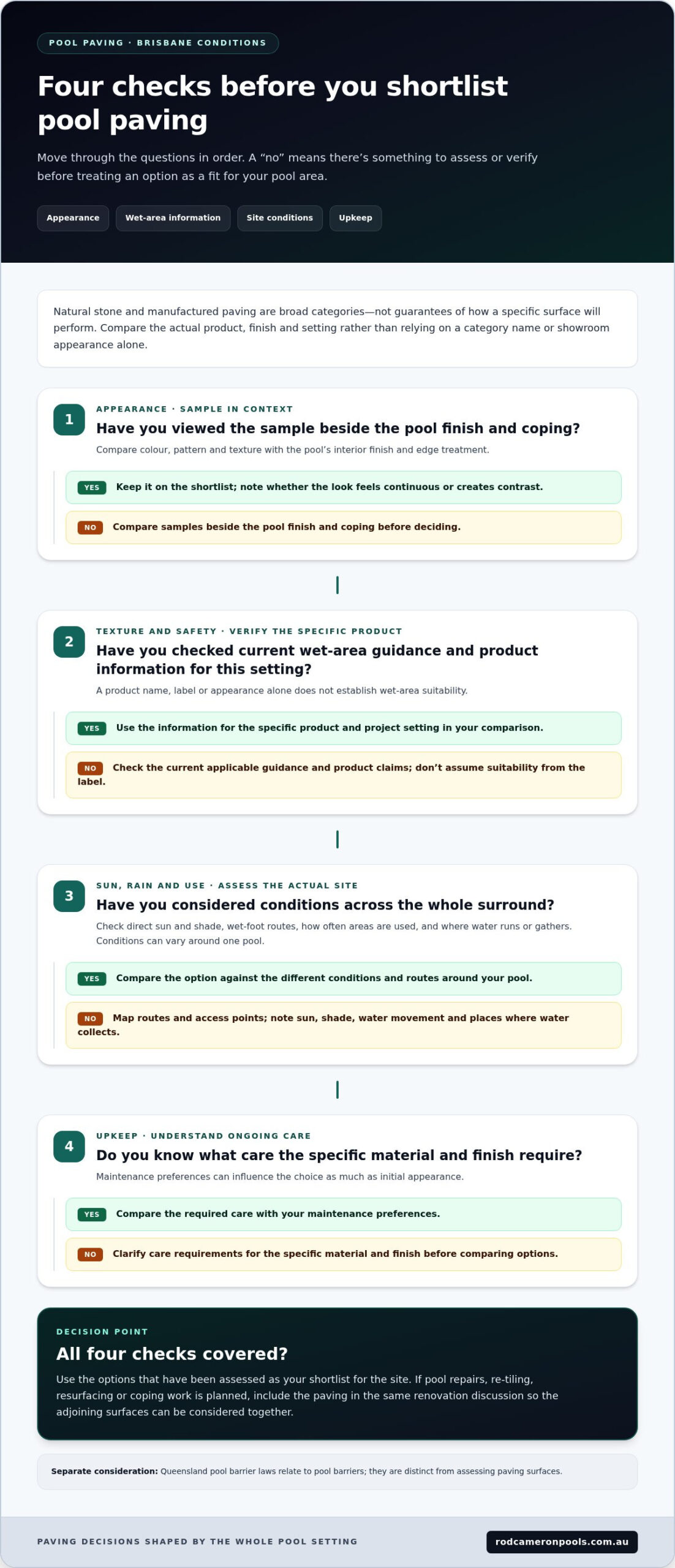
Natural stone and manufactured paving are broad categories, not guarantees of how a particular surface will perform. Stone can vary in colour, pattern and texture, while manufactured options come in a range of finishes and formats. View samples beside the pool finish and coping. Consider whether you want the overall effect to feel understated, patterned or visually continuous.
Texture, upkeep and use matter as much as appearance. A busy route to the pool may have different practical requirements from a quieter entertaining area. Product names alone don’t establish wet-area safety or suitability. Check current applicable slip-resistance guidance and claims for the specific product and setting. The Queensland Government’s pool safety laws cover pool barriers, which are a separate consideration from assessing paving surfaces.
How Brisbane heat, rain, and drainage shape the choice
Look at how sun and rain affect different parts of the surround. A shaded section and an area exposed to direct sun may feel different underfoot, so assess samples and surface conditions in context rather than relying on a general claim about a material. Consider wet feet, how often the pool area is used and how water moves across the site. Verify claims about surface temperature, slip resistance, drainage and upkeep before treating them as established for your project.
| Criterion | Questions to resolve | Project-specific trade-off |
|---|---|---|
| Appearance | Does the colour, pattern and texture work beside the pool finish and coping? | A strong visual contrast may define the pool edge, while a closer match may create continuity. |
| Texture and safety | What current wet-area guidance and product information apply? | A surface’s appearance or product label alone can’t establish its suitability. |
| Sun and rain | Which areas get direct sun, collect water or see frequent foot traffic? | Conditions can vary across one surround, so the site matters. |
| Upkeep | What care does the specific material and finish require? | Maintenance preferences may influence the choice as much as initial appearance. |
Use these questions to narrow your options before deciding how paving fits with pool repairs, tiling or resurfacing. Rod Cameron Pools’ Re-Tile Plus Pavers service brings the surround into the wider pool renovation plan.
Pool paving decisions that prevent safety and drainage headaches
A pool surround works as a whole. The surface is only one part of safe, comfortable use. Water movement, changes in level, access routes and the condition of the pool edge also matter. For pool paving Brisbane projects, a site review can reveal concerns that a material sample cannot.
Drainage and paving should be considered together because the surface, its transitions and the direction of water flow all affect how the pool surround functions. A visible issue, such as a loose or uneven section, may be separate from a less obvious concern beneath the surface or around the pool. Treat what you observe as a prompt for assessment, not proof of an underlying fault.
How to think about slip resistance and poolside comfort
Slip resistance is an important wet-area consideration, but no surface can promise risk-free use. Think about how the paving feels underfoot when wet, whether its texture suits regular pool traffic and what care it needs to stay in good condition. Assess these factors in the context of your pool area rather than relying on a product label alone.
If comparing technical ratings or Australian Standards, check the current guidance and the exact product information that applies to your project. Suitability depends on more than a rating. Upkeep, site conditions and how people use the surround also deserve attention.
What to inspect for drainage and uneven paving
Walk the surround and observe what happens after rain or pool use. Look for areas where water ponds, runoff paths leading toward the pool edge or adjoining surfaces, loose paving, visible damage and noticeable changes in level. Pay attention to transitions near steps, gates, doors and the coping, where an abrupt change can affect movement through the area.
- Water flow: Notice where water travels and whether it gathers in particular spots.
- Surface condition: Record loose, cracked or visibly damaged paving without assuming the cause.
- Transitions: Check for uneven changes between the paving, coping and nearby surfaces.
- Access: Consider whether the main routes around the pool feel clear and practical.
- Pool edge: Include visible damage to coping, tiles or the pool surface in renovation planning.
These checks help distinguish the visible condition of the paving from possible issues involving drainage or the pool itself. If water consistently collects or the pool edge shows damage, include those observations when planning repairs or renovation so the surrounding work can be assessed in context.
A considered assessment brings surface selection, water direction and everyday movement into one plan. That’s a more useful starting point than choosing paving by appearance alone.
Plan Brisbane pool paving alongside tiles, coping, and renovation work
Pool paving is easier to plan when it’s considered as part of the pool project, not as a finishing decision made in isolation. The paving needs to meet the pool edge, sit alongside the interior finish and work with the existing levels and access around the site. For pool paving Brisbane homeowners, identifying related work early helps shape a considered renovation plan.
A practical sequence for planning pool paving
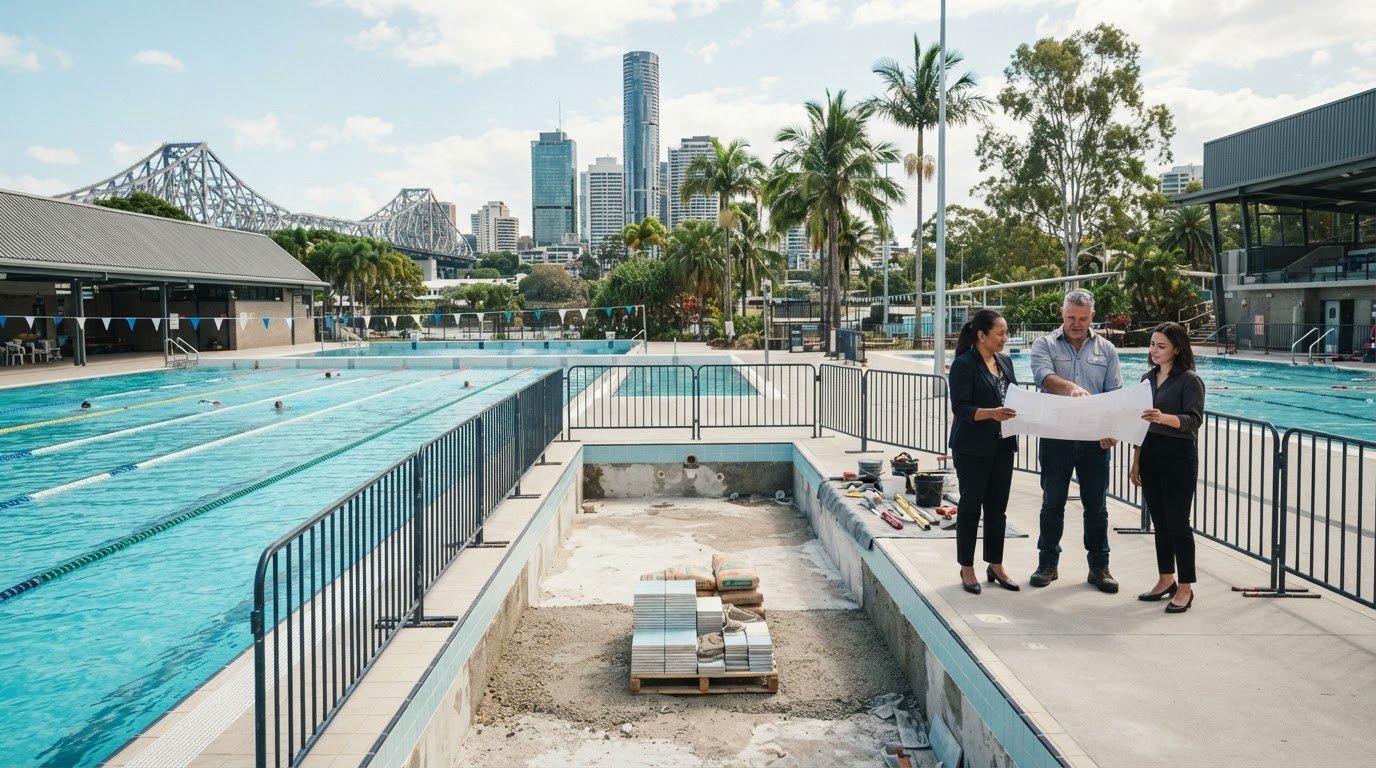
Begin by assessing the pool, coping and surrounding surface. Note access constraints and the appearance you want to achieve. Identify repairs, re-tiling or resurfacing that could affect the pool edge before finalising paving choices. The scope and sequence depend on the property: an existing pool with damaged coping may need a different plan from one where the pool surface remains in good condition.
- Assess: Review the pool interior, edge and existing surround, including visible damage and changes in level.
- Define the work: Identify repairs, tiling, coping or resurfacing to coordinate with the paving.
- Plan the finish: Consider how materials and colours will meet at the pool edge and connect with nearby surfaces.
- Account for access: Factor in how people and materials can reach the work area, particularly where site access is limited.
This sequence helps clarify the project before work begins. For a broader view of renovation planning, read our Brisbane pool renovation guide.
When paving belongs in a broader pool transformation
If the pool interior needs resurfacing or new tiles, refreshing the surrounding paving at the same time may help create a consistent transition at the coping. That doesn’t mean every element must be replaced. It means assessing them together so the finished edge, levels and appearance make sense as a whole. Our Brisbane concrete pool guide provides further context on pool construction and finishes.
Adjacent design choices can also influence the overall feel of the area without becoming part of the paving scope. For separate inspiration, explore these Brisbane pool landscaping ideas.
Rod Cameron Pools brings pool renovation, repairs and Re-Tile Plus Pavers together in a managed project approach from assessment through handover. The company has worked in the pool industry since 1968 and can manage challenging renovations, including sites with limited access. Plan your pool paving renovation as part of a coordinated pool project.
Bring your Brisbane pool paving project together with Rod Cameron Pools
A considered pool renovation brings the surround and pool into one plan. Rod Cameron Pools’ Re-Tile Plus Pavers service incorporates paving into residential pool renovation planning, alongside pool tiles, resurfacing, repairs or restoration. The project scope is shaped around the existing pool, site conditions and the finish you want, rather than treating paving as an isolated surface choice.
What a coordinated pool paving project can address
Planning these elements together helps account for how the paving meets the coping, how the pool edge will look beside refreshed tiles, and whether repairs or resurfacing belong in the wider work. Not every renovation needs every element. An assessment helps distinguish what needs attention from what can remain, so the work reflects the condition of the pool and surround.
Access is part of the planning too. A narrow entry or other site constraint can affect how renovation work is organised. Rod Cameron Pools has experience managing challenging projects, including sites with limited access, and brings pool-industry experience dating back to 1968.
Next steps for a Brisbane pool paving renovation
Start by outlining what concerns you about the existing pool or paving, the appearance you’d like to achieve and how your household uses the area. Include visible damage, uneven transitions and any planned pool work. These details provide a practical starting point for assessment.
From consultation and assessment through renovation and handover, a managed approach brings the project stages together. The assessment informs a practical scope of work and a fixed-price quotation based on the renovation needs of your pool and site.
If you’re considering pool paving Brisbane work, discuss your pool, paving goals and related renovation needs with Rod Cameron Pools. Discuss your pool renovation with Rod Cameron Pools.
Plan a pool surround made for years of use
A successful pool surround brings together more than a pleasing finish. Choose paving with the site and household in mind, pay attention to water flow and transitions, and plan the pool edge alongside any tiling, repairs or resurfacing. This joined-up approach helps the finished area feel cohesive and work well in everyday use.
For pool paving Brisbane homeowners, Rod Cameron Pools brings pool-industry experience dating back to 1968 and a managed renovation approach. The Re-Tile Plus Pavers service allows paving to be considered alongside pool renovation, with experience handling challenging projects, including sites with limited access. The service is available to homeowners across Brisbane, the Gold Coast and the Sunshine Coast.
Whether you’re refreshing the surround or coordinating a broader pool renovation, start with a practical assessment. Share your pool concerns, the look you’d like to achieve and any related work you have in mind. Discuss your Brisbane pool renovation with Rod Cameron Pools and plan a pool area that suits your site and how you use it.
Frequently Asked Questions
What is the best paving for a pool in Brisbane?
There isn’t one best paving choice for every Brisbane pool. Consider the site’s sun and rain exposure, how the area is used, the surface texture and upkeep, and how the paving will meet the coping and pool finish. Use product-specific information to assess wet-area suitability rather than relying on a material name alone. A site assessment can help match appearance and practical needs to your pool renovation plans.
Is natural stone suitable for pool paving?
Natural stone can be considered for pool paving, but suitability depends on the specific stone, finish and site. Compare colour, texture, care requirements and how the surface will look beside the pool tiles and coping. Review performance information for the actual product and wet-area use, including applicable slip-resistance guidance. Also consider how the stone will fit with existing levels and water movement around your pool.
How do I make pool paving less slippery?
Start by selecting paving with appropriate wet-area slip-resistance information for its intended use, and assess the texture in the context of your pool area. Maintain the surface according to the material’s care requirements, since dirt or residue may affect how it feels underfoot. No paving can promise risk-free use. Safe movement also depends on transitions, access routes and the condition of the entire surround.
Does pool paving need to slope away from the pool?
Pool paving should be planned so water moves appropriately across the site, but the correct direction and fall depend on the pool, surrounding surfaces and drainage layout. Don’t assume that directing all water away from the pool is automatically the right solution. Look for ponding and runoff paths, and include them in the project assessment. Consider the finished levels alongside the pool edge and adjoining areas.
Can pool paving be replaced without resurfacing the pool?
Yes, paving may be replaced without resurfacing if the pool interior and adjoining edge don’t need that work. The decision depends on the condition of the pool surface, tiles and coping, as well as how the new paving will meet them. If repairs or resurfacing are also needed, planning the work together can help coordinate levels and create a consistent finish. An assessment helps define the appropriate scope.
When should pool paving be done during a pool renovation?
Plan paving after assessing the pool and identifying any repairs, re-tiling, resurfacing or coping work that may affect the edge and surrounding levels. The right sequence depends on the renovation scope and site conditions, so coordinate these decisions before finalising the paving. Rod Cameron Pools plans residential pool projects from consultation and assessment through renovation and handover, helping related work fit into a managed process.
Can pool paving be installed around a pool with limited access?
Limited access doesn’t automatically rule out a pool paving renovation, but it should be included in the project assessment and planning. Entry routes and site constraints can affect how work is organised around the pool. Rod Cameron Pools has experience managing challenging renovations, including limited-access sites, across Brisbane, the Gold Coast and the Sunshine Coast. The project approach is shaped around the existing pool and property conditions.