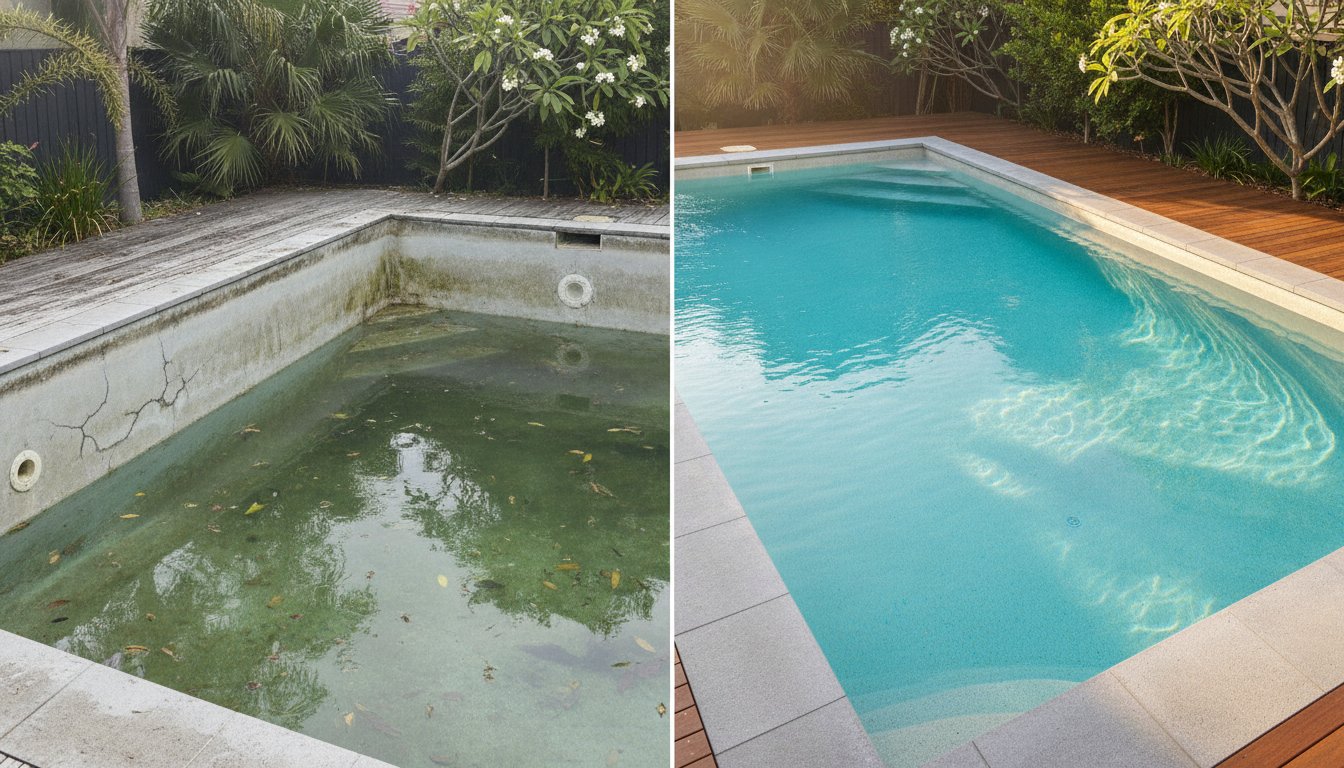

Last Saturday, a family in Ascot realized their backyard sanctuary had become a source of stress when their youngest child emerged from the water with scratched toes for the third time this month. It’s a common story we’ve heard over our forty years of building quality concrete pools across Brisbane. While aesthetic wear is frustrating, it often masks deeper issues like porous surfaces that can lead to “concrete cancer” or structural failure. Identifying the early signs your pool needs resurfacing is the difference between a simple refresh and a $25,000 structural repair that could have been avoided with a timely intervention.
We understand that your pool is the heart of your Southeast Queensland lifestyle, and you want to protect that investment without the pressure of a high-stakes sales pitch. You likely already suspect that those fading patches and rising chemical bills aren’t just a phase. This 2026 checklist provides a clear “yes or no” framework to help you evaluate your pool’s integrity, longevity, and safety. We’ll walk you through the seven critical indicators of surface failure, the specific environmental risks facing Brisbane homes, and how to choose a craftsman who treats your project with meticulous care.
Key Takeaways
- Understand why the 10–15 year mark is a critical tipping point for Brisbane pool surfaces, ensuring your home’s centerpiece remains protected against the harsh Southeast Queensland climate.
- Learn to identify the seven subtle signs your pool needs resurfacing, from stubborn surface stains to abrasive pitting that impacts the comfort of every swim.
- Discover how local weather cycles and chemical imbalances silently degrade your pool’s finish, potentially compromising the meticulous craftsmanship of its original build.
- Realise the financial importance of early intervention to prevent surface wear from evolving into “concrete cancer,” a structural failure that threatens the very integrity of your investment.
- Explore the enduring benefits of a master tradesman’s finish, where smooth crushed marble and decades of local expertise create a seamless, stress-free restoration for your family.
Understanding the Lifespan of Brisbane Pool Surfaces in 2026
A pool surface serves as the vital skin of your investment. It protects the structural concrete shell from the relentless chemical and environmental pressures unique to Southeast Queensland. While we pride ourselves on building quality concrete pools designed to endure, most interior finishes reach a natural tipping point between 10 and 15 years of service. By 2026, we’ve seen Brisbane UV indices frequently peaking at levels of 13 or higher during the summer months. This intense radiation forces your sanitisation system to work 30% harder to maintain water safety, which eventually degrades the binders within your pool finish. Recognising the early signs your pool needs resurfacing allows you to plan for a meticulous restoration before structural integrity is compromised.
- Protective Barrier: The finish prevents water from seeping into the porous concrete shell.
- Chemical Resistance: Modern finishes must withstand 2026’s advanced salt and magnesium systems.
- Aesthetic Value: A smooth, vibrant surface defines the luxury feel of your outdoor living space.
Why QLD Pools Age Faster Than Southern States
Brisbane’s sub-tropical climate presents challenges that pools in Sydney or Melbourne simply don’t face. With average summer humidity levels often exceeding 75%, pool surfaces stay saturated, making them more susceptible to deep-rooted algae growth. Heavy summer storm runoff, which can deliver 100mm of rain in a single afternoon, rapidly alters water chemistry and introduces organic phosphates that etch the finish. Constant evaporation cycles also play a role; a standard 50,000-litre Brisbane pool can lose 160 litres of water daily in January, leading to rapid mineral concentrations that accelerate surface wear.
The Difference Between Cleaning and Resurfacing
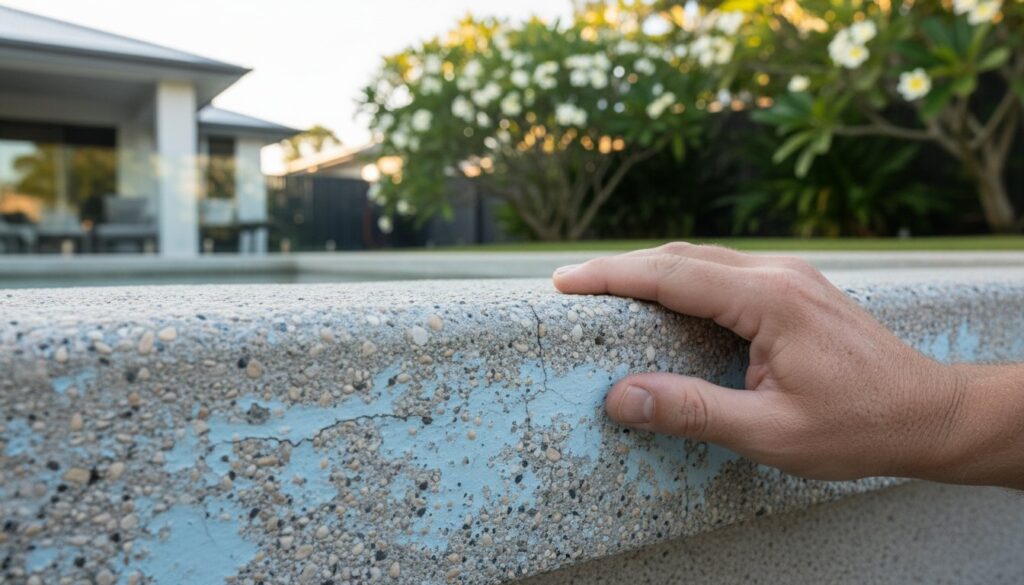
Distinguishing between a superficial stain and a failing finish requires a seasoned eye. If a mark sits “on” the surface, a professional acid wash or chlorine treatment often restores the original look. However, when pigments are embedded “in” the finish, it indicates the protective membrane has become porous. You can perform a “Scratch Test” by running a coin across a submerged section of the wall. If a white, chalky residue clouds the water or the surface feels like coarse sandpaper, these are definitive signs your pool needs resurfacing rather than a simple clean. Pool resurfacing is a comprehensive structural restoration process that replaces the worn interior finish to ensure a watertight seal and a rejuvenated aesthetic for your home.
7 Critical Signs Your Pool Needs Resurfacing: The Checklist
Recognising the early signs your pool needs resurfacing ensures your family’s backyard sanctuary remains a safe, beautiful retreat for the next 15 to 20 years. Over our 40 years of building quality concrete pools, we’ve identified specific indicators that suggest a finish has reached the end of its functional life. These symptoms often start small but can quickly escalate into expensive structural repairs if left unaddressed.
- Persistent surface stains that remain after 72 hours of professional chemical balancing.
- A rough, “pitting” texture that causes physical discomfort or scratches to swimmers’ feet.
- Visible spiderwebbing or structural cracks appearing across the pool floor or walls.
- Chalkiness or “dusting” where the pigment rubs off on your skin when you touch the walls.
- Unexplained water loss exceeding 5mm daily, suggesting the shell’s skin is no longer watertight.
Visual Red Flags: Stains and Discolouration
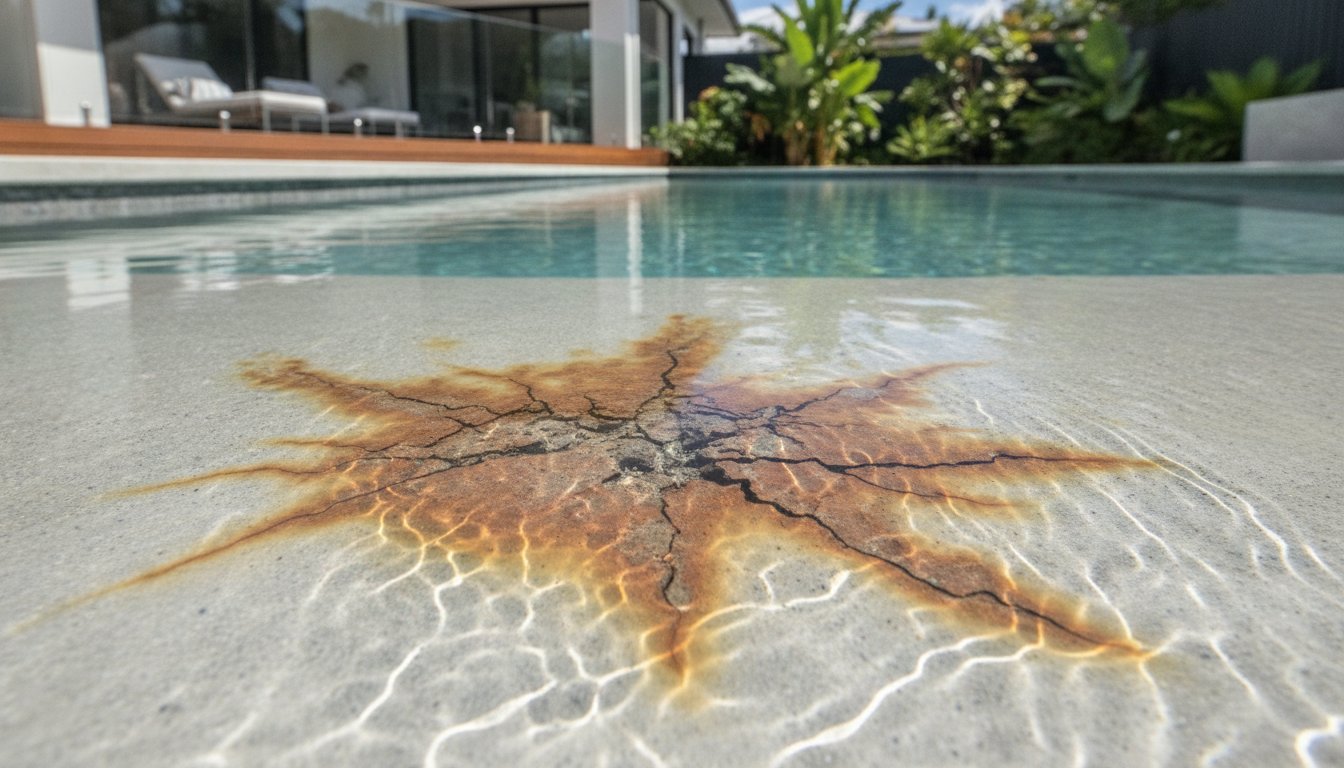
Organic stains from leaves or algae typically vanish with a standard chlorine shock, but mineral deposits are more stubborn. Deep-set mottling or greyish patches often mean the waterproof layer is thinning, allowing the underlying concrete to influence the aesthetic. If you see rust-coloured spots, it’s frequently a sign of iron leaching from aging internal components, a process that eventually compromises the entire finish and requires a meticulous restoration.
Physical Deterioration: Roughness and Peeling
Roughness often stems from calcium nodules, which are small, sharp deposits that form when water chemistry is neglected for more than 6 months. This abrasive texture doesn’t just hurt feet; it increases the wear and tear on automatic cleaners by approximately 25%. More concerning is delamination, where the top layer physically separates from the concrete shell, creating pockets where bacteria can thrive and compromise your water health.
The Leak Factor: When Disappearing Water Means Trouble
In the shifting, sandy soils of the Gold Coast and South East Queensland, a leak is a serious structural threat. You can confirm a leak using the “Bucket Test”: place a bucket of water on a pool step, mark the level inside and outside, and wait 24 hours. If the pool level drops significantly more than the bucket, water is likely seeping through surface cracks. Securing a seamless and stress-free resurfacing now prevents the water from destabilising the ground beneath your pool shell.
Beyond Aesthetics: Why Surface Failure Happens in Queensland
Understanding why your pool surface is degrading requires looking deeper than the visible flakes or stains. For over 40 years, our team has seen how the harsh Brisbane environment punishes quality concrete pools. It’s rarely a single event that causes damage. Instead, it’s a slow erosion driven by chemistry and climate. Even the most meticulous maintenance can’t always stop the natural aging of materials that face 24/7 submersion.
The “Wet and Dry” cycles common in Southeast Queensland play a significant role. In 2025, we recorded humidity fluctuations that put immense stress on exposed pool coping and interiors. When the water level drops or the sun beats down on the top 100mm of the surface, the material expands and contracts at different rates. This thermal shock eventually leads to delamination, where the finish pulls away from the concrete shell.
Aging filtration systems also accelerate this wear. Older pumps often struggle to maintain the consistent turnover required to keep chemicals balanced. When water sits stagnant in “dead spots” around steps or benches, localized chemical spikes occur. This leads to the following issues:
- Surface Pitting: Small holes that trap algae and debris.
- Bond Failure: Areas where the render sounds “hollow” when tapped.
- Legacy Issues: Poor application techniques from the early 2000s that lacked modern bonding agents.
The Chemical Tug-of-War
When calcium hardness drops below the 200 ppm threshold, the water becomes “hungry.” It seeks balance by leaching minerals directly from your pool skin. This chemical theft is one of the primary signs your pool needs resurfacing, as it leaves the finish feeling like coarse sandpaper. While 2026’s smart chlorinators offer better control, they can’t reverse 15 years of etching on an older marble interior. High chlorine levels over a decade also bleach the pigments in modern pebble finishes, leading to a patchy, washed-out appearance.
Structural Movement and Settlement
Southeast Queensland is famous for reactive clay soils that shift by up to 50mm during heavy rain events. This movement causes “crazing,” which are fine, spider-web cracks in the surface. While these are often cosmetic, they are distinct from structural cracks that penetrate the concrete shell. We identify the signs your pool needs resurfacing by checking if these cracks are leaking water or growing wider than 2mm. A successful resurfacing project requires a foundation that has been professionally assessed to ensure the 25 year lifespan of the new finish.
The Risk of Waiting: From Surface Stains to Concrete Cancer
Choosing to ignore the signs your pool needs resurfacing is often the most expensive decision a Brisbane homeowner can make. While a few surface stains might seem harmless, they represent the first stage of a structural breakdown that can’t be reversed with chemicals alone. Our team has spent 40 years witnessing how water, left to penetrate a compromised finish, eventually reaches the internal steel reinforcement. Once moisture meets steel, the metal expands up to three times its original size. This expansion causes the surrounding concrete to crack and spall, a process that can compromise the entire shell and lead to total failure.
The High Cost of Concrete Cancer
Concrete cancer is a genuine epidemic in South East Queensland because of our high humidity and reactive soils. You can identify this early by looking for “rust bleed,” which are small, orange-brown spots that reappear even after heavy scrubbing. Repairing these structural failures involves invasive jackhammering and steel replacement, which can cost five times more than a standard resurface. Resurfacing acts as the primary barrier against steel oxidation, ensuring the structural integrity of your quality concrete pools remains intact for another 20 years. Recent data suggests that 85% of major structural pool repairs in Brisbane could have been avoided with timely surface maintenance.
The ‘Pool Paint’ Trap
Many homeowners attempt to save money with DIY pool paint, but this is a temporary band-aid that often fails within 24 months. In contrast, a professional pebble or marble finish provides a 15 to 20 year lifespan and superior chemical resistance. When you finally decide to do the job properly, removing old, flaking paint adds an average of $3,200 to your project costs due to the intensive sandblasting required. Choosing a smooth, high-quality finish now provides a much higher return on investment than repeated temporary coatings. It’s the difference between a quick fix and a lasting legacy for your family home.
- Surface Stains: Often indicate the protective layer has worn thin.
- Rust Spots: A clear signal that water has reached the internal steel.
- Spalling: When chunks of concrete begin to flake or break away.
- Paint Failure: Chalky residue that clouds your water and clogs filters.
Revitalising Your Pool with a Master Tradesman’s Finish
Choosing to restore your backyard oasis requires more than just a fresh coat of material; it demands a legacy of craftsmanship. At Rod Cameron Pools, we bring over 50 years of Brisbane pool heritage to every project we undertake. We’ve seen every trend come and go, yet our commitment to quality concrete pools remains the constant foundation of our work. Our approach focuses on a meticulous restoration that honors the original structure while integrating modern durability. Whether your pool is tucked away in a tight Paddington terrace or perched on a steep Samford hillside, we specialise in difficult sites that other contractors often avoid. We manage the entire lifecycle from the initial structural assessment to the final, stress-free handover, ensuring your daily routine remains undisturbed.
When you identify the signs your pool needs resurfacing, such as persistent leaks or surface staining, the choice of material becomes your most important decision. We continue to champion smooth crushed marble as the gold standard for Brisbane homes. It provides a seamless, high-end aesthetic that modern synthetic alternatives struggle to replicate. Our process involves a rigorous preparation phase where we strip back the old interior, repair any underlying concrete issues, and apply the new marble finish with a precision that only decades of experience can provide.
The Benefits of a Marble Finish in 2026
Traditional remarbling offers a tactile luxury that pebble finishes simply cannot match. Marble is 20% gentler on skin, making it the ideal choice for families with young children who spend hours in the water. In the harsh Queensland sun, where UV indices regularly hit 11 or higher, a marble surface reflects heat and maintains its structural integrity for up to 20 years. Beyond comfort, a professionally resurfaced pool is a powerful asset. Recent 2026 market data suggests that a pristine pool finish can increase a Brisbane home’s resale value by as much as $45,000, providing a significant return on your investment.
Next Steps: Getting Your Fixed-Price Quote
We believe in transparency from the very first conversation. During a professional Rod Cameron Pools assessment, we examine your pool’s shell, plumbing, and surrounds to identify exactly why the signs your pool needs resurfacing have appeared. We provide a fixed-price quote for every residential and commercial project. This means the price we agree on is the price you pay. There are no hidden variations or surprise costs halfway through the build. Our team handles the logistics, the mess, and the technical hurdles, leaving you with nothing but a beautiful, enduring result. Book your Brisbane pool assessment today to begin your transformation with a team that values integrity as much as you do.
Restoring Your Pool’s Integrity for the Decades Ahead
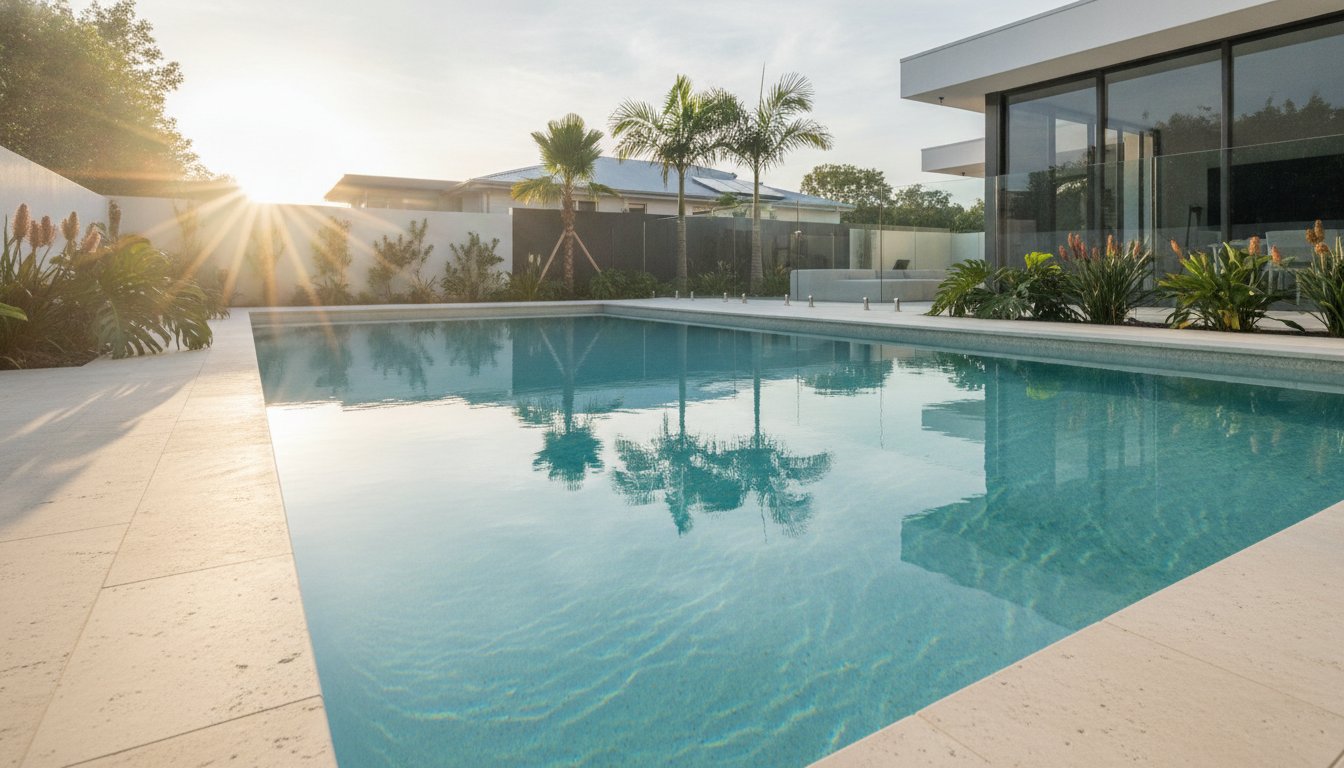
Your pool is the heart of your Southeast Queensland home; it’s where your family gathers and where summer memories are built. Recognizing the common signs your pool needs resurfacing, such as persistent staining or surface flaking, is the first step in preventing costly structural damage like concrete cancer. Since 1968, Rod Cameron Pools has focused on delivering enduring quality through meticulous craftsmanship and a steady, reliable process. We’ve spent 58 years perfecting the art of the smooth marble finish, ensuring your pool feels as luxurious as it looks. As a family-owned and operated team, we take immense pride in every project we touch. We believe a pool should be a source of pride, not a list of maintenance worries. By addressing surface wear now, you’re choosing to design, construct, and maintain a space that adds genuine value to your lifestyle. It’s about protecting your investment with a master tradesman’s touch that lasts. Ready to bring that vibrant, seamless look back to your backyard? Get a Fixed-Price Pool Resurfacing Quote from Rod Cameron Pools today. We look forward to helping you create a beautiful, stress-free environment for your family to enjoy for many years to come.
Frequently Asked Questions
How long does pool resurfacing typically last in Brisbane?
A professionally applied pool finish lasts between 15 and 25 years depending on the specific materials you choose for your backyard. Pebblecrete surfaces often reach the 20 year mark with proper chemical balance; however, modern glass bead blends offer similar longevity with enhanced smoothness. At Rod Cameron Pools, we’ve seen our quality concrete pools maintain their integrity for over two decades. This enduring durability ensures your investment provides a seamless backdrop for family memories for years to come.
Can I resurface my pool myself with a kit?
You shouldn’t attempt a DIY pool resurfacing because the process requires industrial-grade equipment and specialized chemical bonding agents. Most homeowner kits fail within 24 months, leading to peeling and costly professional repairs that exceed the original budget. Our team brings 40 years of meticulous craftsmanship to every project to ensure a bond that lasts. We handle the technical precision of the application so you can avoid the stress of a failed weekend project.
Is it better to resurface in winter or summer in Queensland?
Winter is the best season for resurfacing in Brisbane because the lower humidity and consistent 20 degree temperatures allow the materials to cure evenly. Scheduling your project between May and August ensures your pool is ready for the first 30 degree day in September. This timing avoids the unpredictable afternoon storms that can disrupt a fresh finish during the summer months. It’s a strategic way to ensure a stress-free transition for your backyard sanctuary.
What is the average cost of pool resurfacing in Brisbane for 2026?
The average cost for a professional resurfacing in 2026 ranges from $8,000 to $15,000 for a standard 8 by 4 meter pool. These figures include the meticulous preparation, high-quality materials, and expert application required for a long-lasting result. Recognizing the signs your pool needs resurfacing early can prevent these costs from climbing due to underlying structural damage. We provide a transparent, bespoke quote that reflects the honest value of our 40 years of local experience.
Does a rough pool surface always mean I need to resurface?
A rough surface doesn’t always require a full resurface, as calcium buildup can sometimes be treated with a specialized acid wash. However, if 30 percent or more of the surface is abrasive or losing its finish, it’s one of the clearest signs your pool needs resurfacing. This roughness often indicates that the top layer has eroded, exposing the underlying aggregate. We assess each pool with integrity to determine if a simple treatment or a complete restoration is necessary.
How long will my pool be out of action during the resurfacing process?
Your pool will typically be out of action for 7 to 14 days from the initial drainage to the final refill. This timeframe allows our team to strip, repair, and apply the new finish with meticulous care. We follow a methodical process to ensure the result is solid, beautiful, and enduring. Once the water is balanced, your family can return to making memories in a space that feels brand new and looks spectacular.
What is concrete cancer, and can resurfacing fix it?
Concrete cancer occurs when the internal steel reinforcement rusts and expands, causing the surrounding concrete to crack and spall. Resurfacing alone won’t fix this issue; we must first excise the rusted steel and treat the area with anti-corrosive agents. Our 40 year heritage in building quality concrete pools gives us the expertise to identify and repair these structural threats. We ensure the core of your pool is healthy before applying a bespoke finish that lasts.
Is a marble finish better than pebblecrete for my kids’ feet?
A silk-finish marble or glass bead interior is significantly gentler on children’s feet than traditional pebblecrete. While pebblecrete offers excellent durability, 85 percent of our clients with young families now choose smoother, bespoke finishes to prevent toe scrapes and skin irritation. These modern materials allow you to design, construct, and maintain a pool that is both visually stunning and physically comfortable. It’s about creating a safe, welcoming environment for your family to enjoy every single day.