
What if the most popular pool surface in Brisbane is actually the one causing your family the most discomfort? Many homeowners believe that a rugged, heavily textured interior is the only way to ensure a pool survives the harsh Queensland sun for decades. You likely want a backyard sanctuary that remains beautiful for years, yet you shouldn’t have to deal with scraped knees or the frustration of “pebble toe” every time the kids jump in for a swim.
Choosing between a smooth vs textured pool finish is one of the most significant decisions you’ll make for your property’s value and your daily enjoyment. We’ve spent years refining our craft to help local families find that perfect balance of a soft touch and a hard-wearing surface. In this article, you’ll discover why a smooth crushed marble finish often outperforms traditional alternatives in both comfort and chemical efficiency. We’ll compare maintenance requirements, aesthetic longevity, and how your choice of interior can reduce the time you spend scrubbing algae out of hidden nooks and crannies.
Key Takeaways
- Understand the material composition of high-grade crushed marble versus traditional pebblecrete to make an informed choice for your concrete pool interior.
- Evaluate the debate of smooth vs textured pool finish to see how smooth surfaces actually resist SE Queensland’s intense UV levels and chemical wear over the long term.
- Learn why smooth interiors simplify maintenance by eliminating the tiny crevices where algae thrive, allowing your robotic cleaner to work with maximum efficiency.
- Discover how to prevent “pebble rash” for your family by prioritising a surface that is soft underfoot while maintaining the necessary slip-resistance for steps and ledges.
- Benefit from a 50-year legacy of local craftsmanship to ensure your pool resurfacing project adds timeless aesthetic and functional value to your Brisbane home.
Table of Contents
- Smooth vs Textured Pool Finish: The Core Differences for SE QLD Pools
- Durability and Longevity: Debunking the 'Short-Life' Myth of Smooth Finishes
- Maintenance and Algae Control: Which Surface is Easier to Clean?
- Safety and Comfort: The 'Pebble Rash' Factor for Brisbane Families
- The Rod Cameron Standard: Why We Specialise in Smooth Crushed Marble
Smooth vs Textured Pool Finish: The Core Differences for SE QLD Pools
Selecting your pool’s interior is the most permanent decision you’ll make in any pool restoration or new build project. While furniture can be replaced and gardens can be replanted, the interior finish is a long-term commitment that defines your daily swimming experience. In the unique climate of South East Queensland, where intense UV levels and high bather loads are the norm, the debate of smooth vs textured pool finish comes down to three core factors: family comfort, visual harmony, and ease of maintenance.
A smooth finish is a sophisticated blend of high-grade crushed marble and premium white Portland cement. This mixture is hand-applied and troweled to a glass-like consistency, resulting in a surface that is gentle on skin and resilient against the elements. Conversely, textured finishes like pebblecrete utilise exposed aggregate, where small river stones are embedded into the cement matrix. Both of these pool construction materials are designed for durability, but they cater to very different lifestyle priorities and aesthetic goals.
The Aesthetics of Smooth Marble
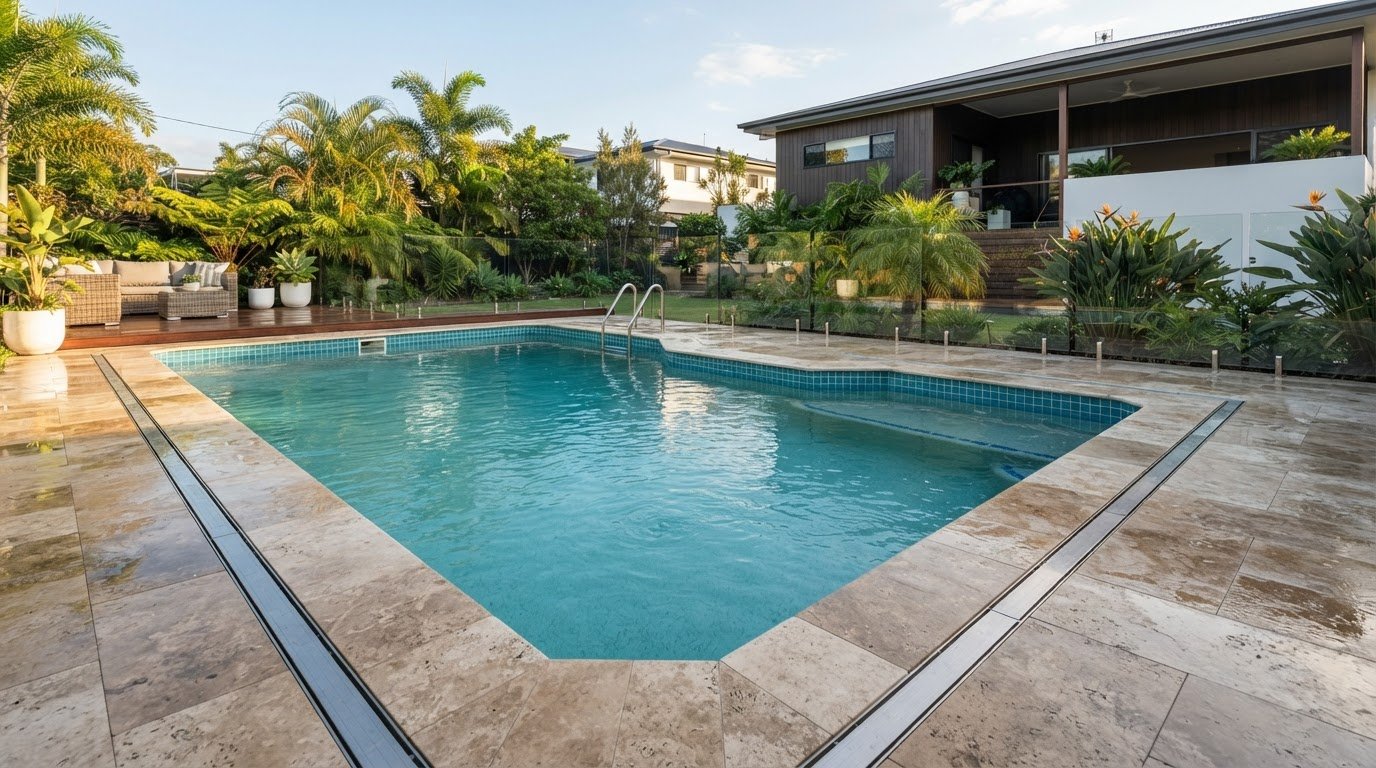
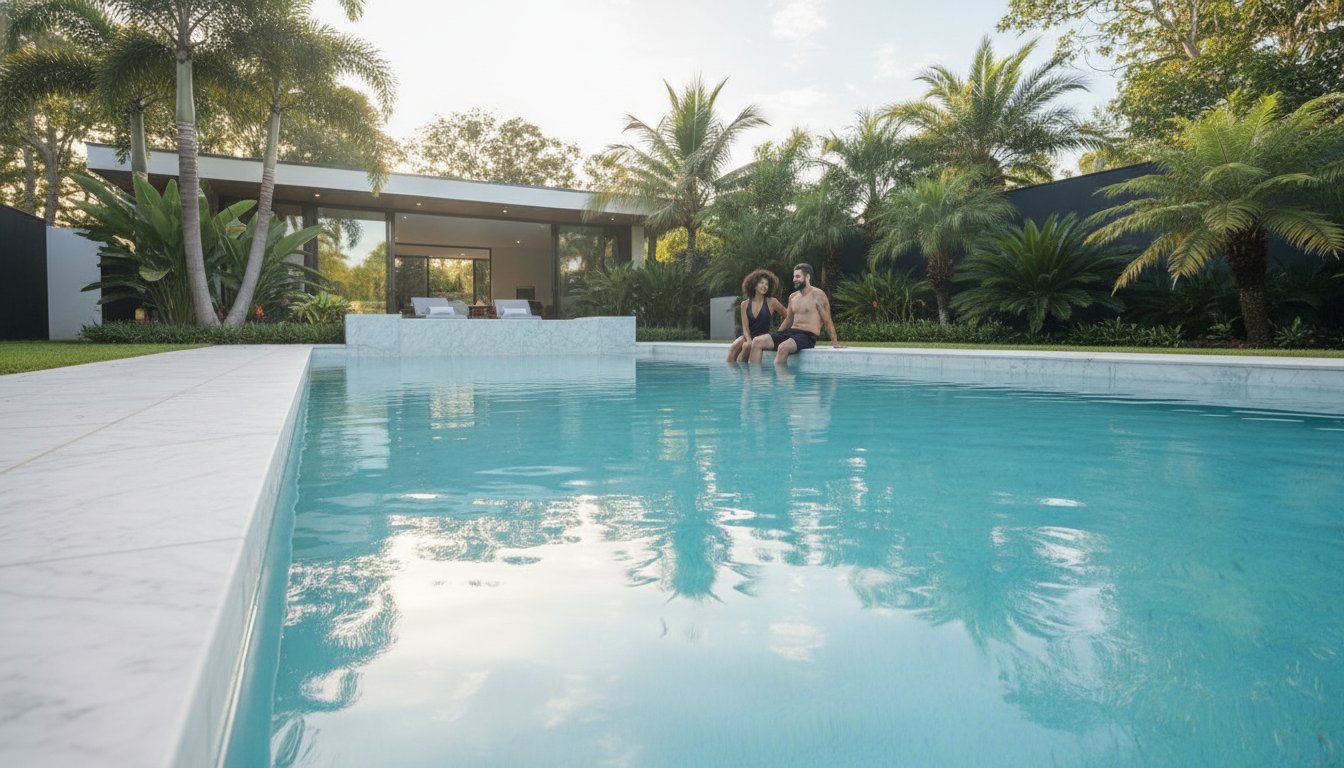
Marble creates a visual depth that other materials struggle to replicate. By reflecting light through the water column, it produces a vibrant “sky blue” effect that remains bright even on overcast Brisbane days. This finish offers a timeless appeal that suits high-end residential estates and luxury commercial pools alike. It provides a seamless, architectural look that enhances the clean lines of a modern outdoor space, ensuring your home maintains a sophisticated and high-value aesthetic for decades to come. It’s about precision, elegance, and a sense of calm.
The Natural Appeal of Textured Pebble
Textured pebble finishes are often favoured for their ability to create a resort or lagoon-style atmosphere. By selecting specific stone blends, homeowners can achieve earthy, natural tones that mimic a tropical beach entry or a secluded creek bed. These surfaces are naturally adept at concealing minor structural imperfections in the concrete shell, which can be a practical benefit for older pool restorations. With pebble sizes ranging from fine mini aggregates to larger river stones, it’s a versatile option for those who prefer a tactile, grounded connection to nature in their backyard. However, this rustic look often comes with a trade-off in surface smoothness that families with young children should consider carefully.
Durability and Longevity: Debunking the ‘Short-Life’ Myth of Smooth Finishes
A common misconception in the Brisbane pool industry is that a smooth crushed marble finish is a temporary luxury, while pebblecrete is the only “forever” solution. This simply isn’t the case. When comparing a smooth vs textured pool finish, the longevity often depends more on the quality of the application and the homeowner’s commitment to water chemistry than the material itself. While river pebbles are naturally hard, the cement matrix that holds them together is what often fails first. In contrast, a high-grade marble finish creates a dense, uniform barrier that is remarkably resilient against the punishing SE Queensland sun.
The idea that smooth surfaces are fragile or prone to cracking is a relic of poor installation practices rather than a flaw in the material. Modern remarbling techniques involve specific curing processes that allow the finish to reach peak structural integrity. When applied by seasoned professionals, a marble interior doesn’t just look better; it provides a stable, long-term solution that has been proven in local backyards for over half a century. We often see 50-year-old pools in Brisbane’s older suburbs that still feature their original marble interiors, standing as a testament to the material’s inherent strength.
Resistance to the Elements
SE Queensland’s intense UV radiation and fluctuating temperatures can be punishing on pool interiors. High-grade crushed marble is surprisingly resilient because it handles calcium scaling differently than textured pebble. Because the surface is uniform, minerals have fewer places to “grip” and crystallise. This is a primary reason why health and safety regulations for public facilities often mandate smooth and easily cleanable finishes to ensure long-term hygiene and structural health. Without the deep nooks found in textured aggregate, your pool’s chemical balance remains more stable, preventing the aggressive acid washes that can shorten a pool’s lifespan.
Structural Integrity and Resurfacing
For homeowners considering pool resurfacing, smooth marble offers a distinct advantage in mechanical bonding. Because the marble dust is so fine, it integrates more tightly with the concrete shell than bulky, rounded pebbles. This creates a superior bond that resists the “hollows” or delamination often found in older pebble pools. If you’re planning a residential pool restoration, choosing a material that bonds effectively today ensures a much smoother transition for any future renovations decades down the line. It’s a choice that respects both the history of your home and its future value.
Maintenance and Algae Control: Which Surface is Easier to Clean?
A common argument in favour of pebblecrete is that it hides dirt well. While this might seem like a benefit, hiding debris is not the same as having a clean pool. In the humid Brisbane summer, the “micro-climate” created within the deep crevices of a textured finish provides the perfect sanctuary for algae to take root. When evaluating a smooth vs textured pool finish, the ease of maintenance is often the deciding factor for busy families who would rather spend their weekends swimming than scrubbing. A smooth surface doesn’t just look cleaner; it fundamentally changes the way you manage your pool’s hygiene.
The physical profile of your pool’s interior directly impacts the efficiency of modern cleaning technology. Robotic pool cleaners, which are now standard in many Queensland backyards, operate with much higher precision on smooth crushed marble. Because there are no jagged edges or deep pits, the cleaner’s brushes maintain constant contact with the surface, ensuring every centimetre is vacuumed effectively. When reviewing Pool & Hot Tub Alliance (PHTA) guidance on pool finishes, it becomes clear that surface texture dictates the long-term hygiene and care requirements of the water environment.
The Algae Battle
Black spot algae is a notorious challenge for Brisbane pool owners, particularly in older textured pools where the organisms can burrow deep into the cement between pebbles. Once algae establishes itself in these nooks, removing it often requires aggressive manual brushing and high doses of algaecide. A smooth crushed marble finish eliminates these hiding spots. Without the “grip” provided by an exposed aggregate, algae struggles to colonise the surface. This means you can maintain a sparkling interior with significantly less physical labour and fewer chemical interventions over the life of the pool.
Chemical Usage and Water Balance
The porosity of your pool’s interior plays a significant role in your ongoing chemical costs. Textured finishes tend to be more porous, which can lead to more frequent fluctuations in pH levels and total alkalinity. Smooth marble, being denser and more uniform, helps maintain a stable Langelier Saturation Index (LSI), which is the standard measure of water balance. When your water is balanced, your saltwater chlorinator operates more efficiently, and you’ll find yourself spending less on corrective chemicals. This stability doesn’t just save money; it protects your equipment and ensures the water is always gentle on your family’s eyes and skin.
Safety and Comfort: The ‘Pebble Rash’ Factor for Brisbane Families
While the technical aspects of durability and maintenance are vital, the physical experience of your family is what truly defines the success of a pool renovation. For many Brisbane and Gold Coast families, the term “pebble rash” is a familiar frustration. It refers to the abrasive friction that occurs when soft, water-soaked skin meets the jagged edges of exposed aggregate. When you’re weighing the pros and cons of a smooth vs textured pool finish, the sensory impact on your children’s skin is often the most immediate factor you’ll notice during a long summer afternoon of play.
There’s a common misconception that a smooth marble finish is inherently more slippery than a textured one. In reality, a hand-troweled crushed marble surface provides a consistent, reliable grip underfoot without the need for sharp, protruding stones. The slip-resistance on steps and ledges comes from the natural friction of the cement-based material rather than the size of the aggregate. This makes smooth finishes a safer, more comfortable choice for active swimmers who spend hours jumping, diving, and playing water sports. It’s about creating a space where the only thing your guests feel is the cool relief of the water. For those who want to take their passion for the water further into the ocean, click here to learn about the custom scuba diving adventures organized by Robin Wing Travel.
Protecting Young Swimmers
Children don’t just swim; they climb, crawl, and lounge on every available surface of the pool. In a textured pool, this activity frequently leads to scraped knees and sore feet, often called “pebble toe.” A smooth crushed marble finish is the “ouch-free” alternative that encourages longer play sessions. Because the surface is uniform and gentle, young swimmers can move freely without the risk of skin irritation. If you’re planning a backyard upgrade, choosing a smooth crushed marble pool finish ensures your sanctuary remains a place of comfort for your most precious swimmers.
The Luxury Feel
There’s a reason why the world’s most renowned resort renovations almost exclusively favour smooth interiors. The tactile sensation of hand-finished marble is often compared to polished stone, offering a sophisticated warmth that textured surfaces cannot replicate. This sensory quality transforms a standard soak into a high-end spa experience, making the water feel softer against the skin. It provides a timeless, architectural elegance that makes your pool feel like an extension of your home’s interior design. When you choose a smooth finish, you’re investing in a level of craftsmanship that prioritises both the aesthetic value and the physical well-being of everyone who enters the water.
The Rod Cameron Standard: Why We Specialise in Smooth Crushed Marble
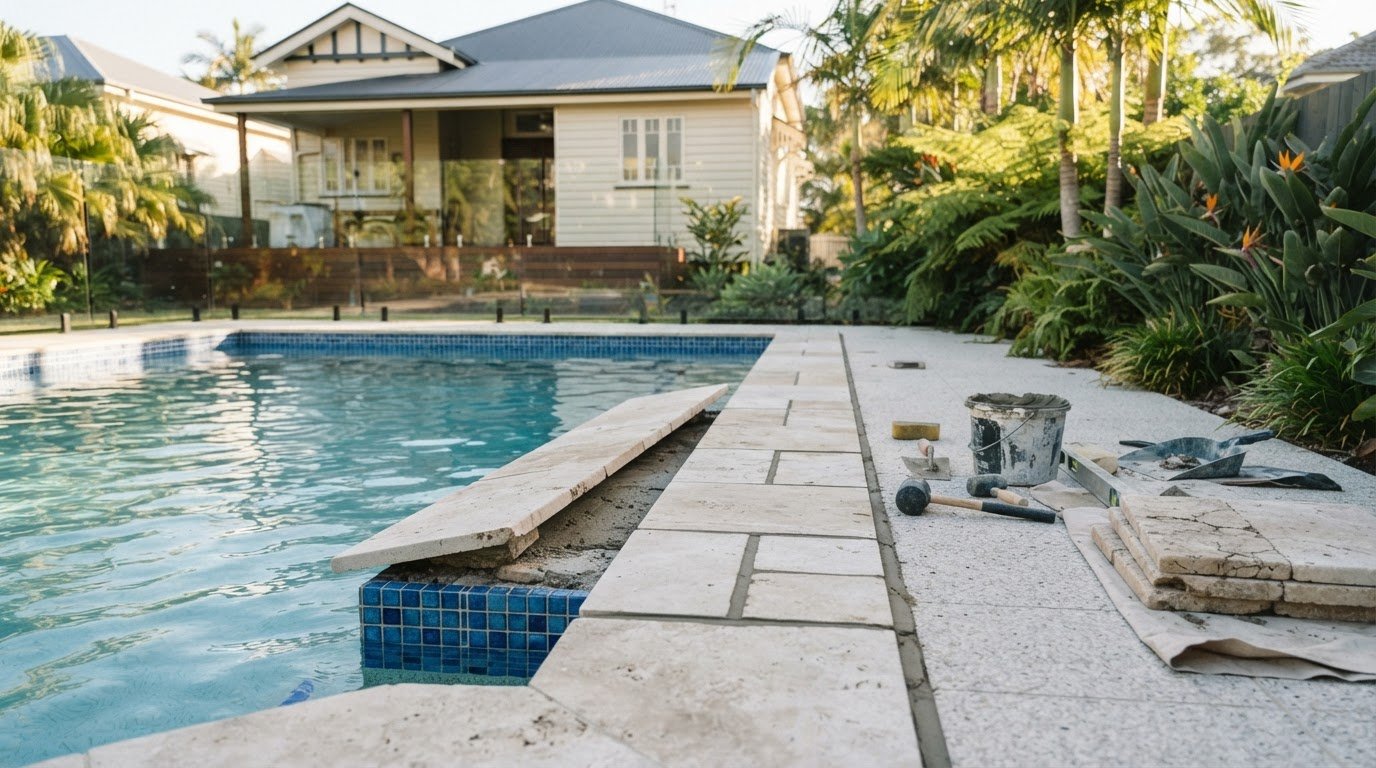
Our commitment to quality isn’t a marketing slogan; it’s a legacy that began in 1968. Over the last five decades, we’ve seen pool trends shift and materials evolve, yet our dedication to the smooth crushed marble pool finish remains unchanged. When homeowners weigh the pros and cons of a smooth vs textured pool finish, they often come to us after years of dealing with the physical discomfort of abrasive surfaces. We specialise in remarbling because we believe every Brisbane family deserves a pool that is as gentle on the skin as it is beautiful to look at.
Achieving a flawless result requires more than just high-quality materials. It demands a level of manual precision that can’t be replicated by machines or hurried crews. Our team uses a specific blend of premium crushed marble and white Portland cement, refined over generations to withstand the unique chemical and environmental pressures of South East Queensland. This bespoke approach ensures that the interiors of concrete pools Brisbane wide remain vibrant, durable, and structurally sound for decades.
Our Time-Tested Process
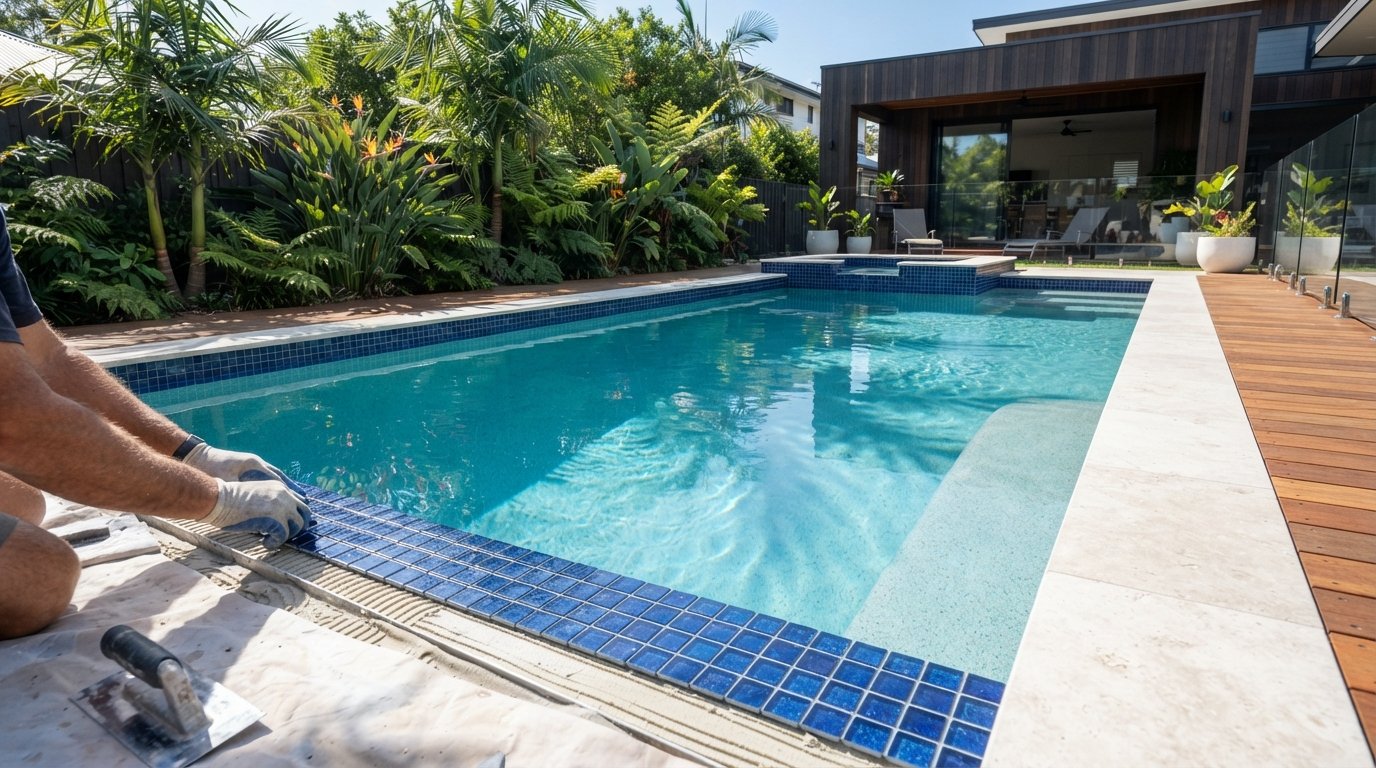
The secret to a truly smooth finish lies in the hand-trowelling process. Our artisans spend hours meticulously smoothing the surface to ensure a consistent, light-reflecting glow that machine-applied finishes simply cannot match. We understand that every backyard is different, and we’ve developed specialised techniques to manage difficult site access for renovations across SE Queensland. Whether your pool is tucked into a tight suburban block or perched on a steep hillside, our methodical approach remains the same. We provide fixed-price quotes to ensure there are no surprises, giving you the confidence that your project will be handled with the care and honesty it deserves.
Transforming Your Pool
We’ve had the privilege of transforming hundreds of Brisbane pools from dated, abrasive interiors into modern marble masterpieces. These restorations do more than just improve the aesthetic value of the property; they revitalise the way families use their outdoor spaces. A properly executed remarbling project is built to last another 20 to 30 years, providing an enduring return on your investment. At the end of the day, our business is built on local reputation and the pride we take in our workmanship. We don’t just resurface pools; we create the grounded, reliable backdrop for your family’s future memories.
Creating a Backyard Legacy of Comfort and Quality
Deciding on the right interior is a commitment to your family’s lifestyle, your home’s long-term value, and your own peace of mind. We’ve explored how the choice between a smooth vs textured pool finish impacts everything from the health of your skin to the hours you spend on weekly maintenance. By choosing a smooth crushed marble interior, you eliminate the abrasive texture of exposed aggregate, reduce the chemical demand of your water, and secure a surface that is naturally resistant to stubborn algae growth. It’s a choice that prioritises comfort, cleanliness, and a timeless architectural aesthetic.
Since 1968, our team has been dedicated to perfecting the art of remarbling for families across Brisbane, the Gold Coast, and the Sunshine Coast. We take immense pride in our local reputation, opting for a methodical process that ensures a solid and reliable result every time. If you’re ready to move away from rough surfaces and embrace a pool that feels as good as it looks, we’re here to guide you through a frictionless restoration. Get a Fixed-Price Remarbling Quote from Rod Cameron Pools and take the first step toward a more comfortable backyard sanctuary. We look forward to helping you protect your legacy of shared summer memories.
Frequently Asked Questions
Is a smooth pool finish more slippery than a textured one?
A smooth finish is not inherently more slippery than a textured alternative. While it feels soft underfoot, the hand-trowelled surface of crushed marble offers a consistent grip that meets standard safety requirements for pool steps and ledges. This texture provides enough friction for safe entry and exit while remaining gentle on the skin. It’s a common choice for public and commercial facilities where safety and ease of cleaning are equally prioritised.
Does a marble pool finish stain more easily than pebblecrete?
Marble finishes are remarkably resistant to deep-seated staining because they lack the porous nooks and crannies found in exposed aggregate. While any cement-based interior requires balanced water chemistry, the uniform surface of a smooth vs textured pool finish makes it much easier to wipe away organic debris before it can leave a mark. Regular maintenance is simplified because dirt and minerals have no place to hide or crystallise on the walls.
How long does a smooth crushed marble finish actually last in Brisbane?
A professionally applied smooth crushed marble finish can last between 20 and 30 years in the Brisbane climate. We’ve encountered many local residential pools where the original marble interior has remained structurally sound for over 50 years. The key to this longevity is the density of the material and the skill of the hand-finish, which creates a durable barrier against the intense Queensland sun and constant chemical exposure.
Can I change my existing pebblecrete pool to a smooth marble finish?
You can certainly upgrade an existing pebblecrete pool to a smooth marble finish during a restoration project. The process involves carefully preparing the old surface to ensure a superior mechanical bond for the new interior. This transformation is a popular choice for families who are tired of “pebble rash” and want to modernise their outdoor space. It’s a reliable way to breathe new life into an older concrete shell.
Which pool finish is better for a saltwater pool system?
Smooth crushed marble is an excellent choice for saltwater systems because its dense structure handles the electrolytic process with ease. Saltwater pools require a stable Langelier Saturation Index (LSI) to prevent scaling or erosion, and a non-porous marble surface helps maintain this balance more effectively than textured options. This stability protects your chlorinator cell and ensures the water remains gentle and clear for every swim.
What is the price difference between smooth and textured pool finishes?
The cost difference between smooth and textured finishes often reflects the level of craftsmanship required rather than just the raw materials. While high-grade crushed marble and river pebbles are priced similarly, a smooth finish requires significantly more hand-trowelling by seasoned artisans to achieve a flawless result. Many Brisbane homeowners find that the long-term savings on chemicals and the increased comfort make it a high-value investment for their property.
Does the water colour look different with a smooth vs textured finish?
The interior finish significantly alters the visual personality of your water. A smooth marble surface reflects light back through the water column, creating a vibrant and luminous “sky blue” effect. Textured finishes tend to absorb more light, resulting in deeper, more earthy tones that suit a rustic or tropical lagoon style. Your choice of a smooth vs textured pool finish will define whether your pool looks like a modern architectural feature or a natural pond.
How do I know if my pool needs remarbling or just a deep clean?
You’ll know your pool needs remarbling if you notice structural issues like delamination, “hollows,” or a surface that feels like sandpaper. While a deep clean can remove surface algae, it won’t fix the underlying degradation of the cement matrix or restore the original smoothness. If the interior is causing skin irritation or requires excessive chemicals to stay clear, it’s likely time to consider a professional restoration to protect the integrity of your concrete pool.