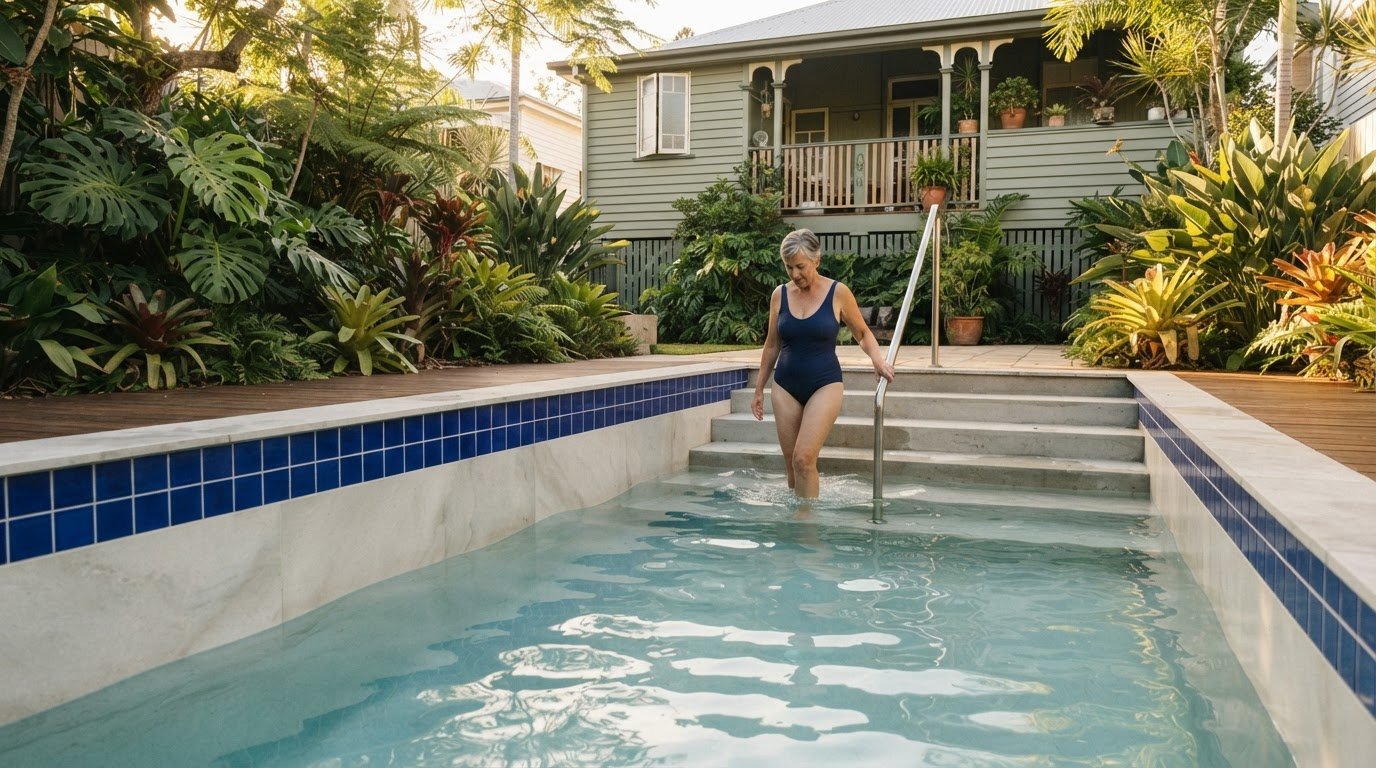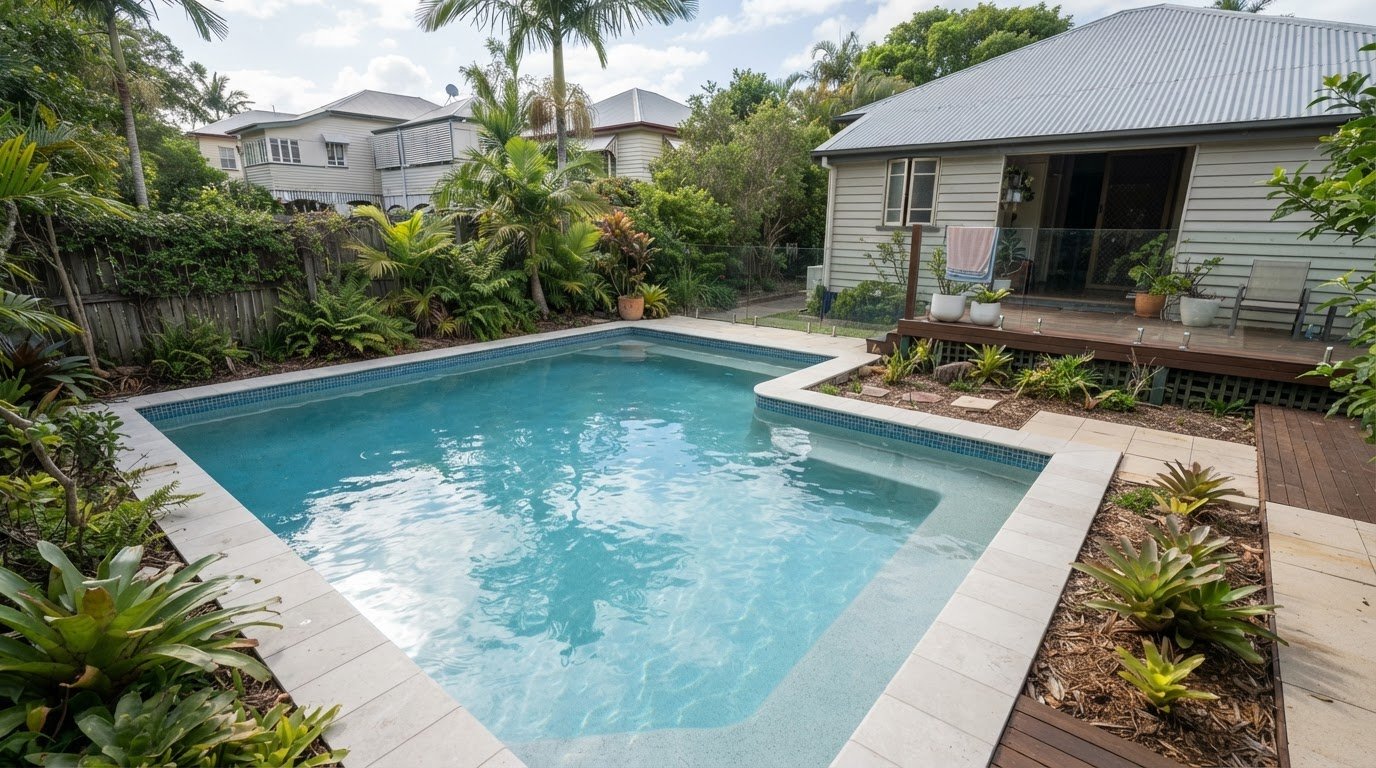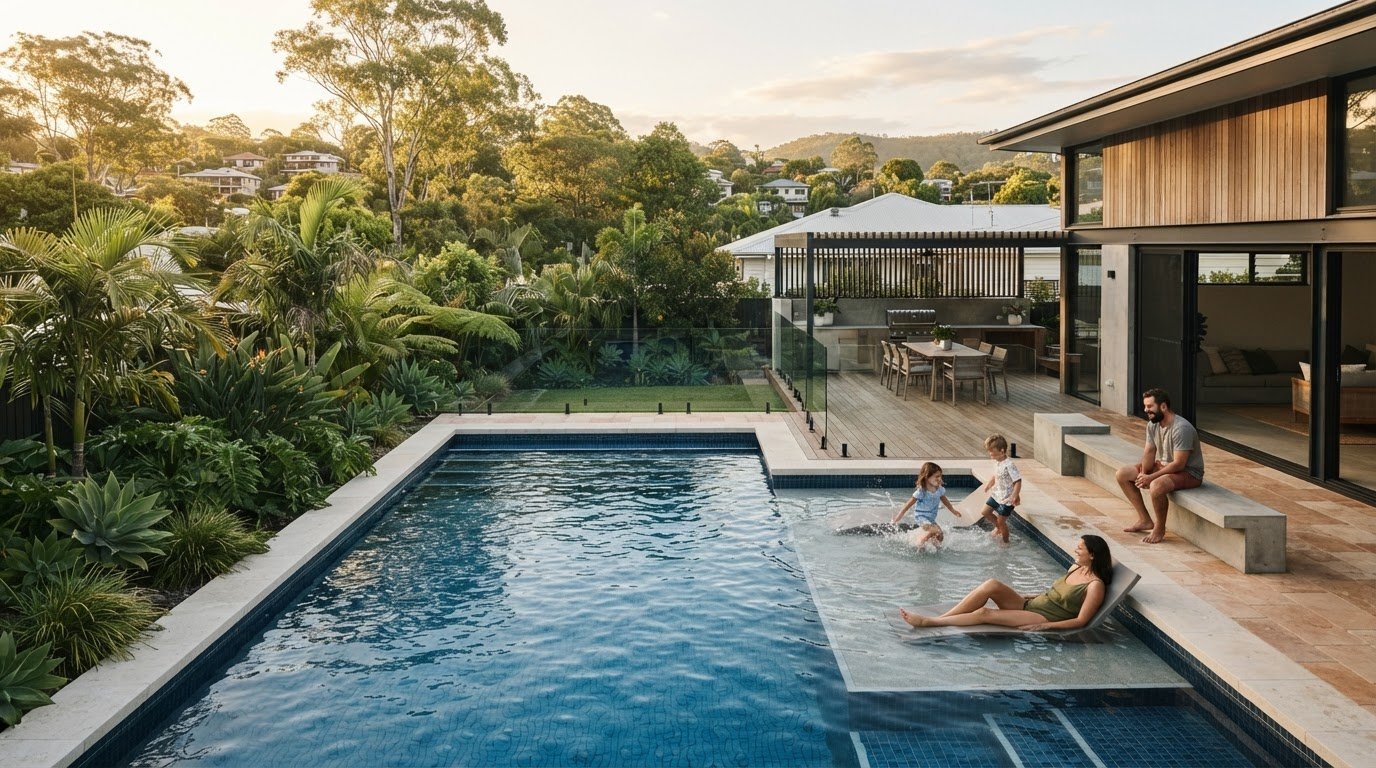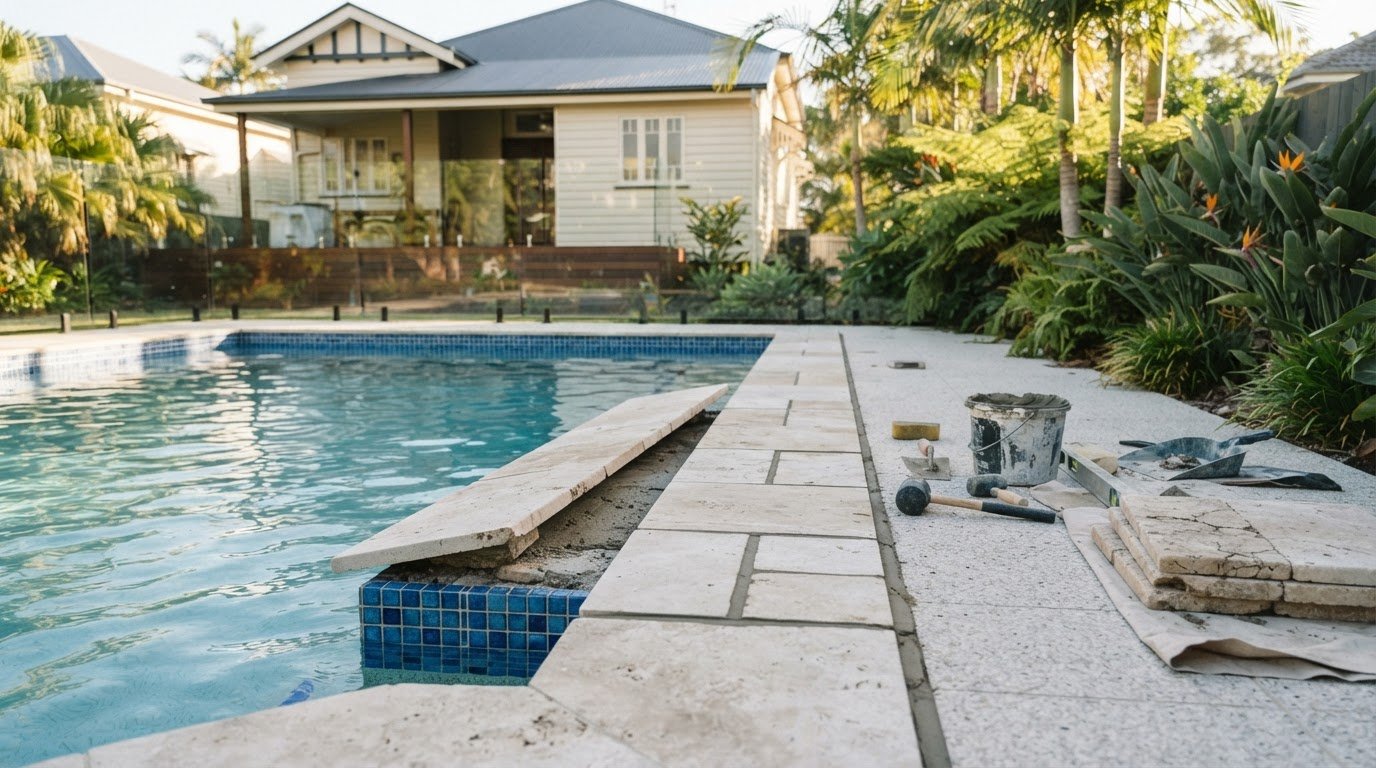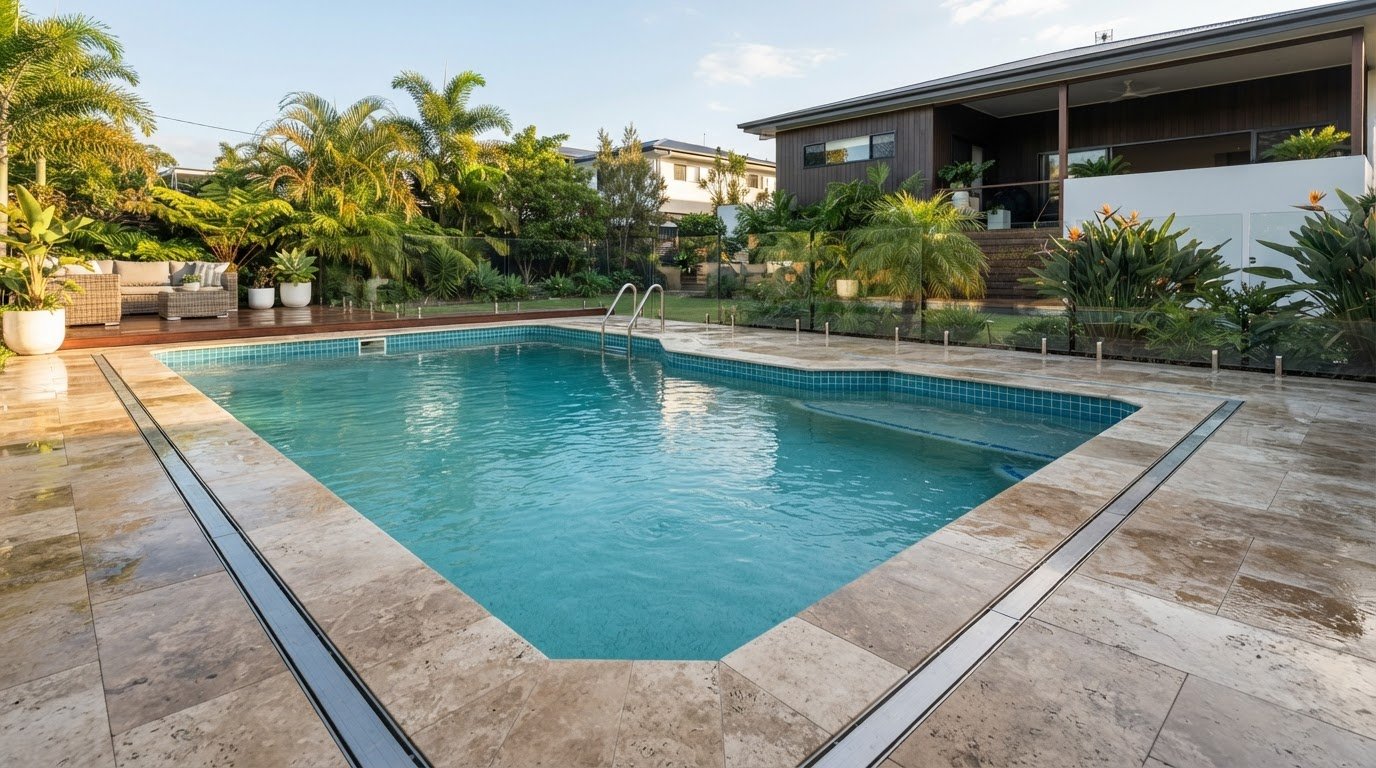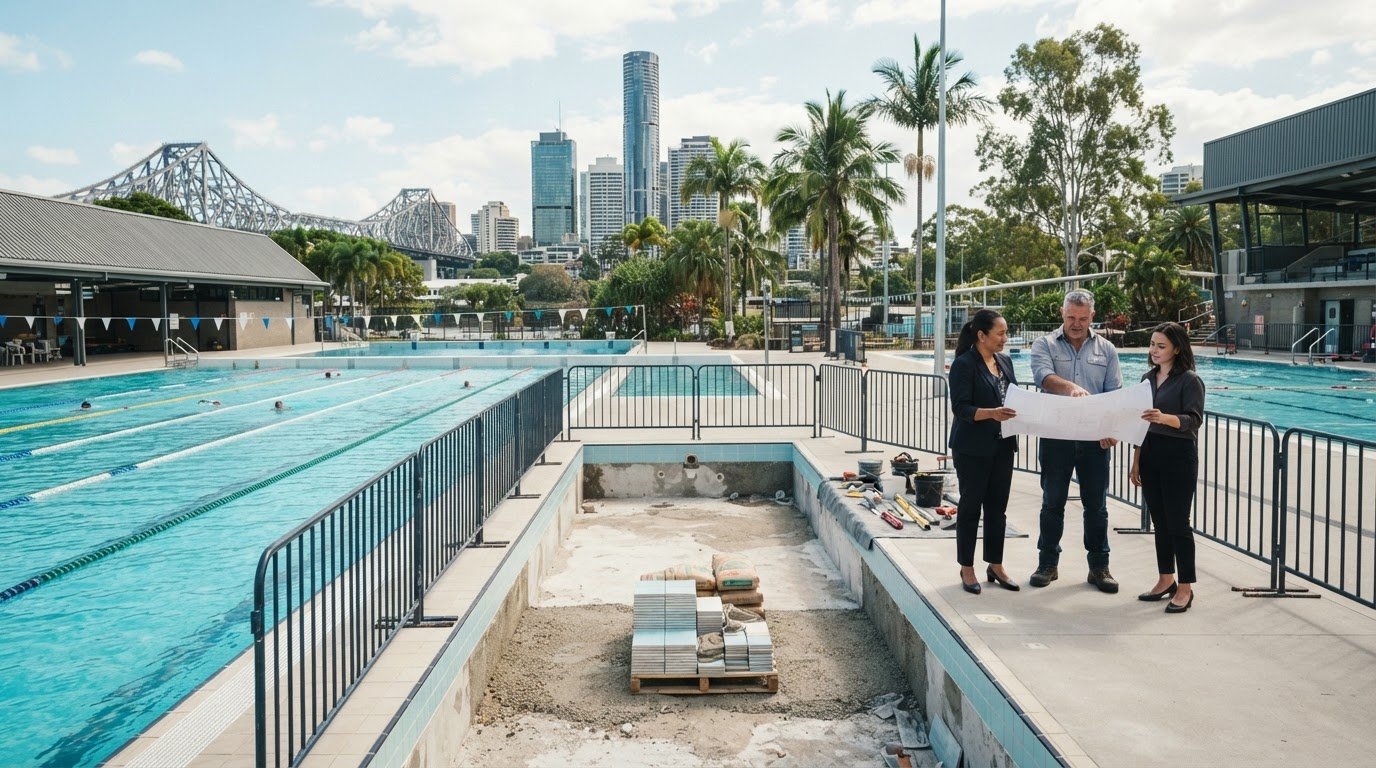

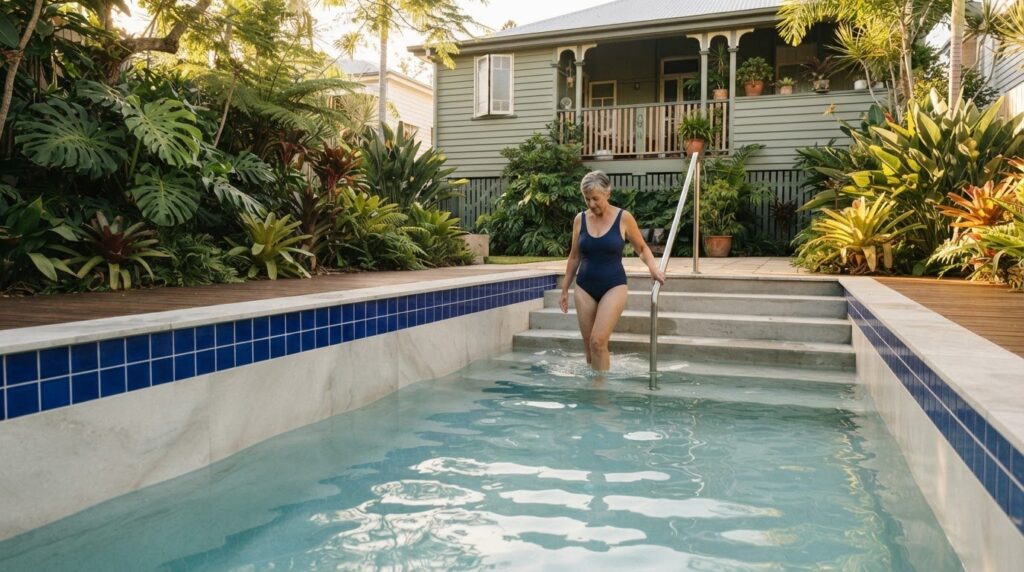
A pool makeover can do more than refresh the look: it can address a worn surface, dated tiles and details that no longer suit how you use the backyard. A backyard pool makeover in Brisbane can renew the pool’s appearance and give you a chance to assess its condition and identify the work it needs.
It’s sensible to understand the options before committing to a renovation. The right approach depends on the existing surface, the changes you want and how you use the pool, so start by comparing the work each option involves.
This guide explains why pool owners renovate, what to consider when choosing resurfacing finishes, colours and tiles, and how project timing is shaped by the work involved. It also outlines the qualifications and practical experience to look for, so you can make informed decisions and plan a considered transformation for your Brisbane backyard.
Key Takeaways
- Look beyond appearance when deciding whether to renovate: surface wear, repairs, safety and how the pool is used can all shape the scope.
- Choose a resurfacing finish and colour with the pool’s existing condition and the look you want in mind.
- Tile choices can refresh the pool’s details and work alongside its interior surface for a more cohesive finish.
- Project timing depends on the work involved, including preparation, application and curing, so plan around the full renovation process.
- Understand the team’s relevant pool renovation experience and how its work is managed before settling on a makeover approach.
Why renovate your swimming pool?
A swimming pool renovation can address a worn concrete surface, damaged tiles or changes in how your household uses the backyard. In Brisbane, it’s also an opportunity to consider pool safety alongside appearance and function.
Renovation Reasons and Concrete Restoration
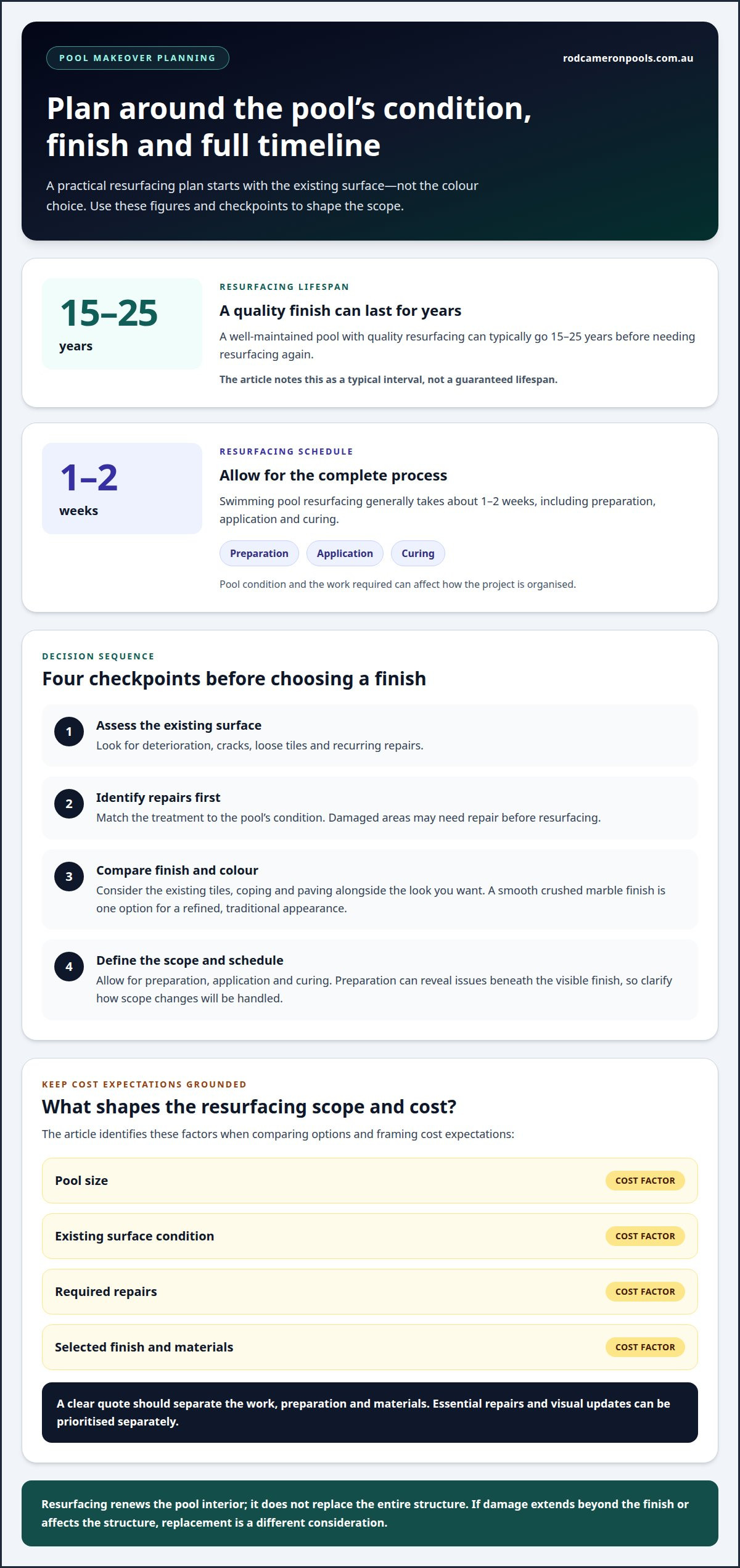
Look for surface deterioration, loose tiles, visible cracks and repairs that keep recurring. These signs can point to different needs, from refinishing a concrete pool to repairing damage before applying a new surface. A renovation may combine concrete resurfacing and refinishing, while restoration focuses on the pool’s existing condition and the work needed to renew it. Match the treatment to the problem to define a practical scope.
Safety is another reason to review an older pool. Queensland pools must be registered and meet pool safety standards. For a safety certificate, the pool fence must be high and strong enough, a visible CPR sign must be placed at the pool, and climbable objects outside the designated zone must be inaccessible. These requirements are separate from appearance upgrades.
Budget-Conscious Renovation Solutions
To plan within your budget, separate essential repairs from visual changes. A pool with a sound structure but a tired interior may need surface work, while loose tiles or concrete damage can expand the scope. Prioritise issues affecting the pool’s condition, then consider whether colour or tile updates fit the project plan.
A renovation quote should describe the work, preparation and materials as separate parts of the scope. A consultation can help establish those priorities and shape a quote around the pool’s condition. Don’t assume a consultation is free; no fee is stated here. The main cost drivers are the pool’s size, existing surface, required repairs and selected finish, rather than a single standard package.
Approvals and Makeover Steps
Brisbane City Council approval depends on the proposed work and its effect on the pool or surrounding structures. Surface renewal differs from work that changes the pool structure or barrier, so define the scope before identifying the relevant approval pathway. Queensland registration and pool safety standards remain important when renovation work affects safety features.
A backyard pool makeover typically involves assessing the pool, defining the scope, preparing the surface and completing the renovation work. For example, a concrete pool with damaged areas may need repairs before resurfacing. Preparation can reveal issues beneath the visible finish, so clarify how changes to the scope will be handled.
To consider energy use and running costs, review the pump, filtration schedule, heating and lighting as part of the renovation plan. The opportunities depend on the equipment already installed and how often the pool is used. These checks can sit alongside surface decisions, but they are separate from concrete restoration.
Pool surface resurfacing and colour choices
Resurfacing can renew a pool’s interior without replacing the entire structure. The right finish depends on the existing surface, its condition and the look you want.
Resurfacing and Refinishing Options
Resurfacing renews the pool interior, while refinishing means applying a new finish to a prepared surface. Full replacement is a different consideration if damage extends beyond the finish or affects the structure. For a concrete pool, begin by assessing the existing surface, identifying repairs and matching the treatment to its condition.
A smooth crushed marble finish is one option for a refined, traditional appearance. The finish can form part of a broader pool project, but the surface still needs suitable preparation before application. A well-maintained pool with quality resurfacing can typically go 15-25 years before needing resurfacing again.
Surface Colours and Makeover Ideas
Colour sets the mood of the pool area, from a light, understated interior to a deeper, more dramatic look. Consider how a shade will sit beside existing tiles, coping and paving. For example, a restrained surface colour can let patterned waterline tiles provide the stronger visual detail.
Brisbane makeover ideas can also connect the pool finish with the wider backyard lifestyle. Choose a colour that complements the home and outdoor entertaining area, rather than treating the pool as a separate feature. Poolside plants should withstand splashes of pool water and avoid dropping too many leaves.
Before settling on a finish, follow a clear order: assess the surface, decide whether repairs are needed, then compare colour and finish options. This keeps the visual choice grounded in the pool’s condition and helps distinguish surface renewal from replacement work, which has a different scope.
Preparation, application and curing all contribute to the schedule. Swimming pool resurfacing generally takes about 1-2 weeks, including those stages. The pool’s condition and the work required can shape how the project is organised, so plan around the full process rather than application alone.
For a considered finish, pool resurfacing options can be discussed alongside the surface condition and colour direction. A clear scope brings together the practical work and the look you want, helping the finished pool complement your home and daily use.
Budget is another factor when comparing resurfacing choices. These considerations make the pool assessment important not only for selecting a suitable finish, but also for understanding the project cost.
When weighing colour and finish preferences, keep the cost drivers in view: pool size, materials and existing surface condition all affect the cost. Discussing the current surface alongside your preferred materials helps frame cost expectations before you choose a direction.
Pool tiles and interior surfaces
Tiles add definition to a pool, while the interior finish creates its larger visual field. Treat them as connected choices: a blue waterline tile, for example, can complement a lighter interior without competing with it.
Start by identifying which tiled areas need attention. Check the waterline, steps, corners and transitions between tiled and finished surfaces. Cracked tiles, loose edges or deteriorated grout can affect the appearance of specific areas. Record their locations to give the renovation plan a clear starting point.
Next, decide whether you want a targeted update or a coordinated change. Replacing a small section can preserve an existing design, while updating the waterline and steps together can create a more unified result. The pool’s shape matters too: horizontal tile lines can emphasise its length, while contrasting details can make steps more distinct.
Consider colour and pattern alongside the interior surface. A strong tile pattern can become the focal point, so a quieter interior may balance it. Conversely, subtle tiles can support a more expressive finish. Compare samples beside the pool’s coping and paving, because surrounding colours affect how the combination looks.
During pool renovations, sequence matters. Consider tiles and the interior finish together before work begins, rather than treating them as unrelated selections. The existing surfaces’ condition helps determine whether tiles can remain, need repair or should be replaced. A clear plan also helps keep the finished look consistent around the pool.
- Location: Identify whether the change concerns the waterline, steps, corners or several areas.
- Condition: Note loose, cracked or visibly worn sections for assessment.
- Palette: Compare tile samples with the interior finish, coping and paving.
- Design: Choose whether tiles should blend in or provide a distinct accent.
For a welcoming pool area, choose details that suit how you use the space. A simple, continuous border can support a calm setting; a contrasting band can give the pool more definition. The best combination connects the interior, tilework and backyard without making any single detail feel out of place.
Before finalising selections, bring the design decisions together in one plan: tile locations, colour relationships and the intended interior finish. This gives the renovation a coherent visual direction and helps distinguish a focused tile update from a broader interior transformation.
Project timelines and completion estimates
A resurfacing schedule includes preparation, application and curing, not just the visible finishing work. In Brisbane, planning for each stage helps set realistic expectations for pool access.
Swimming pool resurfacing generally takes about 1-2 weeks, including preparation, application and curing time. That estimate describes resurfacing, not every possible backyard makeover. A project involving extra repairs or several renovation tasks has a different scope, so its completion estimate should reflect the actual work required.
A useful schedule follows the work in sequence. The stages below show why application is only one part of the overall timeframe:
- Scope and preparation: The pool’s existing finish is assessed, and the required work is planned.
- Surface preparation: The pool is prepared for its new finish, with repair needs addressed within the agreed scope.
- Application: The selected resurfacing finish is applied to the prepared surface.
- Curing: The finish needs its curing stage before the project can progress to completion.
Each stage affects the next. Additional surface repairs, for example, change the preparation work, while a finish that is still curing is not ready for use. A clear schedule separates preparation, application and curing rather than describing the project only by its application day.
Full renovations can involve more than resurfacing. Tile work, repairs or other agreed changes add tasks that need to be sequenced with the interior finish. A customer testimonial describes a pool renovation completed in under 1 month. That example reflects one project, rather than a standard duration for every pool makeover.
Before work begins, a practical completion estimate should reflect the pool’s condition and the planned tasks. It should identify the preparation required, selected finish, repair work and curing stage. If preparation reveals additional work, the schedule should account for it rather than assume the original sequence remains unchanged.
For Brisbane households, planning also means allowing for the time the pool will be unavailable during renovation. Set expectations around the work stages, and don’t arrange pool use before curing is complete. A practical sequence defines the scope, schedules each stage, then allows the finish to cure before the pool returns to use.
A customer testimonial says a pool renovation was completed from start to finish in 2 days. That account offers a specific example, not a planning benchmark for other properties. The time needed for another project depends on its agreed scope and the work identified during preparation, so a brief testimonial should not replace a project-specific schedule.
Before setting expectations, confirm which tasks are included and how their sequence affects the handover. Ask for the estimate to distinguish the work period from the point when curing is complete and the pool can be used again. If the condition of the surface leads to added repairs, revisit the timeline and clarify how those tasks affect later stages. Keeping the scope and milestones clear makes it easier to plan around restricted pool access without assuming that a short completion story applies to every renovation.
What are popular backyard pool makeover ideas in Brisbane?
A cohesive makeover connects the pool finish with the surrounding backyard. In Brisbane, start with the existing home, paving and how you use the outdoor space, then choose updates that work together rather than compete for attention.
Unify the pool and patio. Treat the interior finish, waterline tiles and nearby paving as one visual composition. A restrained pool surface, for example, can sit comfortably beside patterned tiles, while a stronger tile detail can give a simple pool edge definition. Use a few complementary colours to create a considered transition between the water and entertaining area.
Give steps and edges a clear role. A contrasting tile band on steps or along the waterline can create a deliberate design feature. If the pool has distinctive coping, echo one of its tones in the tile selection. This creates continuity without requiring every surface to match. For a more understated result, keep the border simple and let the pool’s shape provide visual interest.
Choose plants for their position. Poolside plants should withstand splashes of pool water and avoid dropping too many leaves. Consider where foliage sits in relation to the water and areas used for seating or walking. A plant near a lounge area, for example, should not obstruct the route around the pool, while a leafy feature can frame a corner without adding too much debris to the water.
Plan the backyard as a sequence. Think about how people move from the house to the pool, then to a dining or seating area. A clear path, consistent paving tones and a defined place for outdoor furniture can make the space feel more organised. Keep the pool edge visually distinct from the entertaining area, especially where different materials meet.
Match the makeover to everyday use. A family-focused backyard may benefit from clear access around the pool and durable, easy-to-coordinate finishes. A quieter retreat might use a simpler palette, restrained tile detail and carefully placed planting. These are design directions, not fixed templates; the pool’s shape, existing materials and household routines should guide the final choices.
Before work begins, bring the decisions together: select the interior finish, choose tile locations, consider how the paving relates to the pool and plan planting positions. This helps avoid isolated updates that clash once installed. It also gives the project a clear visual direction, whether you want a subtle refresh or a more complete transformation.
Ready to shape a backyard pool makeover in Brisbane around your space and lifestyle? Plan your pool transformation with the look, existing surfaces and intended use in mind.
Rod Cameron Pools
Rod Cameron Pools helps homeowners plan pool renovations around the pool’s condition, preferred finish and intended use. Its Residential Pool Services include Pool Resurfacing, Remarbling and Pool Restoration, bringing practical repairs and a renewed interior into the project scope.
Whether your pool needs a new surface or broader restoration, start by understanding its condition and how you want it to look. This provides a clear basis for discussing the right approach, from a smooth crushed marble finish to a more comprehensive renovation.
Contact Rod Cameron Pools to discuss your pool makeover and request a quote.
Shape the next chapter of your backyard
A considered renovation starts with a clear sense of what you want the pool to become. Think about the atmosphere you’re aiming for, how the space supports everyday life and which changes matter most. That vision gives a backyard pool makeover in Brisbane a personal direction instead of a collection of disconnected updates.
Rod Cameron Pools can turn that direction into practical pool work, including Pool Resurfacing, Remarbling and Pool Restoration. The right approach depends on the pool’s condition and the transformation you have in mind. Bringing those priorities together helps shape a defined project plan.
Whether you’re ready to discuss a specific finish or still refining your ideas, take the next step at a pace that feels right. Contact Rod Cameron Pools about your makeover and begin shaping a pool area that feels naturally connected to your home and lifestyle.
Frequently Asked Questions
How much does a pool renovation cost in Brisbane?
Pool renovation costs depend on the pool’s size, existing condition and agreed scope. Work may involve surface renewal, repairs or other changes, each affecting the quote differently. Rod Cameron Pools provides project quotes based on the work required and materials selected. Request a quote based on your pool and the specific changes you have in mind.
How long does a pool makeover take in Brisbane?
The timeframe depends on the renovation scope and sequence of work. A project involving one surface treatment differs from a makeover that also includes repairs or tile changes. Preparation and curing also affect when the pool is ready to use. A practical schedule should reflect the work planned for your pool and the sequence between tasks, rather than assume every makeover has the same completion date.
What pool makeover materials suit Brisbane’s climate and outdoor lifestyle?
Choose materials by considering the existing pool, the finish you want and how you use the backyard. For a concrete pool, a smooth crushed marble finish offers a traditional interior option. Tiles can add colour or define particular areas, while surrounding finishes should complement the home and outdoor setting. In Brisbane, bring these choices together in one design so the pool interior and nearby entertaining space feel cohesive.