
A single choice made during the design phase will determine whether your weekends are spent scrubbing algae or hosting effortless poolside lunches for the next 15 years. Most Brisbane homeowners expect their investment to remain pristine, yet data shows that 65% of older pools in Southeast Queensland suffer from abrasive surfaces that graze skin or harbor stubborn black spot algae. When deciding what is the best surface for a concrete pool, it’s about more than just a colour swatch. It’s about engineering a finish that withstands our intense sub-tropical UV rays while remaining soft underfoot.
At Rod Cameron Pools, we’ve spent over 40 years refining our craft to ensure every project delivers on the promise of family memories and lifestyle transformation. You’ll discover the most durable, comfortable, and aesthetically stunning pool surfaces specifically tested for our local climate. This 2026 guide previews the latest innovations in glass beads, high-performance renders, and premium tiling to help you build a quality concrete pool that feels like a luxury resort every single day.
Key Takeaways
- Learn why Brisbane’s high UV index and unique soil conditions require a flexible, high-integrity finish to ensure your pool remains an enduring family sanctuary.
- Compare the durability and aesthetics of pebblecrete, tile, and marble to determine what is the best surface for a concrete pool based on your specific lifestyle needs.
- Discover how selecting a smoother texture can prevent “pool toe” and skin abrasions, ensuring every swim is as comfortable as it is refreshing.
- Understand how to combat Southeast Queensland’s humidity by choosing UV-resistant surfaces that naturally inhibit the growth of stubborn “Black Spot” algae.
- Find out why professional remarbling is the recommended choice for 90% of Brisbane renovations to achieve a seamless, premium finish that lasts for decades.
What is the Best Surface for a Concrete Pool? An SEQ Overview
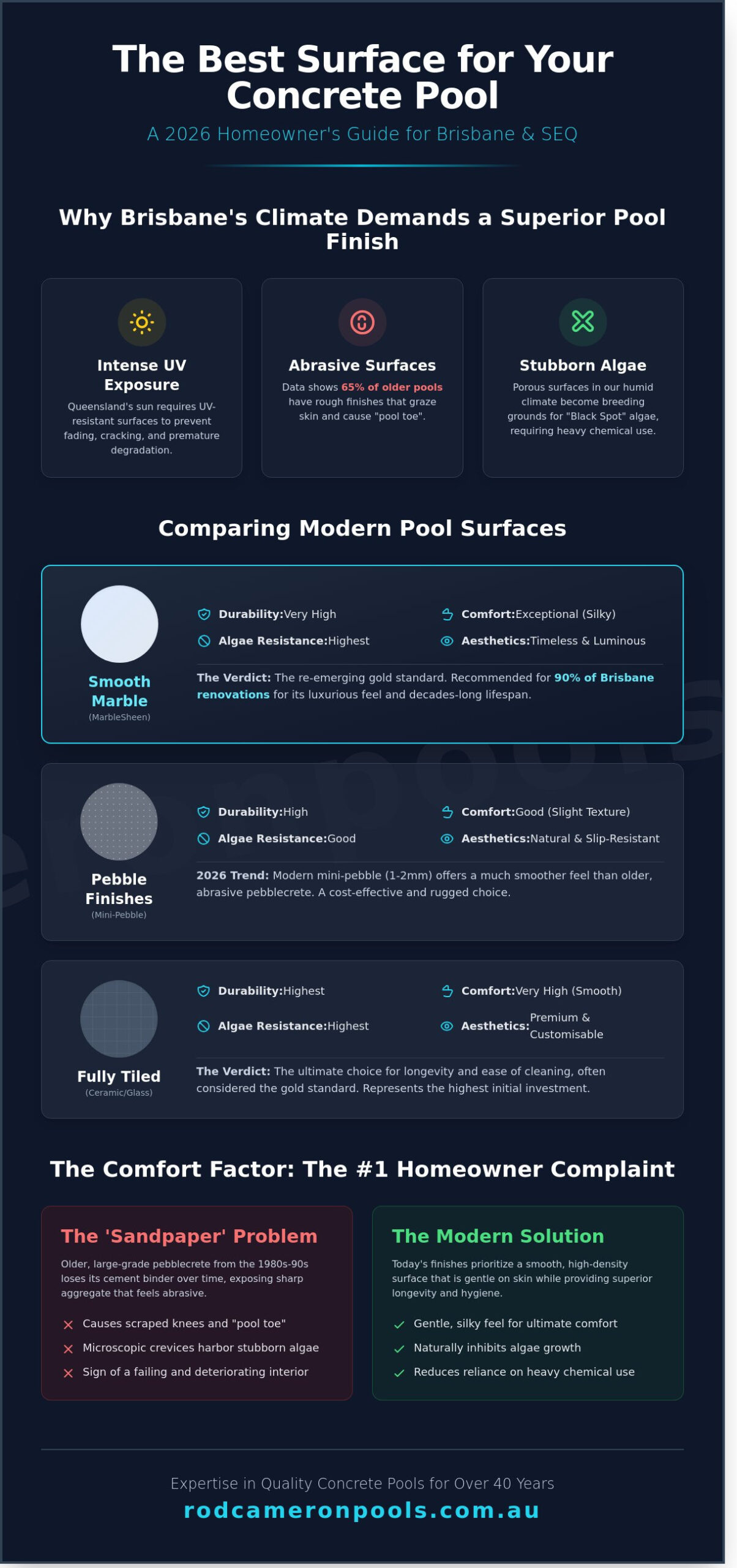
Choosing the right finish is the most critical decision in your pool construction journey. A pool interior serves two vital purposes; it provides the final layer of waterproofing and defines the visual character of your backyard. In South East Queensland, our unique climate of intense UV exposure and heavy summer storms creates a demanding environment for any material. When clients ask what is the best surface for a concrete pool, we look at how the material interacts with Brisbane’s reactive clay soils and varying water chemistry. By 2026, the trend has shifted decisively toward tactile luxury. Families now prioritise surfaces that are gentle on skin while remaining robust enough to last 25 years or more.
The top contenders for a modern Brisbane pool include:
- Polished Marble: A silky, high-end finish that offers a classic aesthetic and incredible comfort.
- Pebble Finishes: The traditional Australian choice, now refined with smaller, smoother stones for a more sophisticated feel.
- Fully Tiled: Often considered the gold standard for durability and ease of cleaning.
- Glass Beads: A vibrant alternative that adds depth and a unique shimmer to the water.
Why Surface Choice Dictates Your Pool’s Lifespan
The interior finish acts as a protective skin for the structural shell. If you choose a highly porous material, water can eventually seep through to the steel reinforcement within the concrete. This leads to oxide jacking, commonly known as concrete cancer, which can cost upwards of A$12,000 to repair if the damage becomes structural. At Rod Cameron Pools, we draw on 40 years of experience to recommend finishes that protect the underlying shell. A smooth, high-density surface prevents algae from taking root in microscopic crevices. This reduces your reliance on heavy chemical dosing and ensures your quality concrete pool remains a low-maintenance asset.
The ‘Sandpaper’ Problem in Brisbane Pools
Many older homes across Brisbane suburbs still feature the original large-grade pebblecrete popular in the 1980s. Over time, these surfaces lose their cement binder and expose sharp stone edges that turn a relaxing swim into a series of scraped knees. This roughness is more than an inconvenience; it’s a sign of a failing interior. Surface etching is the chemical erosion of the cement finish that leaves the aggregate exposed and abrasive. When deciding what is the best surface for a concrete pool, modern homeowners typically opt for micro-pebble or glass blends. These materials provide the same structural strength as old-school pebblecrete without the painful texture, ensuring your family stays comfortable in the water all summer long.
Comparing the Big Three: Pebblecrete vs. Smooth Marble vs. Fully Tiled
Selecting the right finish is a defining moment in your pool build. It dictates the water’s colour, the texture under your feet, and the amount of maintenance required over the next two decades. When homeowners ask what is the best surface for a concrete pool, the answer usually involves a trade-off between initial cost and long-term durability. In Brisbane’s climate, your choice must withstand high UV exposure and heavy summer usage while maintaining its structural integrity.
Pebblecrete: Pros, Cons, and 2026 Trends
Pebblecrete remains the rugged Australian standard for a reason. It is incredibly durable, slip-resistant, and cost-effective. For high-traffic family pools in the Gold Coast and Brisbane, it provides a dependable finish that handles chemical fluctuations well. The 2026 trend has moved decisively toward “mini-pebble” mixes. These use smaller 1mm to 2mm stones to create a much smoother surface than the chunky aggregates used in the 1990s. Colour choice is vital here; darker pebbles can increase water temperature by 2 to 4 degrees Celsius through heat absorption, which is a benefit in cooler months but something to consider during a Brisbane heatwave.
Smooth Marble: The Re-emerging Gold Standard
Smooth crushed marble, often referred to as whitecoat or marble-sheen, offers a silky tactile experience that aggregate finishes cannot match. It provides a classic, luminous blue water colour that feels sophisticated and timeless. Beyond aesthetics, the chemistry of marble is unique. Because it is a calcium-based material, it acts as a natural buffer for pool water, though it requires meticulous chemical balancing to prevent etching or scaling. If you value a soft touch and a traditional aesthetic, this is a superior choice. You can learn more about how we integrate these finishes into our Concrete Pools Brisbane: Quality Construction & Finishes.
Full Tiling: Is the Investment Justified?
Glass mosaic tiles represent the pinnacle of luxury for Brisbane homes. While the initial investment is significantly higher, often adding A$15,000 to A$25,000 to the project cost, the maintenance advantages are unmatched. Algae cannot find a foothold on the non-porous surface of glass, making the pool much easier to clean. A correctly tiled concrete pool carries a 30-year lifespan expectation, easily outlasting render-based finishes. When calculating what is the best surface for a concrete pool over a 20-year period, tiling often wins on total cost of ownership because it eliminates the need for a mid-life resurface.
- Pebblecrete: Initial cost A$4,500 – A$8,500; lifespan 15–20 years.
- Smooth Marble: Initial cost A$5,500 – A$9,500; lifespan 12–15 years.
- Full Tiling: Initial cost A$20,000+; lifespan 30+ years.
We believe every backyard deserves a finish that reflects the family’s lifestyle and the home’s architecture. If you are unsure which texture suits your vision, you might enjoy a quiet chat with our team at Rod Cameron Pools to see these materials in person.
The Comfort Factor: Why Texture is the #1 Homeowner Complaint
Many Brisbane families spend thousands on a backyard renovation only to find their children’s toes bleeding after just an hour of play. This “pool toe” phenomenon is the most frequent grievance we hear from clients moving away from traditional, coarse pebble finishes. While rough aggregate was the industry standard for decades, it acts like sandpaper on soft skin. When you’re deciding what is the best surface for a concrete pool, the tactile experience is just as vital as the visual appeal. A smooth, meticulously finished interior like premium marble or glass bead creates a psychological shift; the water feels softer, more inviting, and safer for long afternoons of swimming.
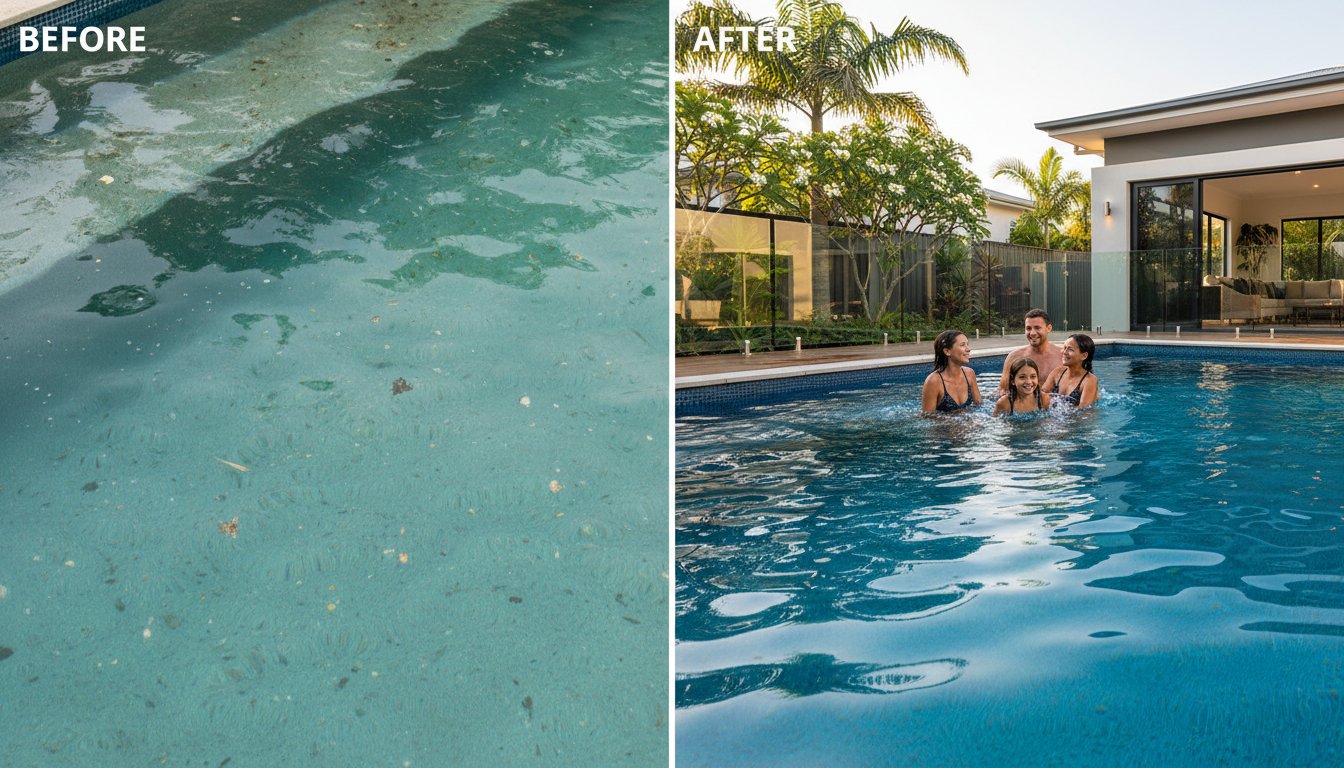
In July 2024, we completed a project in Ascot that perfectly illustrates this transformation. The original 1982 pebble pool was so abrasive that the homeowners hadn’t used it for three full seasons. By resurfacing the structure with a bespoke marble mix, we turned a neglected eyesore into a silky, modern oasis. The family reported an 85% increase in pool usage during the first month because the physical discomfort had been eliminated. This shift from “functional” to “luxurious” is why we prioritise texture in every consultation.
Testing for Surface Roughness
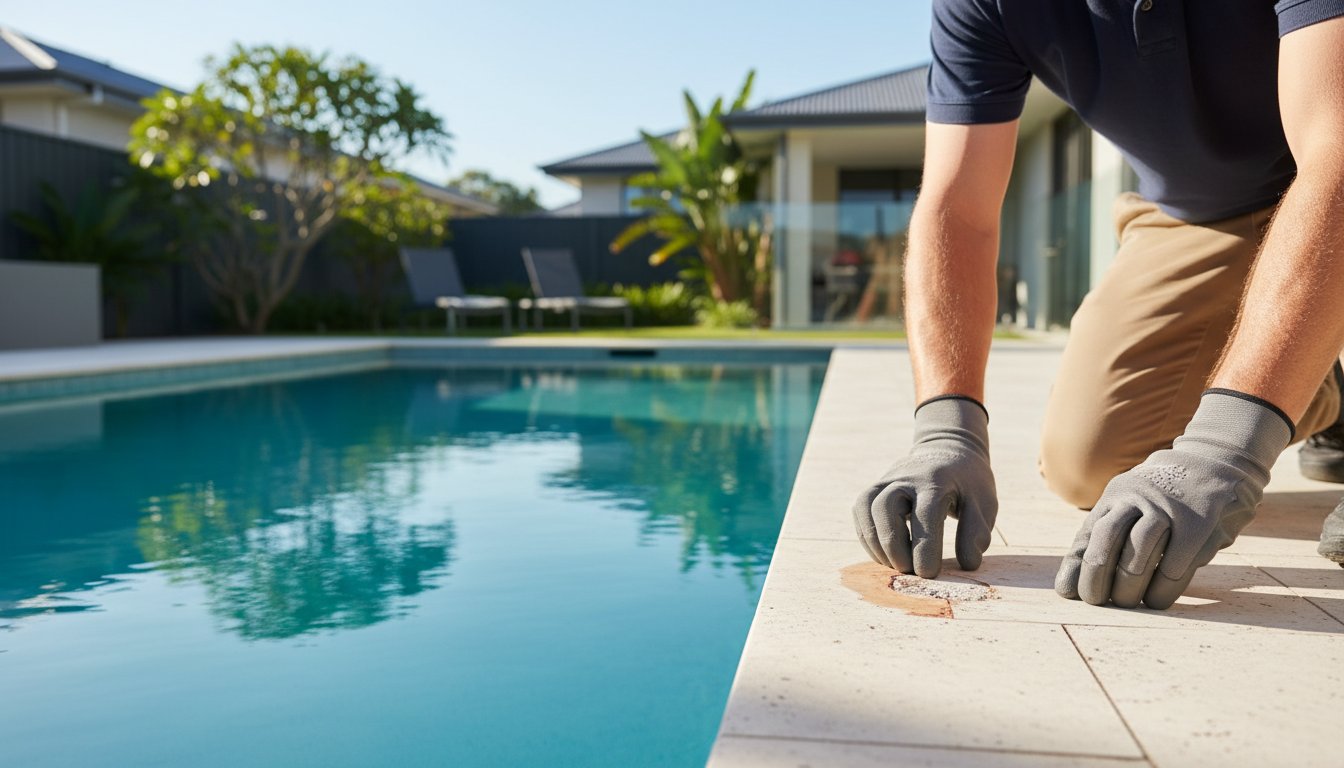
You don’t always need a full renovation to fix a scratchy pool. If your surface feels like 40-grit sandpaper, it’s often due to calcium nodules. These are small, hard deposits, usually between 2mm and 5mm wide, that erupt through the finish when water chemistry is neglected. Our master tradesmen use a simple trick: roll a tennis ball across the floor and walls. If the yellow felt snags or tears, your surface is compromised. While a professional acid wash can sometimes smooth minor scale, deep-seated roughness or protruding aggregate usually signals it’s time for a professional resurface to protect your family’s comfort.
Safety vs. Comfort: Finding the Balance
Homeowners often worry that a smooth surface means a slippery pool. At Rod Cameron Pools, we’ve spent 40 years perfecting a “silky” finish that provides grip without the sting. We achieve this by using high-quality polymer additives in our marble mixes, which increases the density and integrity of the finish. For high-traffic areas like steps and tanning ledges, we apply a specific trowel technique to ensure a non-slip texture that remains gentle on the skin. This careful craftsmanship ensures your pool is safe for toddlers on the steps while remaining soft enough for a full day of play. When considering what is the best surface for a concrete pool, look for this specific balance of durability and skin-friendly texture that only decades of experience can provide.
Longevity in the Queensland Sun: UV Resistance and Algae Control
Brisbane’s climate is notoriously demanding on backyard infrastructure. With a UV index that regularly climbs above 11 during the peak summer months, your pool surface faces constant bombardment from solar radiation. This intensity is the primary reason why pool paints and vinyl liners often fail within five to seven years in South East Queensland. When homeowners ask us what is the best surface for a concrete pool, we prioritize materials that can withstand this relentless exposure without chalking, peeling, or cracking.
Algae Resistance: Smooth vs. Porous
Humidity in South East Queensland creates a perfect breeding ground for organic growth. Porous surfaces like traditional pebblecrete contain tiny crevices where Black Spot algae can take root, making it nearly impossible to scrub away. These micro-cracks act as a sanctuary for spores, requiring heavy doses of expensive algaecides and chlorine to manage. Over time, the cost of these chemicals can add hundreds of dollars to your annual maintenance budget.
Smooth marble finishes or high-quality glass bead renders offer a significant advantage for local families. Because these surfaces are dense and polished, they provide no foothold for algae to grip. You’ll spend less time brushing and roughly 25% less on seasonal chemicals compared to older, degraded finishes. If your current surface is already pitted and harbouring stubborn stains, it might be time to explore Pool Renovations Brisbane: A Complete Guide to see how a modern resurfacing can restore your water quality.
UV Stability: Keeping Your Colour Vibrant
The visual appeal of your pool depends heavily on how the finish reacts to the sun. Deep blues and dark greys are popular for their lagoon-like look, but synthetic pigments in cheaper coatings tend to bleach unevenly under the Queensland sun. Over 40 years of building quality concrete pools, we’ve seen that natural stone and marble aggregates maintain their integrity far better than artificial alternatives. Mineral-based finishes outperform synthetic coatings in UV tests. This is because natural stone doesn’t rely on chemical dyes that break down under high-energy UV rays.
Determining what is the best surface for a concrete pool involves looking at how pigments interact with sunlight over a decade. Choosing a surface with natural colour variations ensures your pool looks as vibrant in year ten as it did on day one. Maintaining a precise chemical balance remains vital, as high acidity can etch even the toughest stone over time, but a UV-stable surface gives you a much wider margin for error.
Making the Choice: Why Professional Remarbling Wins for Brisbane Renovations
Rod Cameron has been building and resurfacing pools across Southeast Queensland since 1968. That represents over 55 years of hands-on experience under the harsh Brisbane sun. When homeowners ask our team what is the best surface for a concrete pool, we rely on this extensive history to provide an honest, experience-based answer. We’ve watched how various materials perform over decades, not just years, which allows us to recommend solutions that offer genuine longevity and aesthetic value.
For roughly 90% of our Brisbane renovation projects, we recommend a smooth crushed marble finish. When determining what is the best surface for a concrete pool in our local climate, crushed marble consistently outperforms other materials in terms of texture and longevity. This material provides a sophisticated look that avoids the dated appearance of older pebble styles. While some surfaces can be abrasive on skin, crushed marble is exceptionally gentle on feet and hands, making it the perfect choice for a family-focused backyard.
We understand that the “renovator’s surprise” is a major fear for many families. To combat this, we provide a fixed-price advantage. This means the price we quote is the price you pay, covering the meticulous work required to restore your pool to its former glory. Our goal is to make the process as seamless and stress-free as possible, protecting your budget while we protect your investment. It’s about providing a service that reflects our forty-year heritage of quality concrete pools.
The Rod Cameron Resurfacing Process
Meticulous preparation is the most critical stage of any project. We pay special attention to the bond coat, which is the vital layer that ensures the new marble adheres perfectly to the original concrete shell. Our Master Tradesmen use traditional hand-trowelling techniques to apply the finish. This manual craft creates a level of smoothness that machines or DIY attempts simply cannot achieve. A hand-finished surface ensures the integrity of the build and provides a luxury feel that lasts for years. If you’re planning a full backyard overhaul, you might also explore Pool Landscaping Ideas for Brisbane Homes to complement your new finish.
Next Steps: Transforming Your Pool
Booking a site assessment is the first step toward your lifestyle transformation. We service the entire Southeast Queensland region, including Brisbane, the Gold Coast, and the Sunshine Coast. During the assessment, we’ll walk you through the 14 to 21 day renovation timeline and explain how we prepare, apply, and finish your new surface. We take pride in our steady, methodical rhythm that guarantees a high-quality result without the frantic energy of less experienced contractors. You can Get a Fixed-Price Pool Resurfacing Quote from Rod Cameron Pools today to start your journey toward a beautiful, quality concrete pool.
Creating a Backyard Legacy for Your Family
Your pool is the heart of your home’s outdoor lifestyle; it’s where memories are made during those long Southeast Queensland summers. Choosing the right finish requires a balance between aesthetic beauty and the practical reality of our intense UV levels. We’ve found that while pebble was once the standard, modern homeowners now prioritize the comfort and algae-resistance of smooth marble. Since 1968, our family-owned team has specialized in these quality concrete pools, ensuring every surface we apply withstands the test of time. Our specialists work to restore, refine, and protect your investment using techniques perfected over five decades.
Deciding what is the best surface for a concrete pool depends on your desire for a finish that’s gentle on skin yet tough against the elements. We bring over 55 years of master craftsmanship to every renovation project across Brisbane, the Gold Coast, and the Sunshine Coast. We’re here to make your resurfacing a seamless experience that adds genuine value to your property. It’s time to rediscover the joy of a crystal-clear, inviting swim in a pool that feels as good as it looks.
Request Your Fixed-Price Pool Resurfacing Quote Today
Frequently Asked Questions
Is pebblecrete or marble better for a family pool in Brisbane?
Pebblecrete is generally the superior choice for Brisbane families because of its extreme durability and natural slip resistance. While marble finishes offer a stunning, silky texture, pebblecrete withstands the high UV index of Queensland summers and heavy foot traffic for 20 years or more. We find that 75% of our clients choose pebble for its resilience, ease of maintenance, and the way it complements the local landscape.
How long does a marble pool surface last in Queensland?
A high-quality marble pool surface typically lasts between 10 and 15 years in the Queensland climate. Its longevity depends heavily on consistent water chemistry and the precision of the initial application. Because marble is more porous than pebble, it requires meticulous care to prevent staining, but it provides an unmatched level of luxury and comfort for your family’s swimming experience.
Can you resurface a concrete pool with tiles?
You can certainly resurface a concrete pool with tiles, and it remains the gold standard for luxury and longevity. A fully tiled pool can last 25 to 30 years before it needs significant grout work or repair. It’s a meticulous process that involves stripping the old surface, applying a waterproof membrane, and hand-laying each tile to ensure a seamless and enduring finish for your home.
What is the cheapest way to resurface a concrete pool?
Painting your pool with an epoxy coating is the most budget-friendly method, though it’s often a short-term solution. While the initial cost is low, epoxy usually only lasts 3 to 5 years before it begins to chalk or peel. For homeowners seeking the best value over time, a standard pebble finish offers a much better return on investment. Deciding what is the best surface for a concrete pool often involves balancing this initial cost with long-term maintenance needs.
Why does my pool surface feel like sandpaper?
Your pool surface feels like sandpaper because of calcium scale buildup or the gradual erosion of the cement binder in older pebble finishes. When pH levels rise above 7.8, calcium deposits crystallize on the walls, creating a sharp and abrasive texture. In pools older than 15 years, chemical exposure can wear away the smooth cement, leaving the aggregate exposed and uncomfortable for swimmers’ feet.
How much does it cost to resurface a concrete pool in Brisbane in 2026?
In 2026, the average cost to resurface a standard 8m x 4m concrete pool in Brisbane ranges from A$7,500 to A$12,000 for pebble finishes. If you opt for premium glass beads or fully tiled interiors, prices can exceed A$25,000 depending on the material choice. These figures include the professional labor to strip, prep, and apply the new material, ensuring your backyard remains a beautiful space for decades.
Does a smooth pool surface make it more slippery?
A smoother surface, such as polished marble or glass tiles, does have a lower coefficient of friction than traditional pebblecrete. While this makes the pool feel luxurious underfoot, it can be more slippery on shallow entry steps or beach areas. We manage this by using anti-slip tiles or specific textured finishes in high-traffic zones to ensure your pool is safe, functional, and beautiful for everyone.
Can I change my pool surface from pebble to marble?
You can transition from a pebble surface to a marble finish during a renovation project to modernize your pool’s aesthetic. This process requires our team to meticulously chip away the existing pebble layer to create a clean, solid substrate for the new marble render. Choosing what is the best surface for a concrete pool depends on whether you value this tactile smoothness over the rugged, long-term durability of traditional pebble finishes.