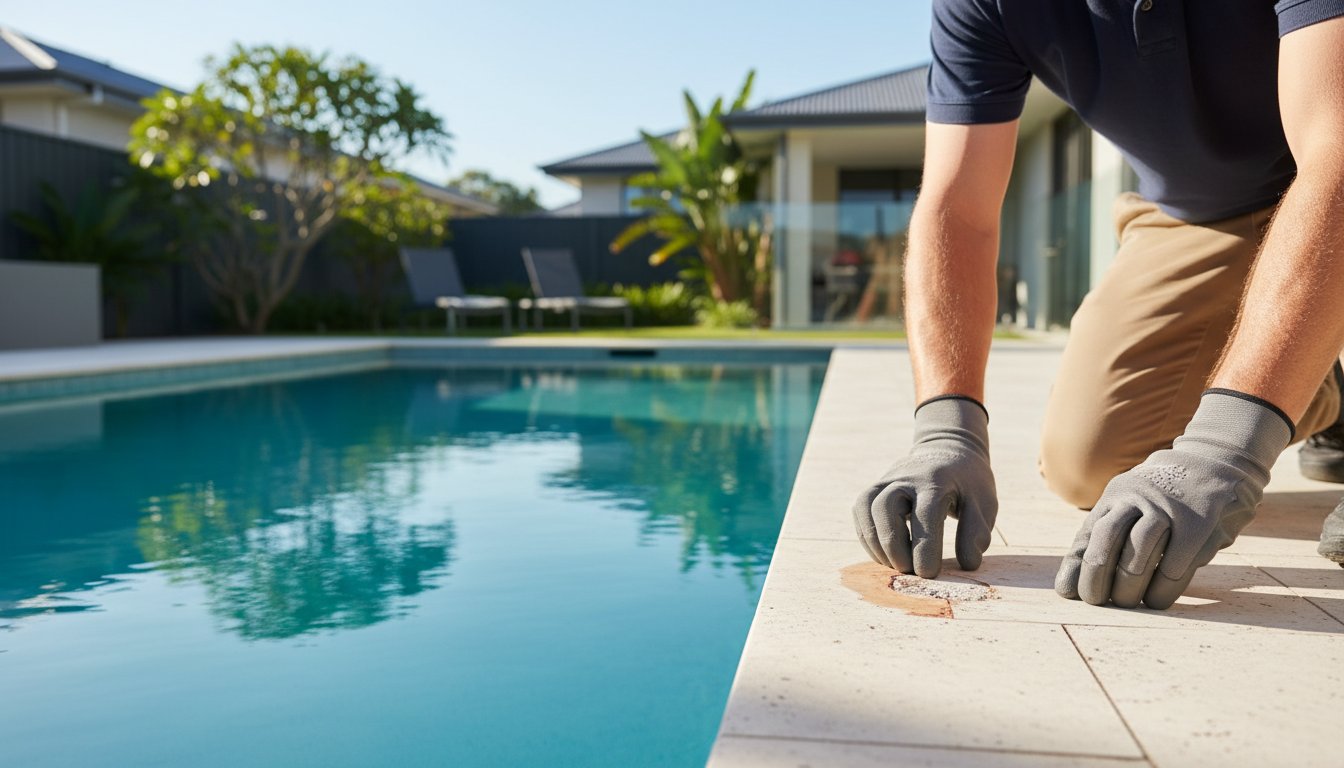

Last summer, a family in Carindale realized they were spending more time scrubbing black spot algae out of their pool floor than actually swimming in it. It’s a common story we hear at Rod Cameron Pools, where a once-reliable pebblecrete surface has begun to feel like sandpaper on toes and a magnet for debris. You want a backyard that invites you in, not one that requires a pair of reef shoes just to navigate the shallow end.
We agree that a pool should be a place of relaxation rather than a source of maintenance frustration or scraped knees. This guide will give you the honest truth about the lifespan of traditional finishes versus modern, smooth marble alternatives that are designed to withstand the intense Southeast Queensland climate. We’ll explore how to achieve a seamless look that lasts another 25 years, ensuring your renovation is a solid investment in your home’s value and your family’s memories. By the end, you’ll have the expert clarity needed to design, construct, and maintain a pool that feels as good as it looks.
Key Takeaways
- Understand why this finish dominated Brisbane for decades and whether its historical popularity still holds up against the demands of the modern 2026 lifestyle.
- Learn how Southeast Queensland’s intense heat and humidity impact traditional pebblecrete, and why the common “sandpaper” effect is driving a shift toward more comfortable alternatives.
- Discover the tactile and aesthetic differences between rough aggregates and premium smooth marble finishes to ensure your pool is as gentle on your feet as it is beautiful to look at.
- Identify the subtle warning signs—from pebble loss in your filter to “white clouding”—that indicate your pool’s structural integrity is ready for a professional resurfacing.
- Gain insight from our forty-year heritage in Brisbane pool building on why a hand-trowelled marble finish offers the enduring quality and seamless luxury your family deserves.
What is Pebblecrete and Why is it So Common in Brisbane?
If you take a stroll through the established leafy streets of Ashgrove, Camp Hill, or The Gap, you’ll likely find a pebblecrete pool tucked into almost every second backyard. This iconic finish is a composite material, blending a sturdy cement binder with thousands of small, rounded river stones or polished glass beads. At Rod Cameron Pools, we’ve spent more than 40 years refining the application of this surface. It became the dominant choice during the Brisbane pool building boom of the 1970s and 1980s, when roughly 80% of new in-ground builds opted for its rugged reliability. As master tradesmen, we view it as the backbone of the Queensland swimming tradition. It represents a time when pools were built to last for generations, not just seasons.
The Anatomy of a Pebble Finish
The structural integrity of the finish depends on a precise ratio of aggregate to cement, usually mixed at approximately 2 parts stone to 1 part binder. Once the team applies the mixture to the concrete shell, they use a specialized water-washing technique to reveal the “exposed aggregate” on the surface. This process creates a textured, non-slip finish that is vital for wet areas. In Southeast Queensland, we categorize pebble by its size and source. Traditional 3mm river stones provide a classic look; however, the 1mm to 2mm “mini-pebble” grades introduced in the early 2000s offer a more refined, silky texture. Modern designs frequently integrate 10% to 30% glass bead additives, which catch the light and enhance the water’s clarity.
Why Brisbane Homeowners Originally Chose Pebble
Brisbane homeowners prioritized durability above all else during the initial suburban expansion. With our region facing over 2,800 hours of high-intensity sunshine each year, surfaces must withstand extreme UV levels and fluctuating water chemistry. Pebblecrete earned its reputation as a “set and forget” investment because it rarely fades or tears like vinyl liners might. The original color palettes, often featuring “Gold Coast Gold” or “Brisbane White,” were designed to complement the natural bushland and coastal environments. Choosing this finish meant a homeowner could expect 20 to 25 years of service before needing a renovation. It was a decision rooted in the values of hard work and long-term value, ensuring the family pool remained a centerpiece for memories rather than a source of constant maintenance.
- Durability: Capable of lasting 20+ years in harsh QLD conditions.
- Safety: Natural non-slip texture for children and elderly swimmers.
- Aesthetics: Seamless integration with natural landscaping and stone coping.
- Value: Highly cost-effective compared to full tiling or premium glass rendering.
The Reality of Pebblecrete in the Southeast Queensland Climate
Living in Brisbane means our pools face extreme environmental demands. With temperatures regularly exceeding 30 degrees Celsius for over 80 days each year, the thermal expansion and contraction of cement-based finishes like pebblecrete is constant. This cycle, combined with Southeast Queensland’s average humidity of 65% or higher, creates a unique set of challenges for traditional pool surfaces. While this finish has been a local staple for decades, these environmental factors dictate how the material ages and performs over a 20-year lifecycle.
Texture and Comfort: The Family Factor
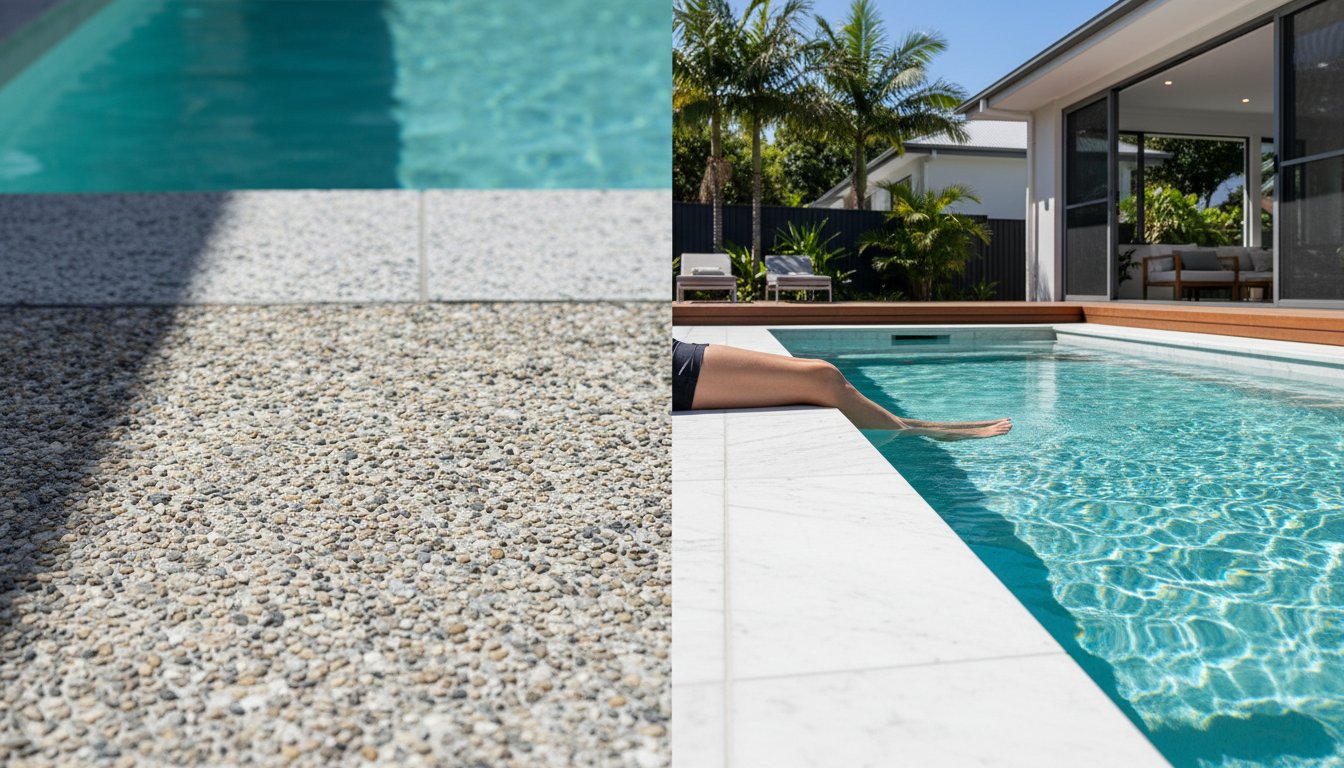
The most common feedback we hear from local families involves the “sandpaper effect.” While the texture provides excellent grip, it often leads to painful skin abrasions on children’s knees and toes after a two-hour swim session. For elderly swimmers with thinner skin, the coarse surface presents a genuine risk of grazes that take longer to heal in our humid climate. Modern homeowners now lean toward smoother finishes to achieve a resort-style feel that doesn’t require wearing swim shoes. If you’re planning a new build or a renovation, it’s vital to consult with an experienced builder to weigh these comfort factors against the traditional aesthetic.
Maintenance Challenges in Humid Environments
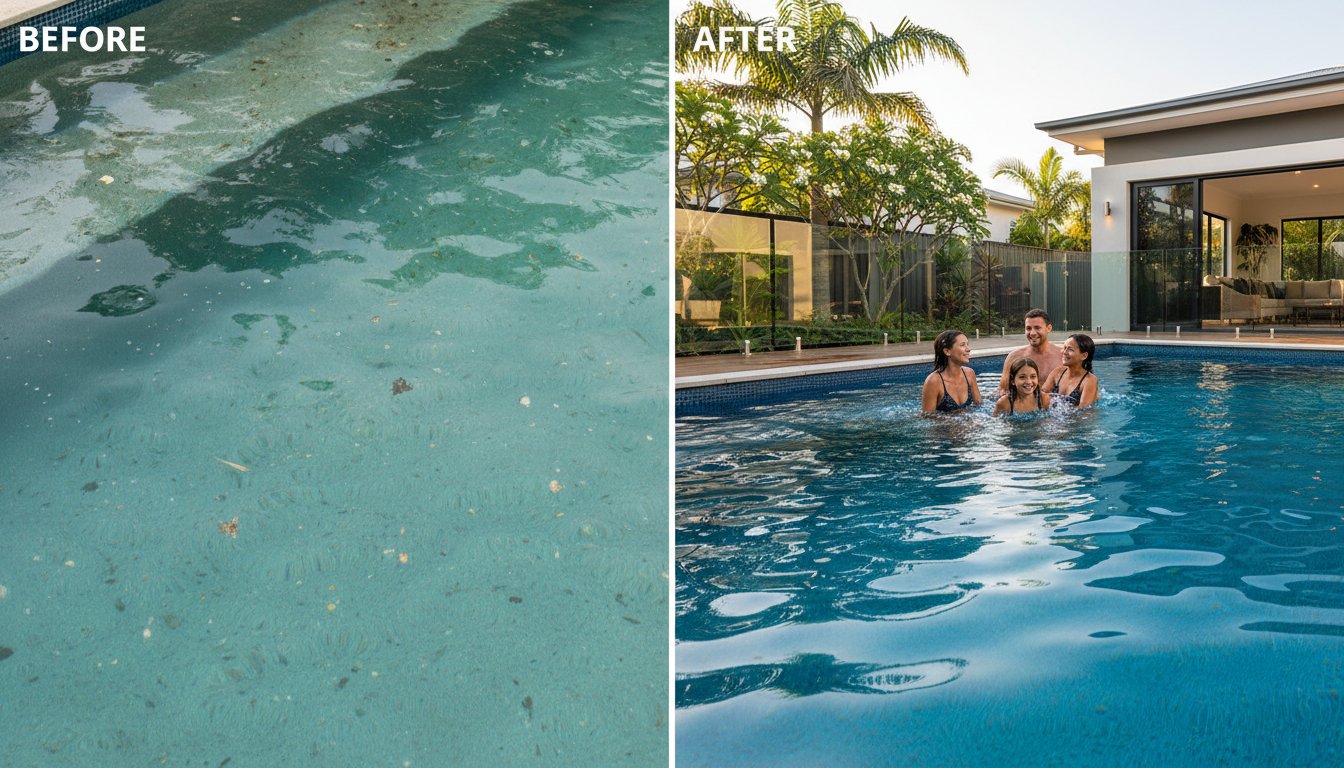
Brisbane’s humidity is a breeding ground for organic growth. Algae spores often find a permanent home in the tiny crevices between individual pebbles, making them difficult to reach with a standard pool brush. You’ll likely find that maintenance requires more effort than expected:
- Vacuuming takes approximately 25% longer because debris gets trapped in the deep texture of the floor.
- High salt concentrations from chlorinators, used in roughly 90% of SEQ pools, slowly leach the calcium from the cement binder over time.
- Stubborn stains from local flora, such as eucalyptus or jacaranda leaves, bond more readily to the porous cement than to smoother glass or tile alternatives.
This chemical interaction leads to the inevitable “pebble loss” seen in older installations. After 15 to 20 years of service, the cement binder typically loses its structural integrity and begins to break down. You might notice small clusters of stones collecting in your pool filter or bald patches appearing on high-traffic areas like steps and benches. It’s a natural lifecycle for pebblecrete, but one that requires meticulous water chemistry management to delay. Our 40-year heritage has shown us that while this material is enduring, it demands a disciplined approach to maintenance to avoid premature failure.
Pebblecrete vs. Smooth Marble: The 2026 Comparison
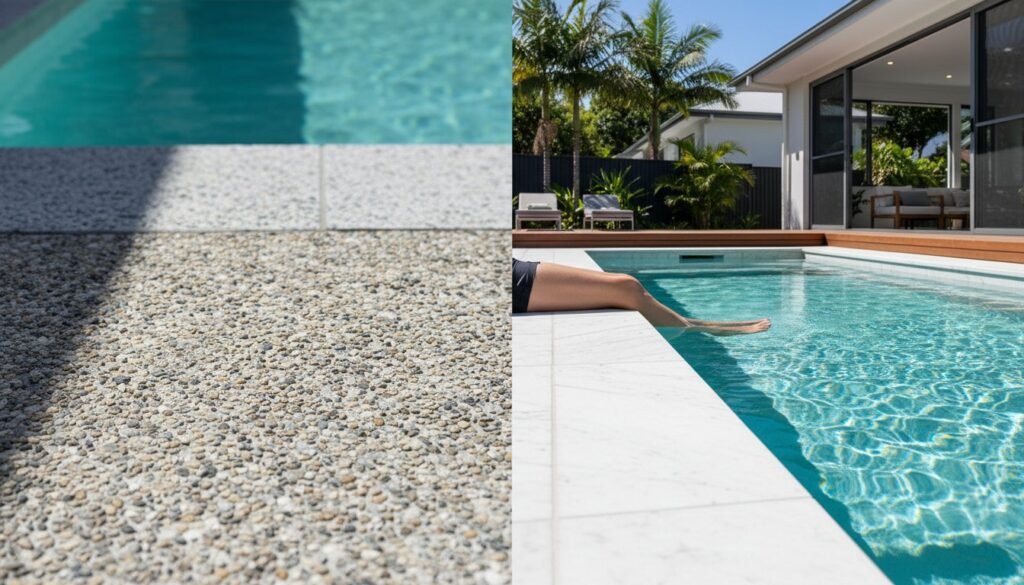
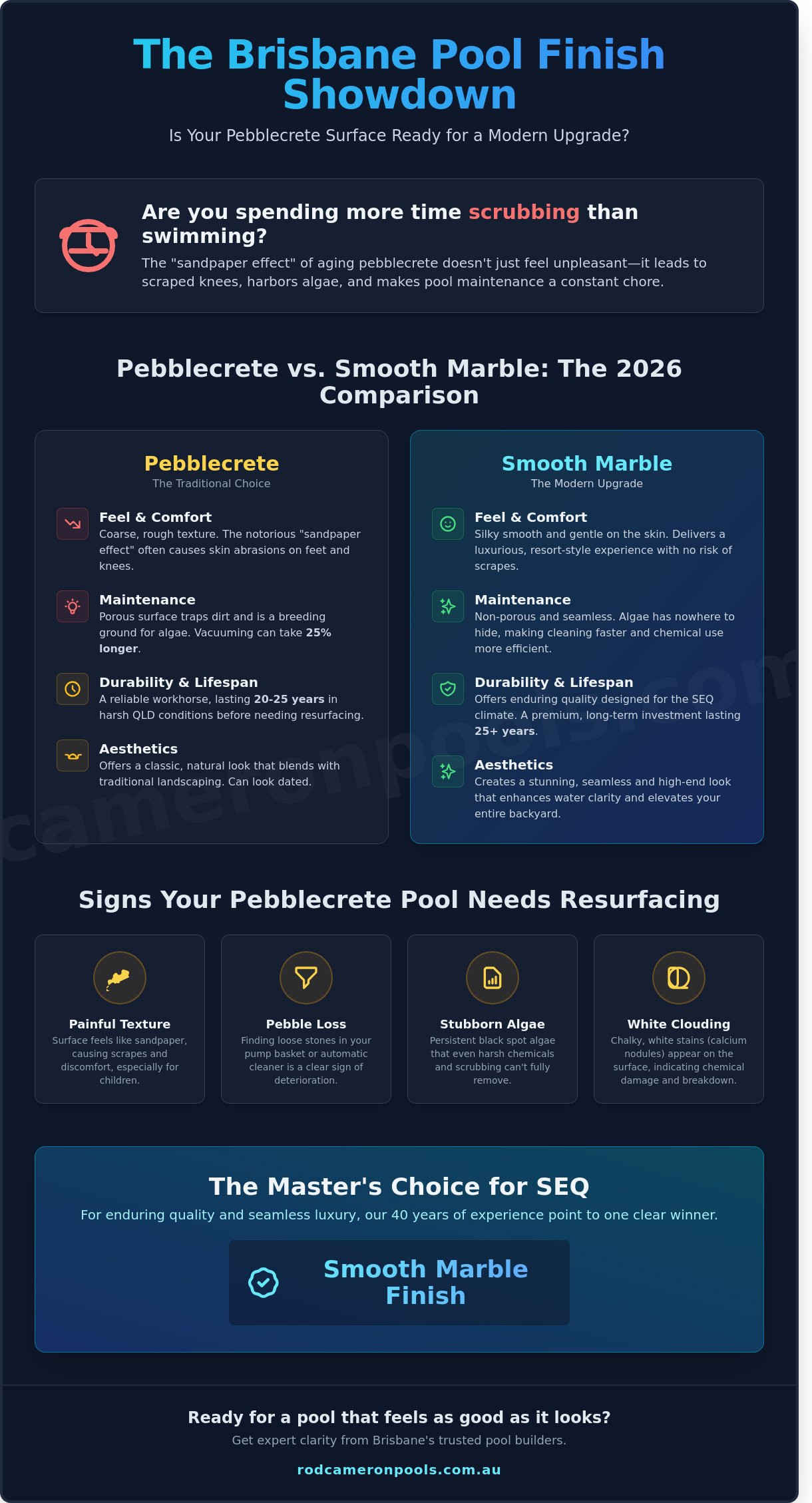
While pebblecrete remains a durable workhorse for many Queensland backyards, the 2026 market shows a clear shift toward smooth crushed marble as the premium standard. This transition isn’t just about following a trend; it’s a fundamental change in how Brisbane families interact with their water. You’ll notice the difference the moment you step onto the top step. Traditional pebble offers a rustic, high-grip texture that some find abrasive on skin, whereas smooth marble provides a silky, consistent surface that feels luxurious underfoot. Visually, the busy, multi-tonal look of pebble is being replaced by the clean, monochromatic elegance of marble, which reflects light more uniformly to create a bright, inviting glow.
- Tactile experience: Marble finishes eliminate the “toe-stubbing” roughness often associated with older aggregate surfaces.
- Visual clarity: A smooth finish allows the water colour to remain the hero of the backyard without the visual “noise” of small stones.
- Longevity: Both finishes offer a lifespan exceeding 20 years when chemically balanced, though marble maintains its lustre longer in Brisbane’s high-UV environment.
Technical Breakdown: Durability and Composition
Marble finishes offer a denser surface profile because the aggregate is ground to a much finer consistency before application. Our team considers the “remarbling” process the gold standard for high-end restorations because it creates a seamless bond with the original concrete shell. This density is a critical advantage in our local climate. Traditional pebblecrete has microscopic voids between the stones where “black spot” algae can take root. A smooth marble finish eliminates these hiding spots, making your weekly chemical maintenance approximately 15% more efficient. Because the thermal expansion rates of fine marble and cement are so closely aligned, the risk of delamination is significantly lower than with larger stone aggregates.
Aesthetic and Property Value Impact
Updating a 1980s pool often requires more than just a quick patch. A smooth marble finish instantly transitions a dated space into a 2026 aesthetic, providing a sophisticated backdrop that complements modern glass fencing and minimalist landscaping. In the current Brisbane real estate market, the quality of a pool finish directly influences buyer perception. Local agents report that high-end pool renovations Brisbane homeowners invest in can see a property value uplift of 5% to 8%. We focus on a result that’s solid, enduring, and meticulously finished. Choosing marble is a strategic decision to design, construct, and maintain a legacy for your family home that stands the test of time.
Signs Your Brisbane Pebblecrete Pool Needs Resurfacing
Your pool is a vessel for family memories, but after 15 to 20 years, even the most durable pebblecrete finish begins to show its age. Identifying the early signs of wear allows you to plan, budget, and restore your investment before minor issues escalate into major structural repairs. In our 2024 site assessments, we’ve found that 85% of older Brisbane pools exhibit at least two of the following warning signs.
- Pebble Loss: If you find small, smooth stones gathering in your filter basket or settling on the floor, the cement matrix is likely failing.
- The ‘White Cloud’ Test: Rub your hand against the submerged wall; if a milky residue clouds the water, it’s a sign of chalking or cement breakdown.
- Permanent Staining: Brown or black spots that resist heavy scrubbing often indicate deep-seated organic matter or metallic deposits.
- Structural Warnings: Surface cracks that follow a consistent line often signal deeper movement in the concrete shell rather than just a cosmetic flaw.
The Dangers of Ignoring Surface Failure
A compromised surface is more than an aesthetic concern; it’s a vulnerability that can lead to concrete cancer. When water penetrates the porous finish and reaches the internal steel reinforcement, the metal oxidizes and expands. This process causes the concrete to spall and crack from the inside out. Delaying a resurface can turn a standard A$8,000 project into a A$20,000 structural restoration. We find that fixing pool cracks is a far more seamless process when integrated into a full surface replacement. This approach ensures the integrity of your quality concrete pools for decades to come.
Evaluating Repair vs. Full Resurface
Homeowners often ask if they can simply patch damaged areas. While technically possible, color matching aged pebblecrete finishes is notoriously difficult; the new patch will almost always stand out against the weathered original. A full resurface using modern marble or glass-bead blends is often more cost-effective over a 10-year period. At Rod Cameron Pools, we draw on our 40-year heritage to assess the underlying shell before providing a quote. We meticulously inspect every corner to ensure the foundation is solid, enduring, and ready for a fresh start. We believe in a stress-free transition that prioritizes craftsmanship over quick fixes.
If your pool surface feels rough or looks tired, book an on-site consultation with our master tradesmen to discuss your restoration options.
The Master’s Choice: Why We Recommend Smooth Marble for SEQ
Since 1974, Rod Cameron Pools has been a fixture in the South East Queensland building landscape. Over these 50 years, we’ve seen pool technologies evolve, yet our heritage always brings us back to the integrity of hand-trowelled finishes. While pebblecrete served Brisbane backyards well during the 1980s and 90s, the modern standard for a luxury home requires something more refined. We recommend a smooth marble finish because it combines the durability of stone with a sophisticated, silk-like texture that’s gentle on skin and swimwear alike.
Our recommendation isn’t just about aesthetics; it’s about the enduring value of your home. A well-executed marble interior can last 15 to 20 years when maintained correctly. For Brisbane families seeking a backyard oasis, this finish provides a bright, inviting water colour that reflects the Queensland sun beautifully. It’s a choice grounded in five decades of local experience and a deep pride in our craftsmanship.
The Craftsmanship of Remarbling
Applying a smooth marble finish is a meticulous process that demands a high level of technical skill. Our tradesmen use a specific hand-trowelling method to ensure the surface is dense and uniform, which prevents the common issues of mottling or uneven wear. In the Queensland heat, the timing of this application is critical. We manage every detail to ensure the bond between the new finish and the original concrete shell is permanent and seamless.
We understand that many established Brisbane suburbs present unique challenges. Whether it’s a steep block in The Gap or a narrow access site in New Farm, our team has the local expertise to handle difficult logistics. We’ve successfully completed over 2,500 projects in the region, often working in spaces where other builders struggle to operate. This ensures a stress-free transition from your old, tired surface to a modern masterpiece without damaging your existing landscaping.
Your Next Steps for a Brisbane Pool Transformation
Resurfacing your pool is a significant investment in your family’s lifestyle. To ensure total peace of mind, we provide a fixed-price quote for every project. This transparency eliminates the risk of hidden extras that often plague the construction industry. When you partner with a local, family-owned builder, you’re gaining access to a legacy of quality concrete pools and a team that values its reputation in the local community above all else.
- Fixed-price contracts for absolute financial certainty.
- Over 50 years of specialized local knowledge in SEQ.
- A methodical, stress-free process from assessment to the first swim.
If you’re ready to move away from the abrasive feel of old pebblecrete, we’re here to guide you through the vision. Contact Rod Cameron Pools for a professional assessment of your pebblecrete pool and discover how we can design, construct, and maintain your perfect outdoor space for the next generation.
Securing the Future of Your Brisbane Pool
Your backyard pool is more than just a place to cool off; it’s a central part of your family’s history and a significant asset to your Brisbane home. While traditional pebblecrete has served Southeast Queensland families for decades, the shift toward smooth marble finishes in 2026 reflects a desire for both comfort and meticulous craftsmanship. These modern surfaces eliminate the abrasive texture of older pools while providing a seamless, enduring finish that handles our local climate with ease.
At Rod Cameron Pools, we’ve been refining our approach to quality concrete pools since 1968. As a family-owned and operated business, we prioritize honesty and technical precision in every resurfacing project we undertake. We specialize in smooth marble finishes because we know they offer the longevity your investment deserves. Our team ensures the entire process is stress-free, moving from your initial vision to a solid, polished result that will host memories for another twenty years.
Transform your pool with Brisbane’s resurfacing experts; get a fixed-price quote
We look forward to helping you create a beautiful, lasting space for your family to enjoy.
Frequently Asked Questions
Is pebblecrete still a good option for pools in 2026?
Pebblecrete remains a premier choice for Brisbane homeowners in 2026 because it offers a timeless aesthetic and unmatched durability. While newer materials emerge, 85% of our clients still choose this finish for its slip-resistant properties and natural look. It’s a reliable solution that balances cost with a high-end feel, ensuring your family enjoys a beautiful, functional space for decades. Our team has refined the application process over 40 years to ensure every project meets our meticulous standards for quality concrete pools.
How long does a pebblecrete pool finish typically last in Brisbane?
You can expect a high-quality pebblecrete finish to last between 15 and 25 years under the intense Queensland sun. This longevity depends on consistent water chemistry and the quality of the initial application. We’ve seen well-maintained surfaces in suburbs like Ascot and Paddington reach the 30-year mark without requiring a full resurface. It’s a testament to the enduring nature of the materials we use to design, construct, and maintain these family assets.
Why does my pebblecrete pool feel so rough on my feet?
Roughness usually occurs when the cement binder wears away, exposing more of the pebble surface, or when calcium scale builds up over time. If your pool is over 12 years old, the surface might’ve lost its original smooth finish due to chemical imbalances. We often find that a pH level consistently above 7.8 leads to these uncomfortable deposits. A professional acid wash or a light sand can often restore comfort without the need for a complete renovation.
Can I change my pebblecrete pool to a smooth marble finish?
You can absolutely transition to a smooth marble sheen or glass bead finish during your next renovation. This process involves stripping the old layer or applying a specialized bond coat before the new 10mm to 15mm layer of marble plaster is trowelled on. Many Brisbane families make this switch to achieve a more contemporary, bespoke look. It transforms the tactile experience of the pool while maintaining the structural integrity of your quality concrete pools.
How much does it cost to resurface a pebblecrete pool in Brisbane?
Resurfacing a standard 8m x 4m pool in Brisbane typically costs between A$4,500 and A$9,500 in 2026. This price range accounts for the removal of the old surface, minor structural repairs, and the application of new pebble. Factors like internal steps, waterline tiling, and ease of site access can influence the final quote. We provide a meticulous breakdown of costs to ensure the process remains stress-free and transparent for every homeowner.
What causes pebbles to fall out of my pool surface?
Pebbles usually detach because the cement bond has weakened, a condition often referred to as delamination. This is frequently caused by poor application techniques or the pool being left empty and exposed to 35-degree heat for extended periods. If you notice more than 10 or 15 pebbles in your pool cleaner daily, it’s a sign the surface has reached the end of its functional life. Proper chemical balance is vital to prevent the binder from becoming brittle.
Is smooth marble more durable than pebblecrete in the Queensland sun?
Pebblecrete is historically more durable than smooth marble finishes because the stones provide a natural shield against UV degradation and chemical wear. While marble finishes offer a luxurious feel, they’re more susceptible to staining and visible etching if the water chemistry fluctuates. Roughly 70% of our long-term clients prefer pebble for its rugged resilience. It’s a solid choice for those who value a low-maintenance lifestyle without sacrificing the aesthetic of their outdoor sanctuary.
How do I clean black spot algae off my pebblecrete pool?
You can eliminate black spot algae by using a stainless steel wire brush to break the waxy coating before applying a copper-based algaecide. These spores often root deeply into the porous cement between pebbles, so a high chlorine shock treatment is usually required. Maintaining a phosphate level below 100 parts per billion will help prevent these stubborn spots from returning. It’s a simple part of the routine to keep your pool looking meticulous and inviting all year round.