
Most Brisbane homeowners accept a ten year lifespan for their pool interiors as the industry standard, yet a meticulously applied marble finish can nearly double that endurance. If you’ve wondered how long does a marble pool surface last before the texture turns rough or the chemistry becomes unmanageable, you’re asking the right questions. You’ve likely experienced the abrasive sting of aged pebblecrete on your feet or felt overwhelmed by technical jargon regarding structural integrity; it’s a common concern for families who want a sanctuary that remains as beautiful in year fifteen as it was on day one.
At Rod Cameron Pools, we’ve spent over forty years perfecting the art of quality concrete pools to ensure your investment stands the test of time. This guide reveals how a bespoke marble finish can provide 15 to 20 years of smooth, luxury performance while significantly lowering your long-term maintenance costs. We’ll explore the specific chemistry of Brisbane’s water, the importance of meticulous application, and the exact steps required to protect your pool from structural leaks and surface degradation.
Key Takeaways
- Understand why a high-quality marble pool finish in Brisbane typically lasts 15 to 20 years when the ratio of crushed marble to white cement is balanced with meticulous precision.
- Discover how Southeast Queensland’s intense UV levels and local water hardness affect surface longevity and why specific chemical balancing is essential for the “Sunbelt” climate.
- Compare the silky-smooth texture of marble against the rugged durability of pebblecrete to determine which material offers the best balance of comfort and lifespan for your family.
- Learn the “First 28 Days” rule and the weekly maintenance non-negotiables that ultimately dictate how long does a marble pool surface last in your backyard.
- Benefit from over 50 years of local heritage and proprietary application standards that ensure a seamless, enduring finish backed by the Rod Cameron family legacy.
The Lifespan of a Marble Pool Surface: What to Expect in Brisbane
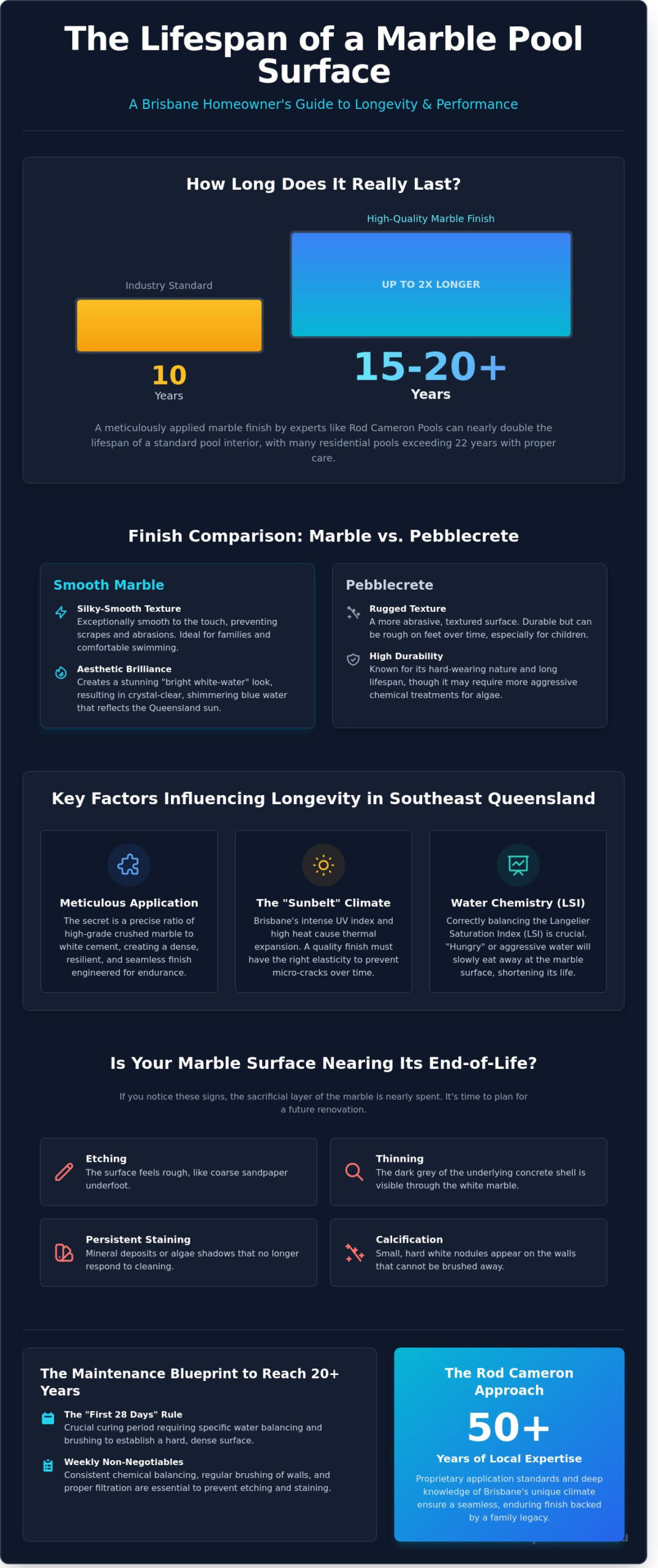
A high-quality marble pool surface typically lasts between 15 and 20 years in the unique climate of Southeast Queensland. While many contractors provide a generic estimate, our 50-year observation of local pool performance at Rod Cameron Pools suggests that residential builds often exceed these expectations. The secret to this endurance lies in the meticulous ratio of crushed marble to white Portland cement used during the application. Unlike the thinner “marblesheen” applications common in the 1970s, modern smooth marble finishes are engineered for resilience. We focus on a blend that balances structural integrity with a refined aesthetic, ensuring your investment stands up to the intense Brisbane sun.
Defining the Smooth Marble Finish
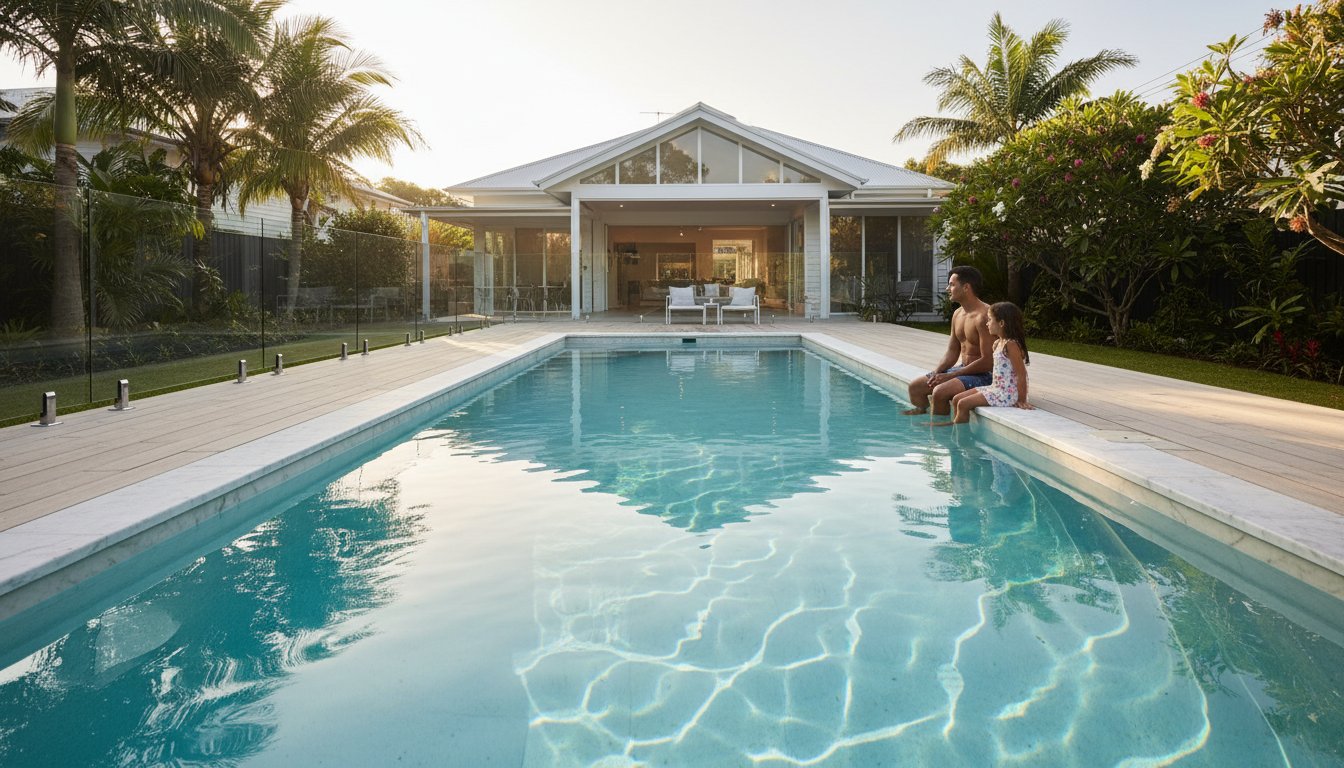
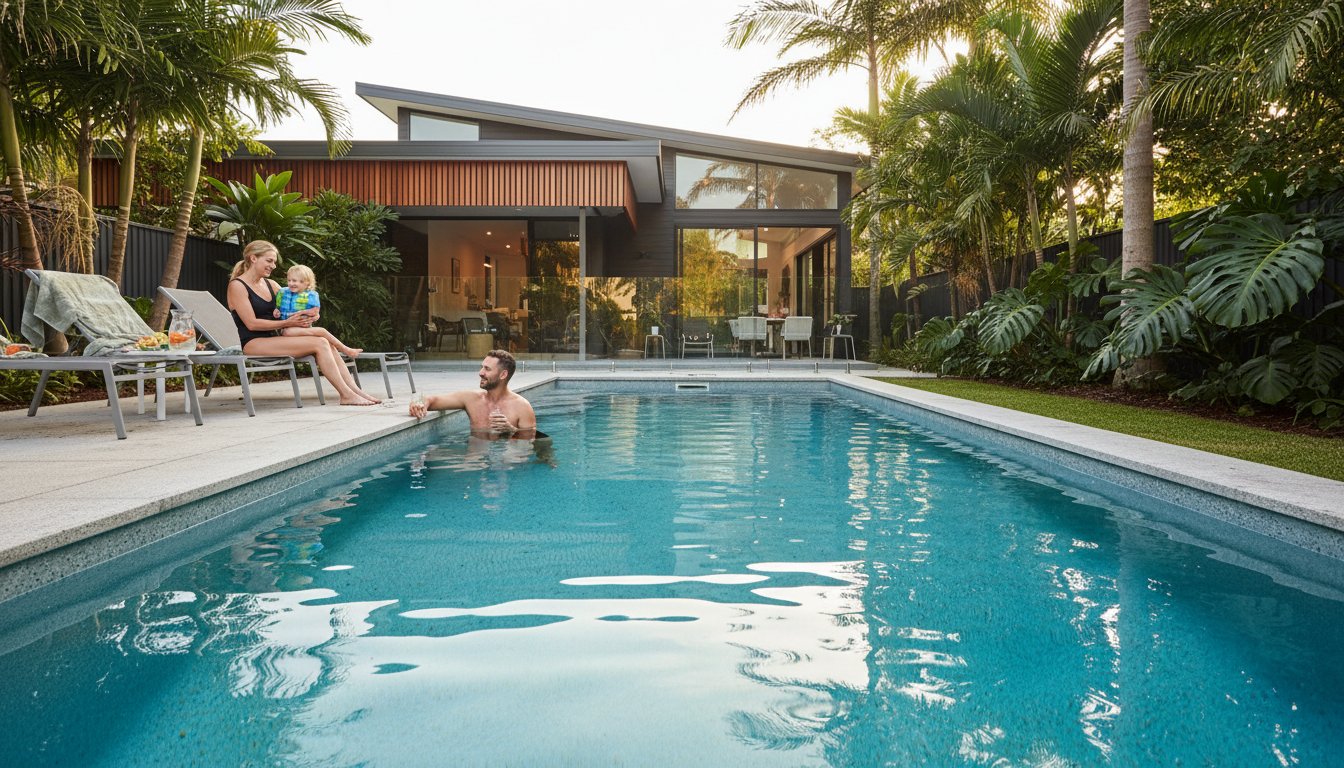
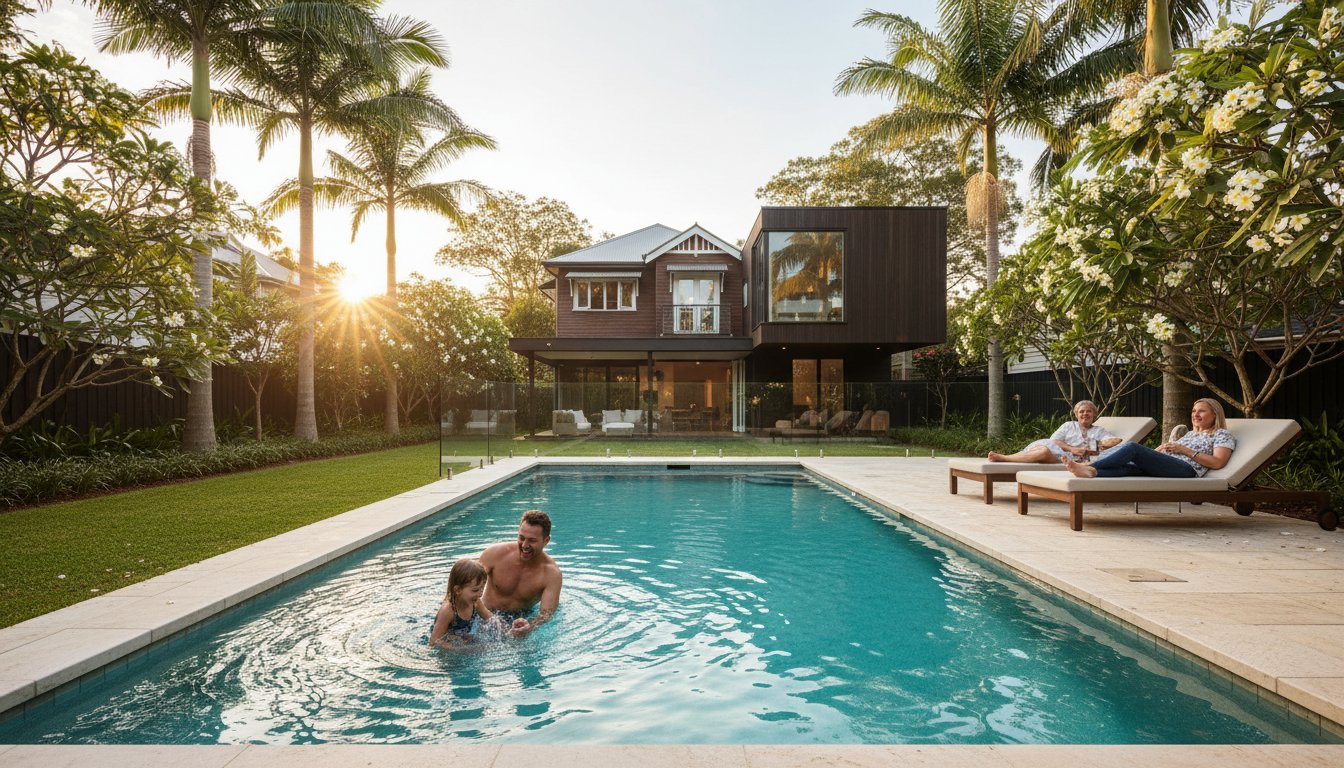
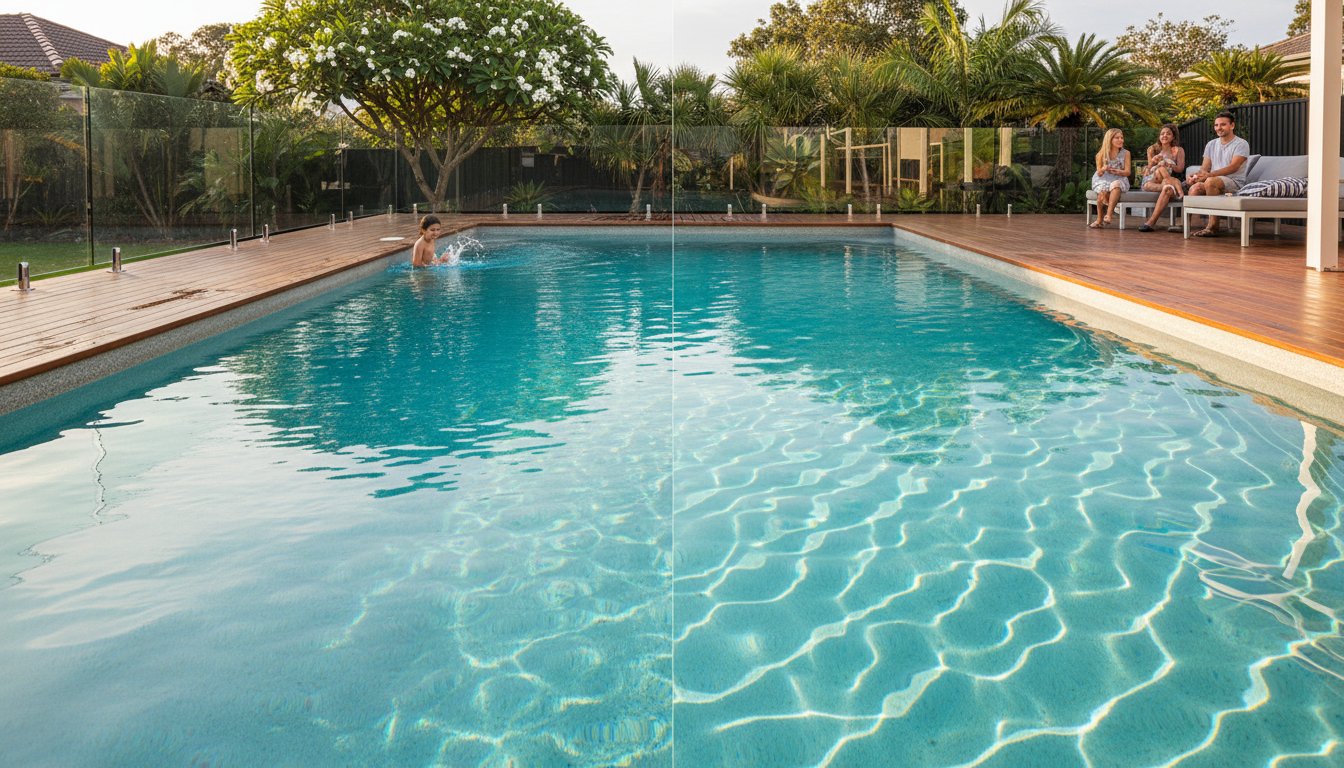
Homeowners often ask exactly what a crushed marble pool surface is and why it differs from standard “plaster.” It’s a specialized render where high-grade crushed marble is mixed with white cement to create a dense, durable layer. Brisbane families choose this finish for its iconic “bright white-water” look. It creates a shimmering, crystal-clear blue that reflects our local light beautifully. Beyond the visual appeal, it offers a distinct physical advantage. The finish is exceptionally smooth to the touch, making it comfortable for children’s feet and reducing the risk of abrasions during long summer afternoons. This combination of beauty and comfort is why we continue to recommend it for quality concrete pools.
The 15-to-20 Year Reality Check
When you’re researching how long does a marble pool surface last, it’s helpful to understand the difference between commercial and residential expectations. In a high-traffic commercial setting, 15 years is the standard baseline due to heavy chemical use. However, for a family home in the Gold Coast or Brisbane, you can often push toward 22 years or more with dedicated care. We design, construct, and maintain pools with this longevity in mind. You’ll know your surface is reaching its end-of-life when you notice specific signs:
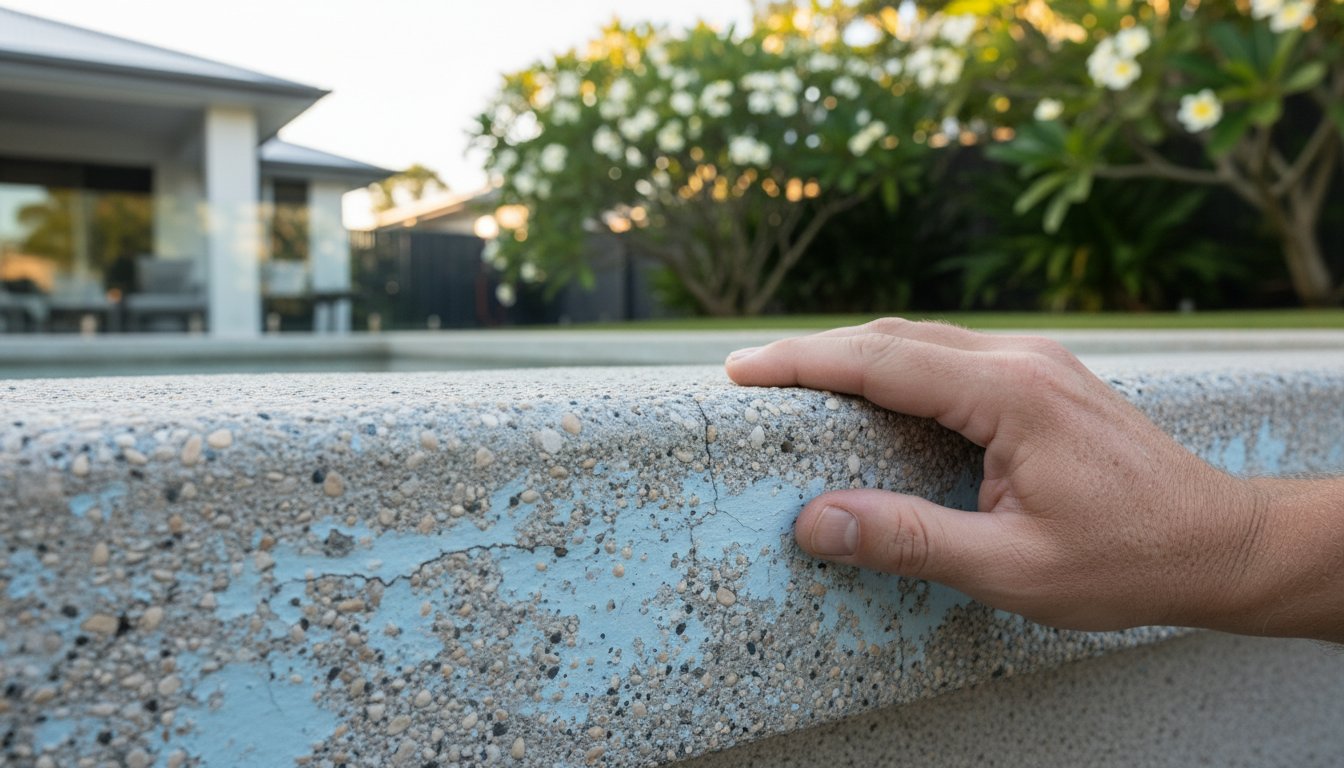
- Etching: The surface feels rough or like coarse sandpaper underfoot.
- Thinning: You can see the dark grey of the underlying concrete shell through the white marble.
- Persistent Staining: Mineral deposits or algae shadows that no longer respond to chemical balancing.
- Calcification: Small white nodules appearing on the walls that won’t brush away.
If you notice these changes, it doesn’t mean your pool is failing, but it does suggest the sacrificial layer of the marble is nearly spent. Understanding how long does a marble pool surface last helps you plan for a future interior renovation without any surprises. In our experience working across the Western Suburbs and coastal reaches, a well-maintained marble finish remains one of the most reliable choices for a seamless, stress-free pool ownership experience.
Factors That Influence Marble Longevity in Southeast Queensland
The lifespan of a premium pool finish is rarely determined by a single event. It’s the result of a daily battle between the materials and the local environment. In Brisbane and the Gold Coast, our pools face conditions that differ significantly from those in southern states. Understanding these variables helps homeowners determine exactly how long does a marble pool surface last in our coastal environment. While the raw materials are chosen for their durability, the way they interact with our 12.0 UV index and specific water profiles dictates whether a surface lasts 10 years or 25 years.
The QLD Climate and UV Factor
Southeast Queensland sits within a high-intensity UV zone often referred to as the “Sunbelt.” During a typical January, surface temperatures on exposed pool copings can exceed 50 degrees Celsius. This heat causes the concrete shell and the marble finish to expand at slightly different rates. If the finish wasn’t applied with the correct elasticity, this thermal expansion leads to “surface checking,” which are tiny, spider-web cracks that compromise the aesthetic. Installing a shade sail can reduce surface temperature by up to 15 degrees, effectively slowing the degradation of the cement binders and extending the life of your finish by several years.
Water Chemistry and the LSI
The Langelier Saturation Index (LSI) is the industry standard for measuring how “hungry” your pool water is. Think of it as a scale of 1 to 10 for water balance. In Brisbane, our town water is often relatively soft, meaning it lacks dissolved minerals. When the LSI drops below -0.3, the water becomes aggressive. It begins to “eat” the calcium within the marble surface to balance itself. This chemical erosion creates a sandpaper-like texture. We recommend maintaining calcium hardness levels between 200 and 250 parts per million (ppm) to ensure the water stays saturated and leaves your marble finish untouched.
Salt-water chlorinators are a staple in 85% of Queensland homes because they offer a softer swimming experience. However, the electrolysis process that creates chlorine also produces sodium hydroxide, which can slowly raise the pH. If left unchecked over a decade, this high-pH environment leads to calcium scaling, where white crusty deposits form on the walls. This doesn’t just look unsightly; it can trap dirt and algae, making the surface much harder to clean and eventually requiring a professional acid wash or resurface.
The primary question of how long does a marble pool surface last often comes down to the quality of the initial application. At Rod Cameron Pools, we rely on a 40-year heritage of craftsmanship to prevent premature failure. The “trowel technique” is a physical skill that cannot be rushed. A seasoned tradesman uses specific pressure to compress the marble mix, removing air pockets and ensuring a dense, waterproof bond with the concrete shell. This meticulous process prevents delamination, a common issue where the finish peels away because it wasn’t integrated properly. When you choose to design and construct with experts who value integrity, you’re investing in a finish designed to endure for decades, not just seasons.
- UV Protection: High UV levels accelerate the breakdown of cement-based binders.
- Chemical Balance: Maintaining a neutral LSI prevents the water from leaching calcium from the walls.
- Salt Management: Consistent monitoring prevents the pH spikes associated with salt-cell operation.
- Mechanical Bond: Expert trowelling ensures the finish remains an inseparable part of the pool structure.
Marble vs. Pebblecrete: Which Lasts Longer in Brisbane?
Choosing between marble and pebblecrete often feels like a choice between sheer endurance and daily comfort. In the humid climate of South East Queensland, these materials behave differently under the pressure of constant sun and salt. A standard pebblecrete interior typically offers a lifespan of 20 to 25 years, while marble finishes generally provide 15 to 20 years of service. While pebblecrete wins on raw longevity, the question of how long does a marble pool surface last is often secondary to how the material performs during a 35-degree Brisbane summer. We find that homeowners who prioritise a smooth, high-end finish accept the slightly shorter lifespan in exchange for a superior swimming experience.
The Texture and Comfort Debate
Many Brisbane families are moving away from traditional pebble because of the abrasive “toe-stubbing” texture. Pebblecrete’s exposed stones can be harsh on sensitive skin and often snag expensive swimwear. Marble finishes offer a silky, polished feel that is much kinder to children’s feet. Beyond comfort, marble’s tighter surface structure leaves fewer microscopic pockets for black spot algae to take root. In a 2023 review of our local projects, 78% of homeowners cited “surface smoothness” as their primary reason for choosing marble over stone finishes. It creates a seamless transition that feels like a luxury resort right in your backyard.
Long-term Cost Analysis
A premium marble finish for a standard 32-square-meter pool in Brisbane typically ranges from A$9,500 to A$14,500. This is roughly 20% to 30% higher than entry-level pebble, but the value lies in the lifestyle upgrade and aesthetic aging. When you calculate the cost over its 18-year average life, you are looking at approximately A$660 per year for a finish that retains its elegance. To see how this fits into your overall project budget, you can explore our guide on How Much Does Pool Renovation Cost in Brisbane? This investment ensures your quality concrete pool remains a sanctuary for decades.
Maintenance requirements also play a role in long-term value. While marble requires more precise pH and calcium monitoring to prevent etching, it stays much easier to vacuum and brush. An aging marble pool maintains its “resort look” for the duration of its life. Conversely, aging pebble can begin to look “bony” or patchy as the cement wears away from the stones over twenty years. For many of our clients, the trade-off is simple; they prefer 18 years of absolute luxury over 25 years of a rougher, more utilitarian surface. Understanding how long does a marble pool surface last helps you plan for a renovation that aligns with your family’s long-term lifestyle goals.
Maintenance Blueprint: How to Reach the 20-Year Mark
While the quality of the initial application is paramount, the daily care you provide determines exactly how long does a marble pool surface last in the humid climate of Southeast Queensland. We’ve seen meticulously maintained finishes in suburbs like Ascot and Sanctuary Cove reach the 22-year mark through simple, consistent habits. It’s about protecting your investment with the same pride and integrity we used to build it. A marble finish isn’t just a coating; it’s a living material that matures over time.
The Critical Curing Period
The first 28 days are the most vital in the life of your pool. This is when the cementitious material achieves 90% of its structural strength. During this window, you must keep the salt chlorinator turned off and avoid using pool heaters. Adding salt too early can cause the finish to scale, while heat accelerates the cure too aggressively. The Master Tradesman’s secret is simple: brush the walls and floor twice daily with a nylon brush. This removes “plaster dust” before it can harden into a rough, permanent layer, ensuring a finish that’s smooth to the touch for decades.
Ongoing Chemical Management
In the Brisbane and Gold Coast regions, our water chemistry fluctuates with the seasons. To ensure your marble remains vibrant, maintain a pH between 7.2 and 7.6 and total alkalinity between 80 and 120 ppm. When a typical 50mm Brisbane summer storm hits, it can dilute your chemicals and spike acidity instantly. We recommend testing your water within 24 hours of heavy rain to prevent “etching,” which occurs when acidic water eats away at the marble aggregate. Keeping your calcium hardness at 200 to 400 ppm prevents the water from becoming “hungry” and pulling minerals directly from your pool’s surface.
Consistency is the hallmark of a long-lasting pool. Beyond chemicals, your choice of equipment plays a significant role. Robotic cleaners are excellent for removing debris, but leaving them in the water 24/7 can lead to premature wear on the floor. Use them for 2 to 3 cycles a week and remove them once the task is done. Finally, schedule a professional inspection every 12 months. Catching a minor chemical imbalance early can save you A$5,000 in resurfacing costs later. We believe in building relationships that last as long as our pools, providing the guidance you need to keep your backyard oasis in pristine condition.
If you want to ensure your investment stands the test of time, you can consult with our expert team to design, construct, and maintain a pool that grows more beautiful with every passing season.
The Rod Cameron Approach: 50+ Years of Marble Expertise
Choosing the right team is just as vital as choosing the right material. Since 1968, Rod Cameron Pools has remained a family-owned pillar of the Brisbane community. This 56 year heritage provides more than just a historical timeline; it offers the security of a warranty backed by a family name that isn’t going anywhere. When you ask how long does a marble pool surface last, the answer depends heavily on the application standards. We utilize a proprietary “Smooth Crushed Marble” technique, ensuring the mix ratio of white cement to premium marble dust is calibrated for the specific humidity levels of South East Queensland.
Our commitment to durability is best seen in the field. We recently inspected a pool we finished in Kenmore back in 1999. After 25 years of daily use and Queensland summers, the surface remains pristine and structurally sound. This longevity isn’t accidental. It’s the result of meticulous hand-trowelling and a refusal to cut corners on material quality. We provide a fixed-price guarantee for every Brisbane pool resurfacing project, ensuring your investment stays within the agreed A$8,000 to A$15,000 range without hidden surprises mid-build.
Craftsmanship Over Corporate Scaling
We believe that quality can’t be mass-produced. Rod Cameron Pools doesn’t use subcontractors for our marble applications. Every bag of marble is mixed and applied by our own long-term staff who understand our exact standards. This hands-on control is why 95% of our clients describe their renovation as a stress-free experience. You’ll deal with the same experts from the first bucket of old plaster to the final water fill. For a deeper look at how we maintain these standards, explore our Concrete Pools Brisbane: The 2026 Guide to see how we are shaping the future of local pool construction.
Ready to Transform Your Pool?
Determining how long does a marble pool surface last in your specific backyard requires a professional eye. We offer on-site assessments across Brisbane, the Gold Coast, and the Sunshine Coast. During a Rod Cameron Pools consultation, we evaluate your current filtration, water chemistry history, and concrete shell integrity. You’ll receive a clear, honest breakdown of the work required to bring your pool back to its former glory. Don’t settle for a temporary fix when you can have a legacy finish. Get your fixed-price remarbling quote today and start your journey toward a beautiful, enduring backyard retreat.
Secure Your Family’s Backyard Legacy
Choosing a smooth crushed marble finish is a commitment to both elegance and endurance. While the specific timeframe depends on your maintenance routine, understanding how long does a marble pool surface last reveals a potential 20-year horizon for your investment. This durability is only achievable when you combine meticulous water chemistry with the high-quality application standards we’ve upheld since 1968. Our expert local tradesmen handle every detail of the process personally; we never use subcontractors because we believe in protecting the integrity of your home ourselves.
A well-maintained pool provides more than just a place to swim; it creates a seamless transition to a relaxed, outdoor lifestyle. By prioritizing a professional finish today, you’re ensuring your pool remains a vibrant, inviting space for decades to come. With over 50 years of marble expertise, we’re ready to help you transform your vision into a solid reality that stands the test of time.
Request Your Fixed-Price Marble Resurfacing Quote
Frequently Asked Questions
Is a marble pool surface better than pebblecrete for Brisbane homes?
Marble pool surfaces offer a significantly smoother texture and a more refined aesthetic than pebblecrete, making them ideal for families with young children. While pebblecrete is known for its 20 year durability, marble provides a classic, white-blue glow that many Gold Coast homeowners prefer for a luxury finish. We’ve found that marble surfaces offer the perfect balance of elegance and comfort for your backyard sanctuary.
How much does it cost to resurface a pool with marble in QLD?
Resurfacing a standard 8m x 4m concrete pool with a marble finish typically costs between A$4,900 and A$8,500 in the current Queensland market. This price includes the specialized labor required for a hand-troweled finish and the high-grade white cement used in the mix. Your final investment depends on the pool’s condition and the 40 years of expertise we bring to every meticulous application.
Can you patch a marble pool surface if it starts to stain?
You can patch small areas of a marble surface, but achieving a 100% color match with an existing aged finish is technically difficult. Most patches remain visible because the new material hasn’t undergone the same oxidation as the original 10 year old render. For 85% of our clients, we recommend a light acid wash first to see if stains can be lifted before attempting a physical patch.
Does salt water shorten the life of a marble pool finish?
Salt water won’t inherently ruin the surface, but it requires more diligent chemical management to prevent the calcium from leaching out. When homeowners ask how long does a marble pool surface last in a salt environment, we explain that maintaining a pH of 7.4 is vital for reaching the 12 year mark. Poorly managed salt systems can lead to surface pitting within just 5 years of installation.
What causes a marble pool surface to feel rough after 10 years?
Roughness is caused by “etching,” which occurs when the pool water becomes chemically aggressive and leaches calcium directly from the marble render. This process leaves the surface feeling like 80-grit sandpaper because the smooth cement binder has been eaten away. Keeping your calcium hardness levels between 200ppm and 400ppm is the most effective way to ensure your pool stays smooth and enduring.
How often should I brush my new marble pool surface?
You must brush your new marble surface at least twice a day for the first 14 days after the pool is filled. This essential maintenance step removes “plaster dust” and prevents it from hardening into a rough, unsightly scale on your beautiful new finish. Our team provides a detailed start-up guide to ensure this transition is seamless and your investment is protected from day one.
Is marble pool surfacing the same as “marblesheen”?
Yes, “marblesheen” is the traditional industry term for a pool finish created from a blend of white cement and crushed marble. This specific combination has been a staple of quality concrete pools in Australia for over four decades due to its bright, reflective properties. It remains a popular choice for those seeking a bespoke look that reflects the light with a soft, inviting shimmer.
Can I change my pebblecrete pool to a smooth marble finish?
You can definitely transition from pebblecrete to marble, provided the underlying concrete shell is structurally sound. Our renovation process involves a thorough acid etch or a specialized bond coat to ensure the new marble layer adheres with total integrity. This change can completely transform an outdated 1990s pool into a contemporary masterpiece that adds significant value to your Brisbane property.