
What if the reactive clay soils typical of Southeast Queensland are quietly working to compromise your backyard investment before the first summer even arrives? Choosing between a fiberglass or concrete pool is one of the most significant financial decisions you’ll make for your home, and it’s natural to feel overwhelmed by conflicting advice regarding maintenance and crane access. You deserve a space that feels premium underfoot and adds tangible value to your property, rather than a source of constant worry about structural integrity or rising chemical costs.
We understand that you want a result that lasts well beyond the 15 year mark without needing a total replacement. This guide draws on our forty year heritage as a family owned business to reveal the honest truth about durability, total cost of ownership, and how each material handles the specific SEQ climate. We will compare the long term resilience and aesthetic flexibility of these options so you can invest with the quiet confidence that your pool will remain a beautiful, enduring centerpiece for your family for decades to come.
Key Takeaways
- Understand how Brisbane’s reactive clay soil dictates specific structural requirements to ensure your investment remains stable and enduring for decades.
- Compare the “off-the-shelf” limitations of pre-moulded shells against the bespoke, limitless design potential of a custom-poured pool tailored to your lifestyle.
- Navigate the decision between a fiberglass or concrete pool by analyzing honest maintenance timelines, from routine cleaning to 15-year structural renovations.
- Identify critical site access requirements and crane logistics that could significantly impact your project timeline and total A$ investment.
- Discover the “Smooth Marble” finish difference and how a legacy of craftsmanship creates a seamless, high-value addition to your Southeast Queensland home.
Fiberglass vs. Concrete Pools: Understanding the SEQ Landscape
Choosing between a fiberglass or concrete pool is the most significant decision you’ll make for your backyard. It’s a choice that dictates how your home looks, how it functions, and how it ages over the next 30 years. At Rod Cameron Pools, we’ve spent four decades watching Southeast Queensland backyards evolve. We understand that a pool isn’t just a product; it’s a structural addition to your land. Fiberglass pools are pre-moulded shells manufactured in a factory and transported to your site. In contrast, concrete pools use a custom-poured shotcrete method. We build a reinforced steel cage and spray high-density concrete directly into the excavated hole. This distinction is vital. It determines how the vessel interacts with the unique geology of the Brisbane region. Understanding the different construction methods for private pools helps homeowners see why we’ve committed to the concrete niche for over 40 years. Our heritage as master tradesmen means we value longevity over shortcuts. We believe a pool should be a permanent legacy for your family.
The Brisbane Soil Challenge
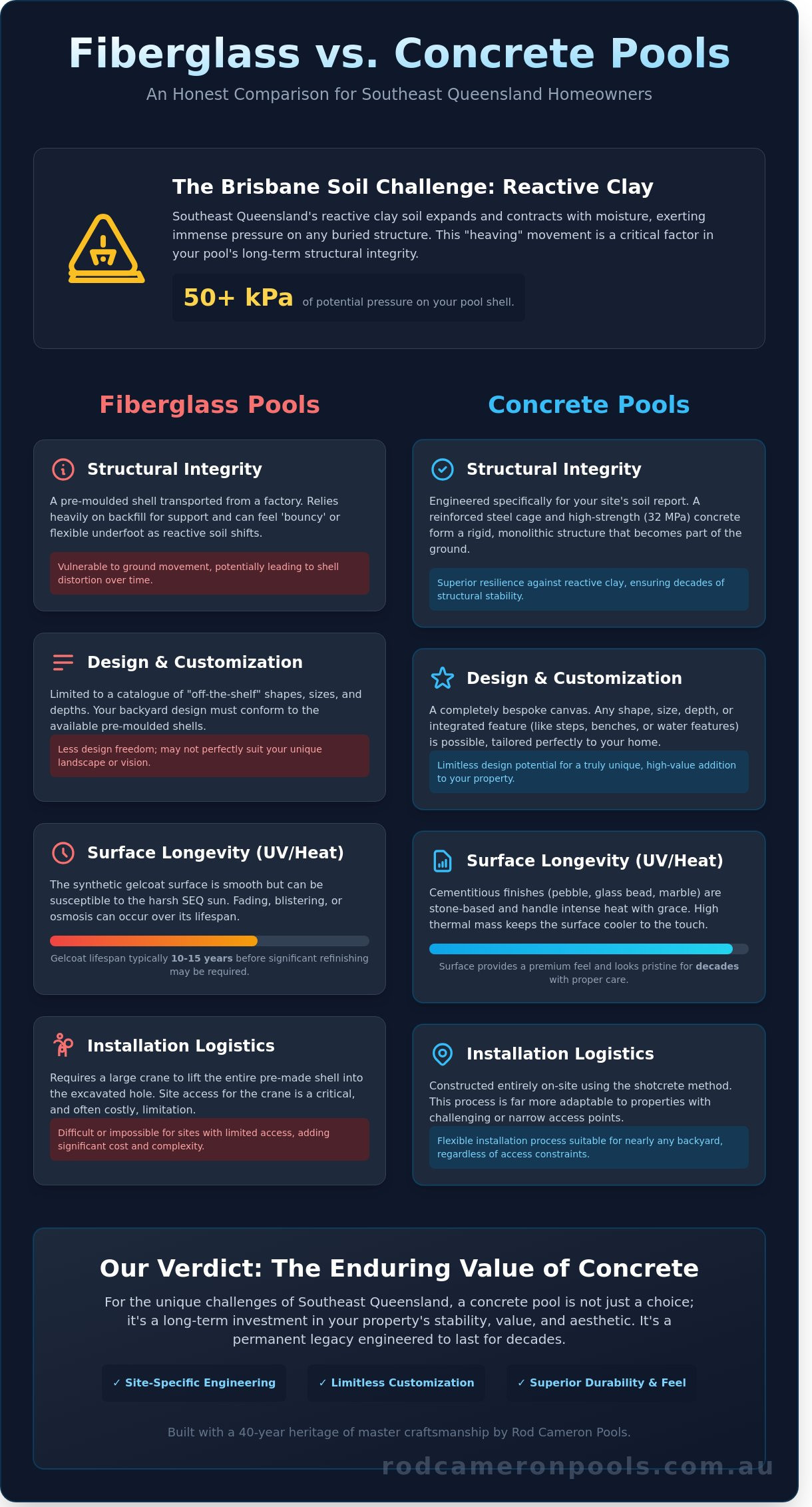
Brisbane is famous for its reactive clay soil. This earth expands and contracts aggressively with moisture levels. This “heaving” movement can exert 50 kilopascals of pressure or more on a buried structure. While fiberglass shells offer some flexibility, they rely heavily on the backfill material to maintain their shape. They can sometimes feel “bouncy” underfoot if the ground shifts. Concrete pools are different. We engineer them specifically for your site’s soil report. We use heavy-duty steel reinforcement and 32 MPa strength concrete to ensure the shell remains rigid. This site-specific engineering acts as a silent protector for your investment. It prevents the structural shifts that can lead to costly repairs in less robust designs. A concrete pool doesn’t just sit in the ground; it becomes part of it.
Climate and UV Resistance
The Southeast Queensland sun is relentless. It often delivers a UV index of 11 or higher during the peak of summer. On a 40-degree day, the surface of a pool undergoes intense thermal stress. Fiberglass gelcoats are synthetic. They can suffer from osmosis or fading over a 10 to 15 year period. Cementitious finishes, such as pebble or glass bead, are stone-based. They handle the heat with grace. Concrete’s high thermal mass means it stays cooler to the touch than synthetic alternatives. A marble-infused finish provides a natural, enduring texture that won’t peel or blister. We’ve seen these finishes look pristine decades after the initial pour. The density of concrete also provides a benefit in our coastal humidity. It offers a solid, cool-to-the-touch experience that synthetic shells simply can’t replicate. It’s about creating a space that feels as premium as it looks.
- Structural Integrity: Concrete offers bespoke engineering for reactive QLD clays.
- Surface Longevity: Natural stone finishes resist UV degradation better than synthetic gelcoats.
- Customisation: Shotcrete allows for any shape, depth, or integrated feature you desire.
We take pride in every meticulous detail of the build. Our process is methodical and steady. We don’t rush the curing stage because we know that patience leads to a superior finish. When you choose a concrete pool, you’re choosing a craft that has been refined over generations. It’s a commitment to quality that stands the test of time and weather. Your pool should be a stress-free sanctuary for years to come.
The Honest Comparison: Performance, Aesthetics, and Value
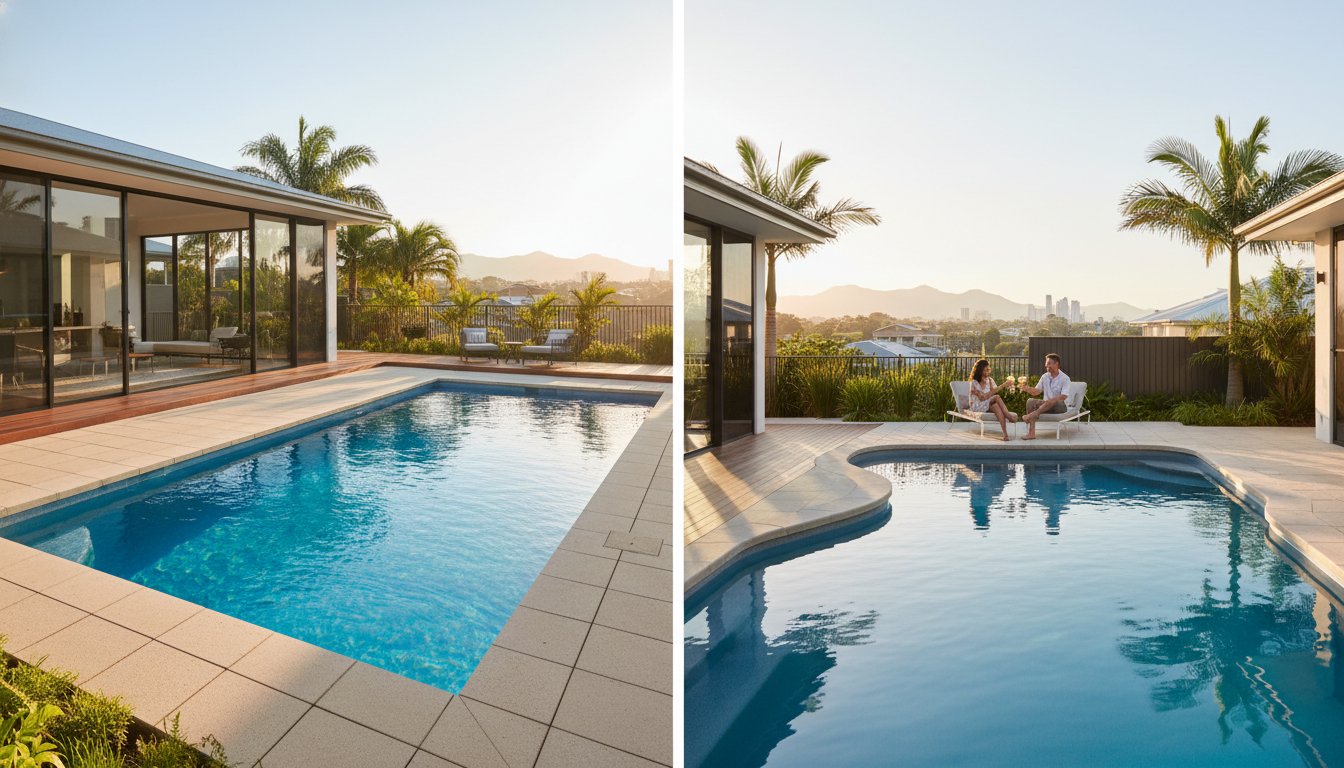
Choosing between a fiberglass or concrete pool often comes down to the vision you have for your home’s future. Fiberglass options arrive as pre-molded shells, which limits you to off-the-shelf shapes and sizes that may not perfectly align with your vision. In contrast, a concrete build offers a limitless bespoke canvas where the only boundary is your imagination. You can feel the difference immediately; a fiberglass gelcoat provides a smooth, plastic-like surface, but it lacks the organic, high-end texture of a hand-finished pebble or marble interior. Our clients often tell us that the tactile sensation of natural stone underfoot makes their swim feel more like a retreat than a backyard dip.
There is a common myth that concrete pools are chemical-hungry monsters that require constant scrubbing. Modern filtration systems and robotic cleaners have closed this gap significantly over the last 15 years. While a fiberglass shell is non-porous, a correctly balanced concrete pool with a high-quality interior finish resists algae just as effectively. In fact, over a 10-year period, the difference in chemical expenditure is often less than A$200 annually. This is a small investment when you consider the 40-year legacy of durability that comes with our quality concrete pools.
Customization and Backyard Integration
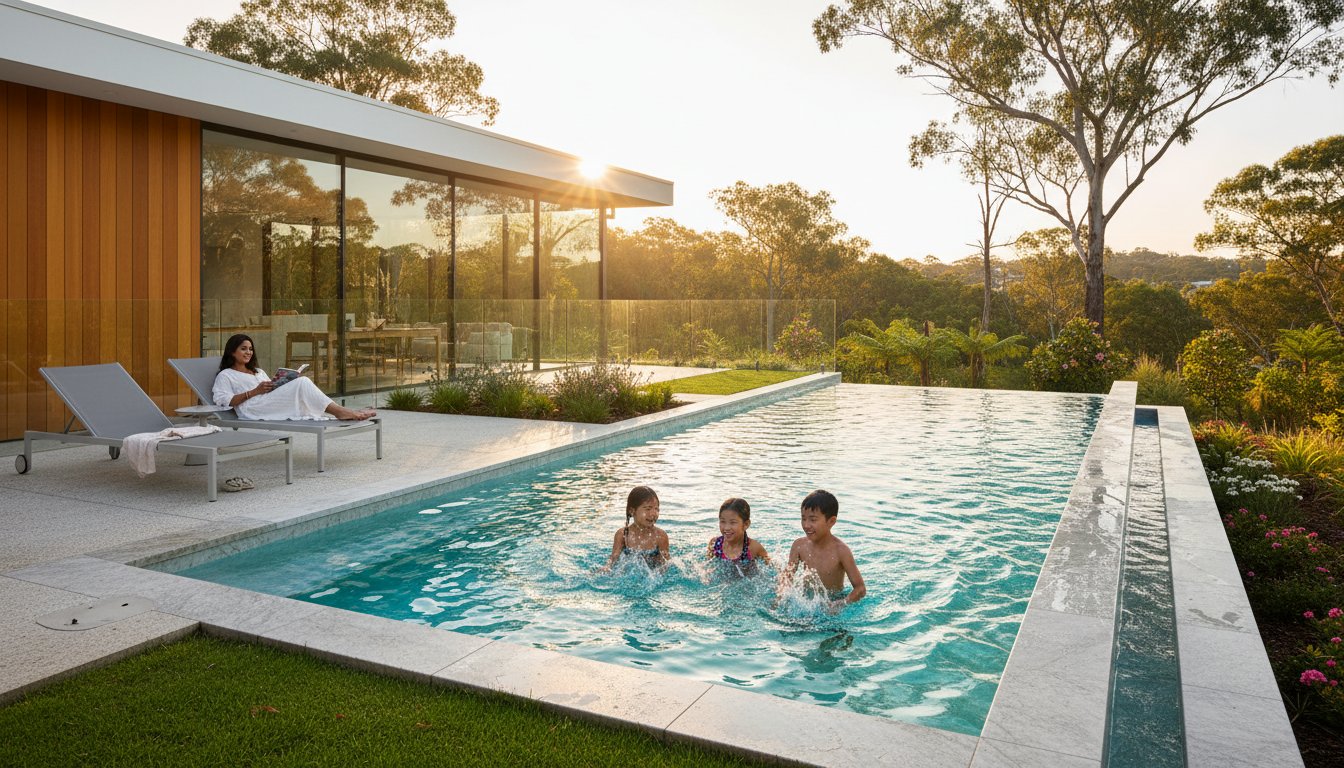
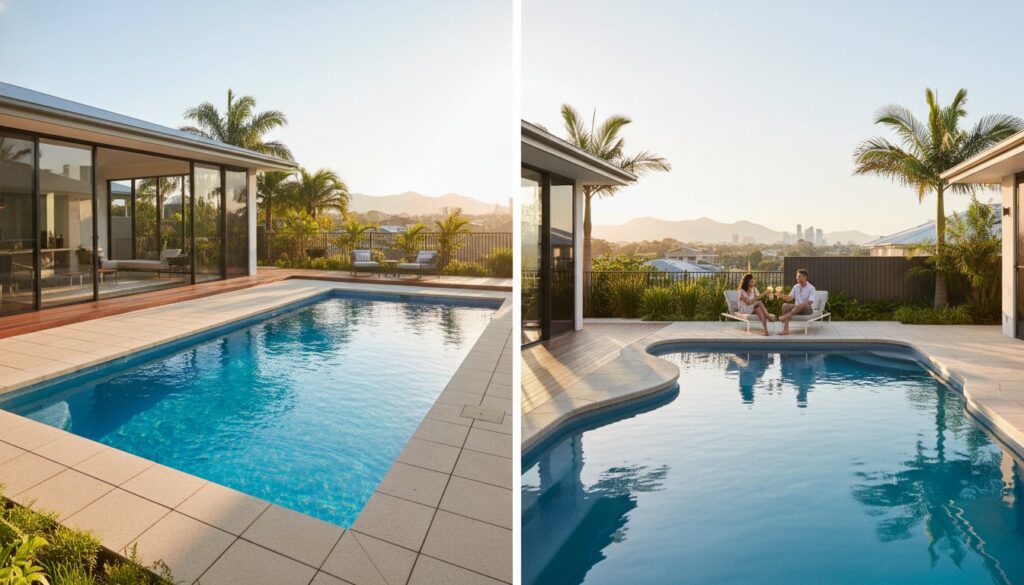
Brisbane’s topography often presents challenges that a pre-fabricated shell simply cannot meet. When dealing with steep slopes of 15 degrees or more in suburbs like Paddington or Hamilton, concrete wins because the pool itself acts as a retaining structure. This allows us to design, construct, and maintain a level oasis on a difficult block. You can integrate steps, deep-water benches, and sun pods exactly where the afternoon light hits. This flexibility ensures a seamless transition where the pool coping matches your home’s architectural flow, creating a unified living space rather than a bolted-on accessory. If you are ready to see how a custom design fits your yard, you can view our recent projects for inspiration.
The Long-Term Value Proposition
While the initial capital outlay for concrete may be A$15,000 to A$25,000 higher than fiberglass, the 30-year lifecycle cost analysis tells a different story. Fiberglass shells can suffer from osmosis or sun-fading over two decades, often requiring expensive resurfacing that costs upwards of A$10,000. Concrete remains the gold standard for Australian valuations because real estate agents view it as a permanent improvement to land. In the Brisbane market, a well-executed concrete pool can add between 7% and 11% to a property’s total value. A concrete pool acts as a permanent structural addition to a home’s footprint, essentially extending the foundation into the landscape. This sense of permanence and meticulous craftsmanship ensures your investment remains as solid as the day it was poured.
The Hidden Lifecycle: Maintenance and Future Renovations
Deciding between a fiberglass or concrete pool often involves weighing the immediate aesthetic against the long-term commitment. A common misconception suggests that concrete is a high-maintenance burden that requires constant scrubbing. This simply isn’t the reality for modern builds. While fiberglass surfaces are non-porous, the gap in daily upkeep has closed significantly. With the integration of robotic cleaners and automated pH controllers, a well-engineered concrete pool requires less than 20 minutes of manual attention per week. The real distinction emerges when we look at the 15-year horizon.
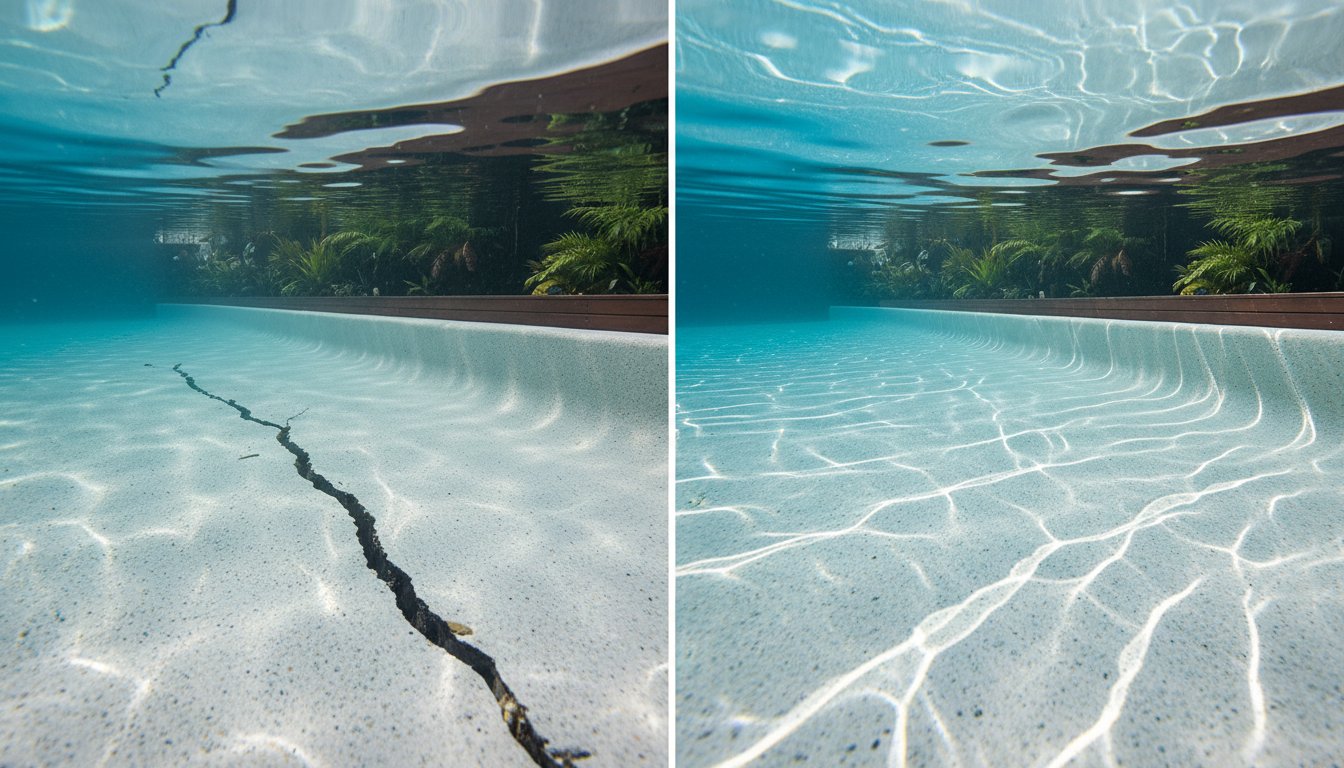
By the time a pool reaches its second decade, the Queensland sun has usually left its mark. Fiberglass shells often suffer from gelcoat fading or osmosis, which manifests as small blisters in the laminate. These issues are notoriously difficult to patch without leaving visible scars. Concrete pools offer a distinct “Renovation Advantage” because they are permanent structures rather than pre-moulded inserts. You can strip the interior and apply a fresh finish, effectively resetting the clock on the pool’s lifespan. This flexibility allows homeowners to evolve their backyard style as trends change, moving from traditional pebble to the contemporary luxury of smooth, polished marble.
Resurfacing vs. Replacement
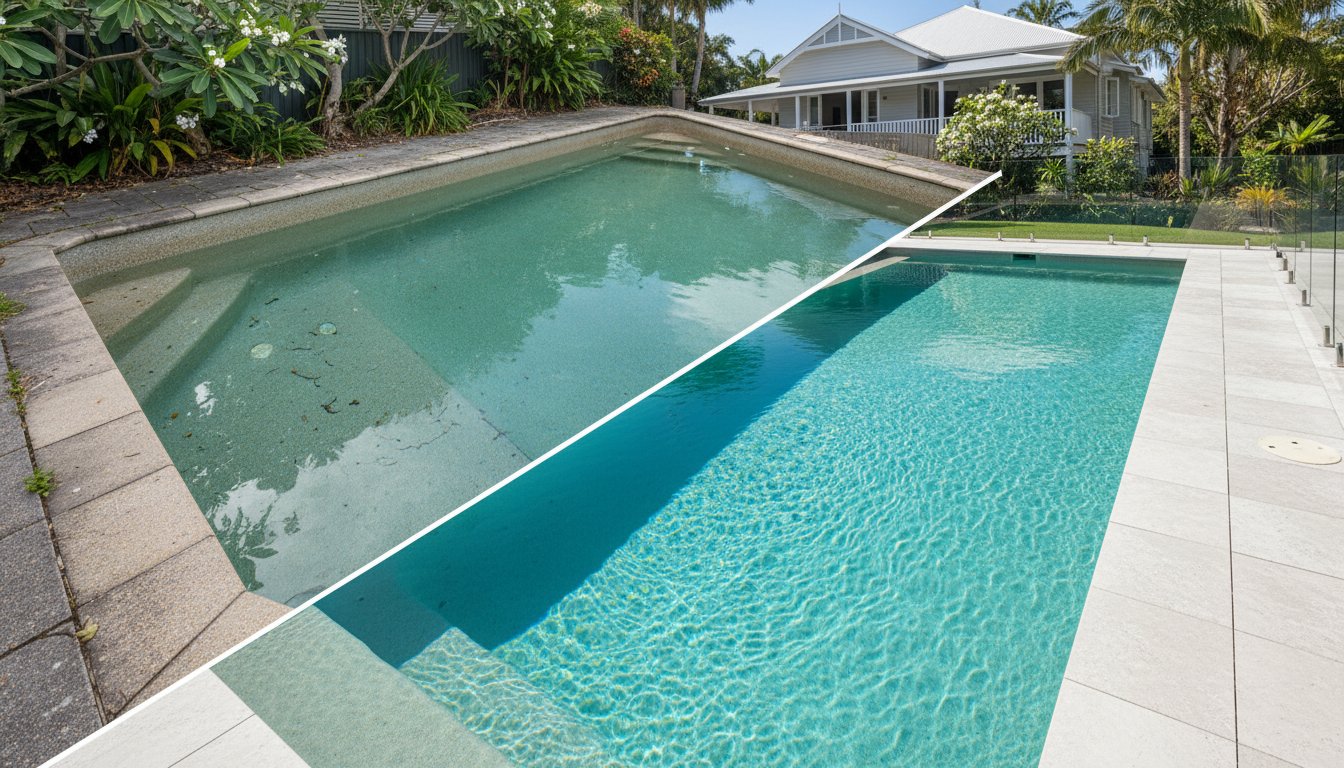
In our 40 years of experience, we’ve seen how a concrete pool can be completely transformed through remarbling. This meticulous process involves removing the old interior and applying a new, high-performance finish like glass beads or silky-smooth pebbles. It typically costs between A$8,500 and A$15,000, which is a fraction of the cost of a total replacement. Failing fiberglass shells are far more complex; they often require expensive crane hire and structural stabilization if the shell needs removing. Rod Cameron Pools specializes in giving these older concrete structures a second life, ensuring the integrity of the original build remains solid for another 20 years.
Chemicals and Energy Efficiency
The argument regarding chemical consumption often leans toward fiberglass, yet the data shows a narrowing margin. A concrete pool with a high-quality finish might require 10% to 15% more chlorine than a fiberglass counterpart to manage surface bacteria. However, this is easily offset by modern filtration technology. By using variable speed pumps, homeowners can save up to A$450 annually in energy costs, making the total cost of ownership remarkably similar. We focus on a “low-touch” engineering approach. By pairing a salt-water chlorinator with a glass media filter, we create a system that maintains crystal-clear water with minimal chemical intervention, ensuring your family spends more time swimming and less time testing water.
- Durability: Concrete structures are built to last 50+ years; fiberglass shells generally have a 25-year structural expectation.
- Customization: Concrete allows for bespoke additions like integrated sun shelves or deep-end ledges during a renovation.
- Resale Value: A freshly resurfaced concrete pool adds significant market appeal, often returning 100% of the renovation cost during a home sale.
Choosing a pool is an investment in your family’s lifestyle. While the initial choice of a fiberglass or concrete pool is important, understanding the lifecycle ensures you aren’t surprised by the reality of year 15. We believe in building things that endure. Our team approaches every project with the honesty and craftsmanship that only four decades in the Queensland industry can provide. We don’t just dig holes; we create permanent landmarks for your home that grow and change alongside your family.
Choosing the Right Pool for Your Brisbane Property
Selecting a pool involves more than picking a shape from a brochure. It requires a meticulous assessment of your land, your lifestyle, and your long-term financial goals. Whether you decide on a fiberglass or concrete pool, the physical reality of your Brisbane backyard often dictates the best path forward. We’ve spent over 40 years helping families navigate these choices, ensuring every quality concrete pool we build stands the test of time and adds genuine value to the home.
A site access audit is your first priority. You must determine if a heavy crane can safely reach your backyard to drop in a pre-moulded shell. In many established Southeast Queensland areas, overhead power lines or narrow side clearances make this impossible. If a crane cannot get within a safe lifting radius, the logistical costs can skyrocket by A$5,000 to A$15,000 for specialized equipment. Concrete pools offer a distinct advantage here because the materials are brought in via small pumps and agile machinery, making them suitable for 90% of challenging sites.
Timeline expectations also vary significantly between the two methods. While a fiberglass shell might be in the ground within 7 days, the surrounding landscaping often takes another 4 to 6 weeks. A concrete build is a more deliberate process, typically spanning 8 to 12 weeks from excavation to the first swim. This methodical pace allows for the 28-day curing phase, a vital period where the concrete gains its structural integrity and ensures your investment remains solid for decades.
The Logistics of Installation
In hilly or tightly packed suburbs like Paddington, Ascot, or Bardon, traditional installation methods often fail. Narrow blocks and steep gradients are the “go-to” scenarios for concrete construction. Because we build the pool in the ground rather than delivering a finished product, we can navigate heritage-listed gates or steep driveways that would block a fiberglass delivery. The curing phase is a quiet but essential part of this journey, where the shell rests and strengthens before we apply the final interior finish.
Budgeting Beyond the Quote
Many homeowners are surprised to find that the pool shell represents only 50% to 60% of the total project cost. You must factor in council application fees, which typically start around A$1,500 in Brisbane, alongside mandatory safety fencing that costs between A$250 and A$650 per linear metre. Beware of “low-ball” fiberglass quotes that exclude site preparation or soil removal costs. These hidden expenses can add A$10,000 to your final bill if not identified early. At Rod Cameron Pools, we believe in fixed-price contracts to provide peace of mind and financial clarity.
Selecting a builder with local Southeast Queensland experience is the final piece of the puzzle. Our region is known for reactive clay soils that expand and contract with the weather. A builder who understands these local conditions will design a pool with the correct steel reinforcement to prevent cracking. This expertise ensures a seamless transition from a construction site to a backyard oasis. We take pride in our heritage as a family-owned business, focusing on honesty and craftsmanship to deliver results that your family will enjoy for generations.
Ready to start your journey with a builder who values integrity and quality? Contact Rod Cameron Pools today for a professional consultation on your Brisbane project.
The Rod Cameron Legacy: Why We Build Concrete Pools
Since 1968, the Cameron family has dedicated itself to the craft of building and restoring concrete pools across South East Queensland. Rod Cameron founded this business on a simple, enduring principle: quality lasts. We’ve spent 56 years refining our techniques because we believe a pool should be a permanent legacy for your home, not a temporary fixture. While the choice between a fiberglass or concrete pool often comes down to initial speed versus long-term flexibility, our history is rooted in the structural integrity that only reinforced concrete provides. We don’t just build shells; we create backyard landmarks that stand up to the shifting soils of the Brisbane River and the salt-heavy air of the Gold Coast.
Our commitment to concrete stems from its unmatched versatility. We specialize in the projects that others find too difficult, such as sites with limited 1.5-metre access or steep blocks that require custom engineering. Over the last four decades, we’ve completed more than 4,200 projects, each handled with the same family-owned values that Rod established in the sixties. We treat every backyard as if it were our own, ensuring that the 32 MPa concrete we pour today remains rock-solid for the next fifty years. It’s a methodical, steady approach that prioritizes your peace of mind over high-pressure sales tactics.
Expertise in Pool Resurfacing and Remarbling
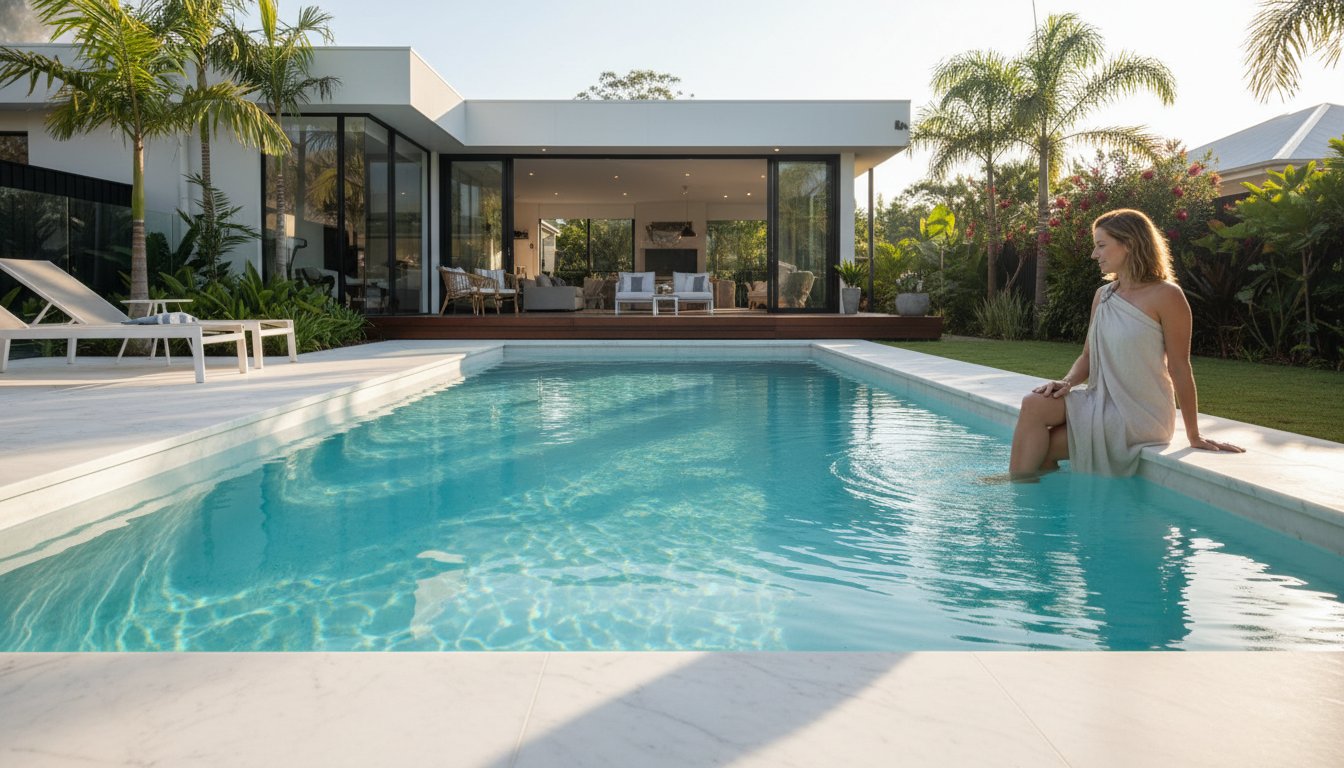
The finish of your pool determines both its aesthetic appeal and its comfort. We’ve pioneered the use of our signature “Smooth Marble” finish, a premium blend of crushed marble and white cement that offers a silkier texture than traditional pebblecrete. This finish is a game-changer for families who want to avoid the “pool toe” abrasions often caused by rougher surfaces. Our Pool Resurfacing Brisbane team follows a rigorous 7-stage preparation process. This includes high-pressure water blasting and specialized bonding agents to ensure the new surface adheres perfectly to the original shell. By choosing smooth marble, you’re investing in a finish that can last 15 to 20 years with proper water chemistry, providing a timeless look that never goes out of style.
A Stress-Free Transformation
We understand that a pool renovation can feel like a daunting undertaking. That’s why we employ a “Master Tradesman” approach to project management, where every stage is overseen by experts who value honesty and hard work. We take pride in turning a 30-year-old, dated concrete eyesore into a modern oasis that looks like it was built yesterday. Our process is designed to be seamless, moving from the initial vision to the final fill with a reliable, rhythmic pulse. We handle the heavy lifting, the structural repairs, and the technical filtration upgrades so you don’t have to worry about the details. If you’re ready to breathe new life into your backyard, contact us for a fixed-price pool renovation quote today. We provide clear, transparent pricing in AUD, ensuring there are no hidden surprises during your transformation journey.
Creating a Backyard Legacy for Your Brisbane Home
Choosing between a fiberglass or concrete pool is about more than just the initial dig; it’s a decision that shapes your family’s lifestyle for the next 50 years. While fiberglass offers a faster installation, it lacks the bespoke flexibility and enduring structural integrity that a custom concrete build provides. We’ve spent over 40 years serving Southeast Queensland, witnessing firsthand how a meticulously designed pool becomes the heart of the home. Since 1968, our team has focused on delivering quality concrete pools that stand up to the local climate while offering a level of craftsmanship that pre-molded shells simply cannot match. Our specialists use smooth marble finishes to create a tactile, luxurious feel that remains timeless as your garden matures. We believe the construction process should be seamless and stress-free, backed by decades of technical precision and honest, local values. You’re not just installing a feature; you’re building a solid foundation for decades of summer memories. Start your pool transformation with a fixed-price quote from Rod Cameron Pools. We look forward to helping you bring your vision to life.
Frequently Asked Questions
Is a concrete pool more expensive than a fiberglass pool in Brisbane?
A concrete pool usually requires a higher initial investment, with Brisbane projects typically starting between A$55,000 and A$85,000 depending on the site’s complexity. Fiberglass shells often start lower, around A$45,000; however, they don’t offer the same bespoke design flexibility. This price difference reflects the meticulous craftsmanship and structural integrity required to build a permanent, custom-shaped aquatic retreat that perfectly fits your backyard’s unique dimensions.
How long does it take to build a concrete pool vs. fiberglass?
The construction of a quality concrete pool typically spans 10 to 14 weeks, while a fiberglass shell can often be installed in 3 to 5 weeks. We take this extra time to ensure the steel-reinforced structure cures properly and the tiling is applied with absolute precision. This methodical pace is what guarantees your pool will remain a solid, enduring part of your family home for over 40 years.
What is the most durable pool finish for the Queensland climate?
Pebblecrete and glass bead finishes are the most resilient options for our harsh Queensland sun, often lasting 15 to 22 years before requiring a refresh. These finishes handle the 30-degree summer heat and UV exposure much better than the gel coats found on a fiberglass pool. By choosing a high-grade pebble finish, you’re investing in a surface that stays vibrant and smooth for decades of family memories.
Can you change the shape of a concrete pool during a renovation?
You can absolutely alter the shape, depth, or features of a concrete pool during a major renovation by adding new steel and shotcrete. This flexibility allows us to add a 2-meter sun shelf or a modern internal bench seat to a 20-year-old pool. Fiberglass shells are manufactured in a factory and can’t be modified, meaning you’re locked into that specific shape for the life of the product.
Why do fiberglass pools sometimes ‘pop’ out of the ground?
Fiberglass pools can ‘pop’ or lift when groundwater pressure becomes greater than the weight of the water inside the shell, which is a significant risk during heavy Brisbane rain events. Concrete pools are far less susceptible to this because their 200mm thick reinforced walls provide the mass needed to stay firmly anchored. We’ve seen unweighted shells lift by 300mm in low-lying suburbs after a single 100mm downpour, causing permanent structural damage.
Which pool type adds the most value to a Brisbane home?
A custom concrete pool typically adds 7% to 12% more to a property’s resale value compared to a standard fiberglass installation. Local Brisbane buyers view a concrete build as a premium, permanent asset that signals high-end craftsmanship and architectural intent. It’s a strategic choice for homeowners who want their pool to feel like a seamless extension of their luxury home rather than a pre-fabricated addition.
How often does a concrete pool need to be resurfaced?
A well-constructed concrete pool generally needs resurfacing every 15 to 25 years, provided the water chemistry is kept in balance. If you opt for a fully tiled interior, that lifespan can extend well beyond 30 years with minimal wear. Our 40-year heritage in the industry proves that a commitment to quality materials during the initial build significantly reduces the frequency of these long-term maintenance tasks.
Do concrete pools use more chemicals than fiberglass?
Concrete pools may require 10% to 15% more chemicals to manage pH levels because the surface is naturally more alkaline than a fiberglass pool shell. Modern salt chlorination and automated dosing systems have made this difference almost unnoticeable for most Brisbane families. We focus on installing efficient filtration systems that make maintaining your water quality a stress-free process, ensuring a safe environment for your kids to swim.