
The secret to a pool that stays beautiful for decades isn’t the finish itself; it’s the invisible work that happens during the 70% of the project dedicated to preparation. When you decide to invest an average of A$11,000 into your backyard, you deserve more than a quick cosmetic fix. Understanding the pool resurfacing process step by step allows you to move past the anxiety of hidden costs or shell damage. At Rod Cameron Pools, we’ve spent over 40 years refining this craft, ensuring every quality concrete pool we restore meets the rigorous ANSI/PHTA/ICC-12 standards revised in 2025.
It’s completely natural to feel a sense of trepidation when the water level drops and the bare shell is exposed. You want a seamless transition from a tired, leaking surface to a smooth crushed marble finish that invites your family back into the water. This guide promises to demystify the technical stages of restoration, giving you the peace of mind that your investment is structurally sound and built to endure the Queensland sun. We’ll walk through the timeline of the build, the vital 28-day curing phase, and the daily brushing routines required to protect your new surface for years to come.
Key Takeaways
- Learn why a meticulous site audit for hollow spots and delamination is the essential foundation for a leak-free, structurally sound pool shell.
- Understand the pool resurfacing process step by step, from stripping old layers down to raw concrete to applying the vital bond coats required for permanent adhesion.
- Master the technical nuances of hand-trowelling a smooth crushed marble finish to ensure a dense, uniform surface that feels as beautiful as it looks.
- Discover the “Fill and Brush” rule and why the initial 28-day curing period is the most critical phase for the long-term integrity of your restoration.
- Gain peace of mind with a fixed-price approach that eliminates the anxiety of hidden costs, ensuring your Queensland backyard transformation remains a stress-free experience.
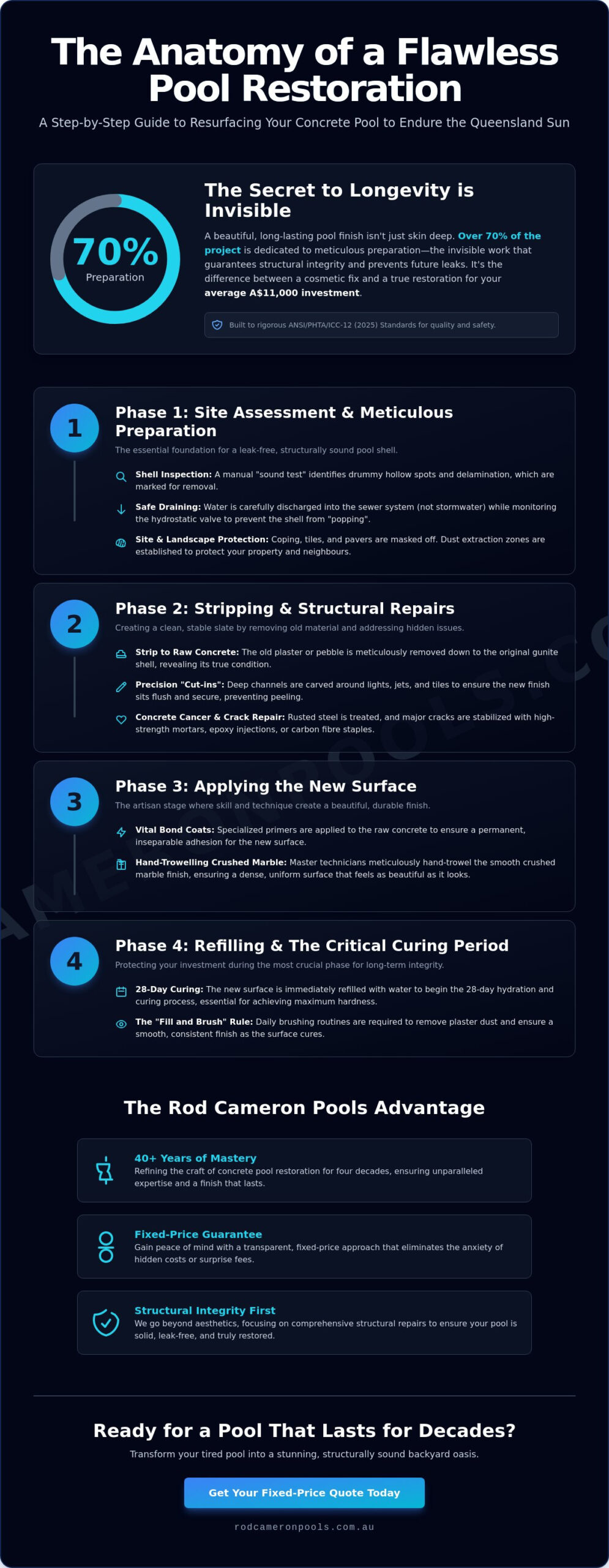
Phase 1: Site Assessment and Meticulous Preparation
Resurfacing is far more than a simple aesthetic upgrade; it is the comprehensive removal of an aged interior lining to apply a fresh, waterproof finish that preserves the life of your asset. To master the pool resurfacing process step by step, we begin with a meticulous site audit. This isn’t a cursory glance over the fence. We’re looking for delamination, where the bond between the original concrete and the surface has failed, and checking the structural integrity of the shell itself. Because we specialise in types of swimming pools constructed from quality concrete, we understand that the health of the foundation determines the longevity of the finish.
In Southeast Queensland, our humid summers and sudden tropical storms dictate our project schedules. We don’t just start whenever the sun is out; we monitor the dew point and local forecasts to ensure the bonding agents cure under optimal conditions. Before a single tool is lifted, we coordinate the safe discharge of your old pool water. Local council regulations in areas like Brisbane and the Gold Coast are strict about where chlorinated or salt water can go. We typically direct this into the sewer system rather than stormwater drains to protect our local waterways and ensure your project remains compliant with environmental standards.
Draining and Shell Inspection
Draining a pool carries inherent risks, specifically hydrostatic lift, which can cause a pool to “pop” out of the ground if groundwater pressure is too high. We manage this by carefully monitoring the hydrostatic valve located at the pool’s deepest point. Once the shell is empty, we perform a manual “sound test” to identify drummy areas. These are hollow spots where the old surface has detached from the concrete. We mark these sections meticulously, as they must be stripped back to the raw concrete to ensure your new smooth crushed marble finish adheres permanently and stays leak-free for decades.
Protecting the Surrounding Landscape
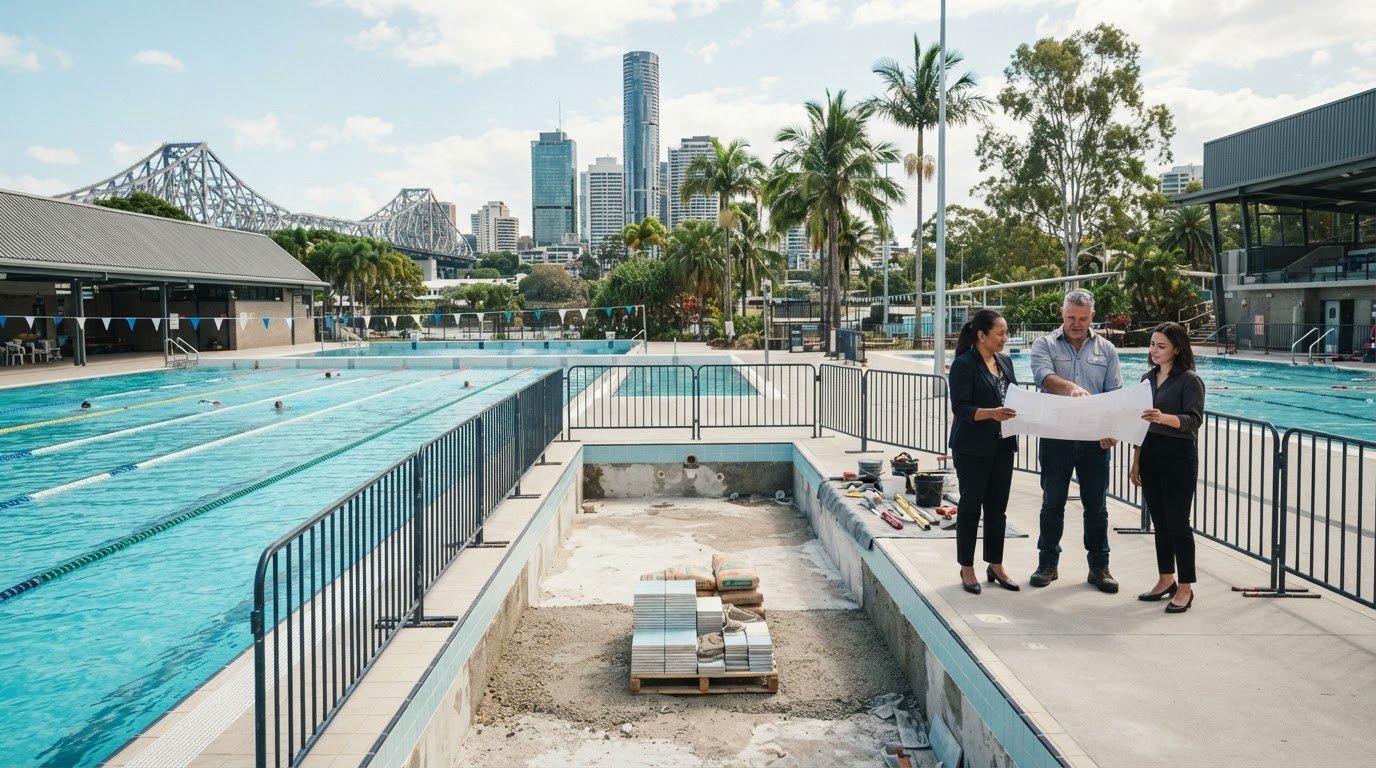
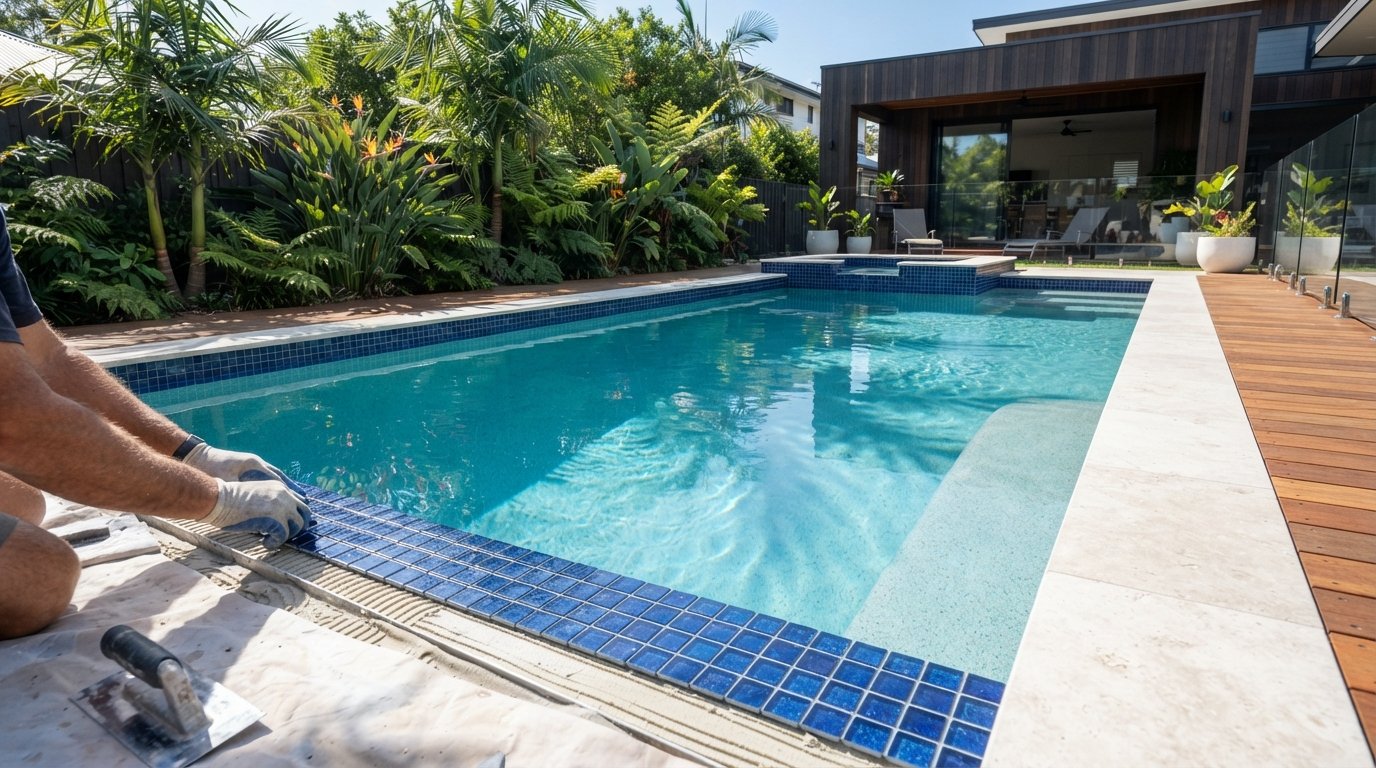
A professional restoration shouldn’t leave your backyard in ruins. We take great pride in our site preparation, masking off existing coping, waterline tiles, and expensive pavers with heavy-duty protection. Many Brisbane residential blocks have tight access, so we use specialized, compact machinery and set up dedicated dust extraction zones. This containment ensures that the debris from the stripping process doesn’t end up in your garden or your neighbour’s entertaining area. Our goal is a seamless transition from a construction site back to a family sanctuary, keeping the process as stress-free as possible for your household.
Phase 2: Stripping the Surface and Structural Repairs
Once the pool is empty, we move into the most physically demanding stage of the pool resurfacing process step by step: the strip-down. This isn’t merely about removing old material. It’s about creating a clean slate. We meticulously remove the old plaster or pebble right down to the raw concrete shell, revealing the true condition of the gunite foundation that has supported your family’s memories for years. During this phase, we perform “cut-ins,” which are deep, precise channels carved around pool lights, return jets, and the waterline tile line. These channels ensure your new finish sits flush and secure, preventing the clumsy, raised lips that often lead to premature peeling or snagging.
Stripping the surface often reveals “unseen” issues that have been hidden for decades. We look for signs of structural fatigue, such as weeping cracks or hollow pockets that compromise the shell’s integrity. By addressing these flaws now, we ensure the new surface has a stable, reliable home. This methodical approach to repair is what separates a professional restoration from a simple patch job, providing you with a pool that is once again solid, leak-free, and enduring.
Addressing Concrete Cancer and Major Cracks
In older Queensland pools, we frequently encounter “concrete cancer,” which occurs when the internal steel reinforcement rusts and expands. This expansion cracks the concrete from the inside out. We excavate these affected areas, treat the rusted steel, and apply high-strength repair mortars to restore the shell’s strength. For structural movement, we don’t just fill the gap; we stabilize the shell using epoxy injections or carbon fibre staples to prevent the crack from returning. If you’ve noticed growing fissures in your shell, fixing pool cracks in Brisbane requires this level of trade mastery to ensure the finish doesn’t fail within a few seasons.
Surface Cleaning and Bond Coating
After repairs, the raw shell undergoes a rigorous acid wash to remove stubborn calcium deposits and chemical impurities. This process opens the “pores” of the concrete, preparing it for the bond coat. We apply a high-performance polymer bond coat that creates a textured, “velcro” effect across the entire surface. This step is vital for meeting pool construction and finish standards, ensuring the new material adheres permanently to the old shell. Skipping the bond coat is the single most common cause of surface delamination and is a failure point we never risk in our pool resurfacing process step by step. If you’re ready to restore the integrity of your backyard oasis, our team at Rod Cameron Pools is here to help.
Phase 3: Applying the New Surface Step by Step
The visual transformation within the pool resurfacing process step by step begins when our team arrives with the raw materials for your new interior. We don’t use pre-mixed, aged batches. Instead, we mix the finish on-site to ensure the chemical bond is at its peak strength the moment it hits your pool shell. Our tradesmen combine high-grade white cement with premium crushed marble in precise ratios, creating a material that is both workable and exceptionally durable. This on-site control allows us to account for the specific humidity levels of the day, a vital factor in the volatile Southeast Queensland climate.
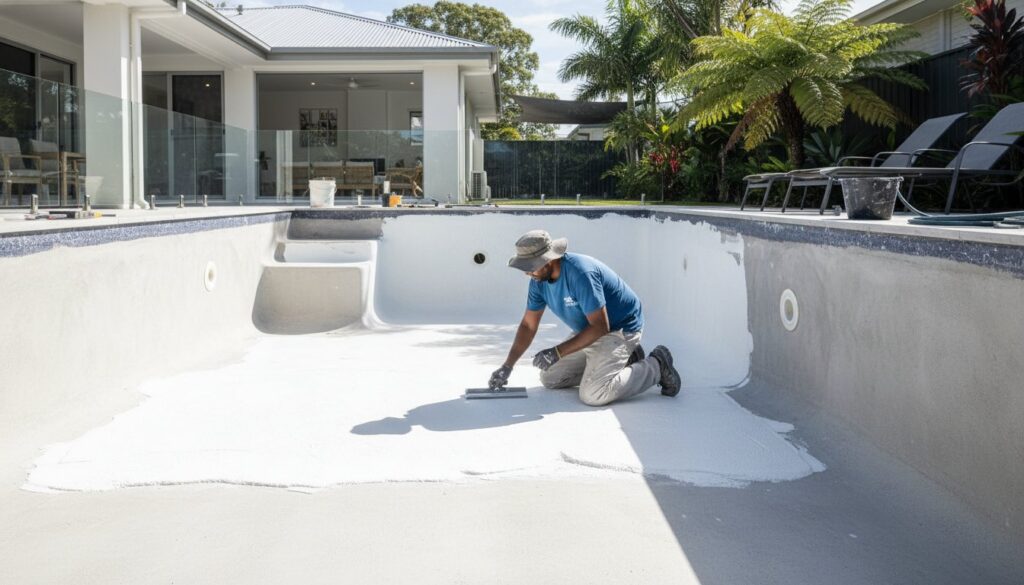
Once mixed, the material is pumped into the pool where the true artistry begins. This critical stage of the pool resurfacing process step by step requires a steady hand and decades of experience. We hand-trowel the entire surface, applying the marble finish at a consistent thickness to ensure there are no weak points or thin patches. After the initial application, we enter the refinement phase. For aggregate finishes, this involves a careful “exposure” wash to reveal the texture; however, for our signature smooth marble, it involves a series of timed trowel passes to compact the surface. This compaction creates a dense, non-porous finish that feels like silk underfoot and resists algae growth far better than rougher alternatives.
The Mastery of Smooth Crushed Marble
While many contractors push for pebble, we believe smooth crushed marble remains the gold standard for Queensland families who value comfort. Achieving a mirror-smooth finish without “burning” the plaster-which causes unsightly grey streaks-is a skill that takes years to master. It’s the difference between a surface that lasts ten years and one that remains pristine for twenty. If you’re torn between textures, you can compare smooth marble vs pebblecrete in our detailed 2026 comparison guide to see which suits your lifestyle best.
Tiling and Coping Integration
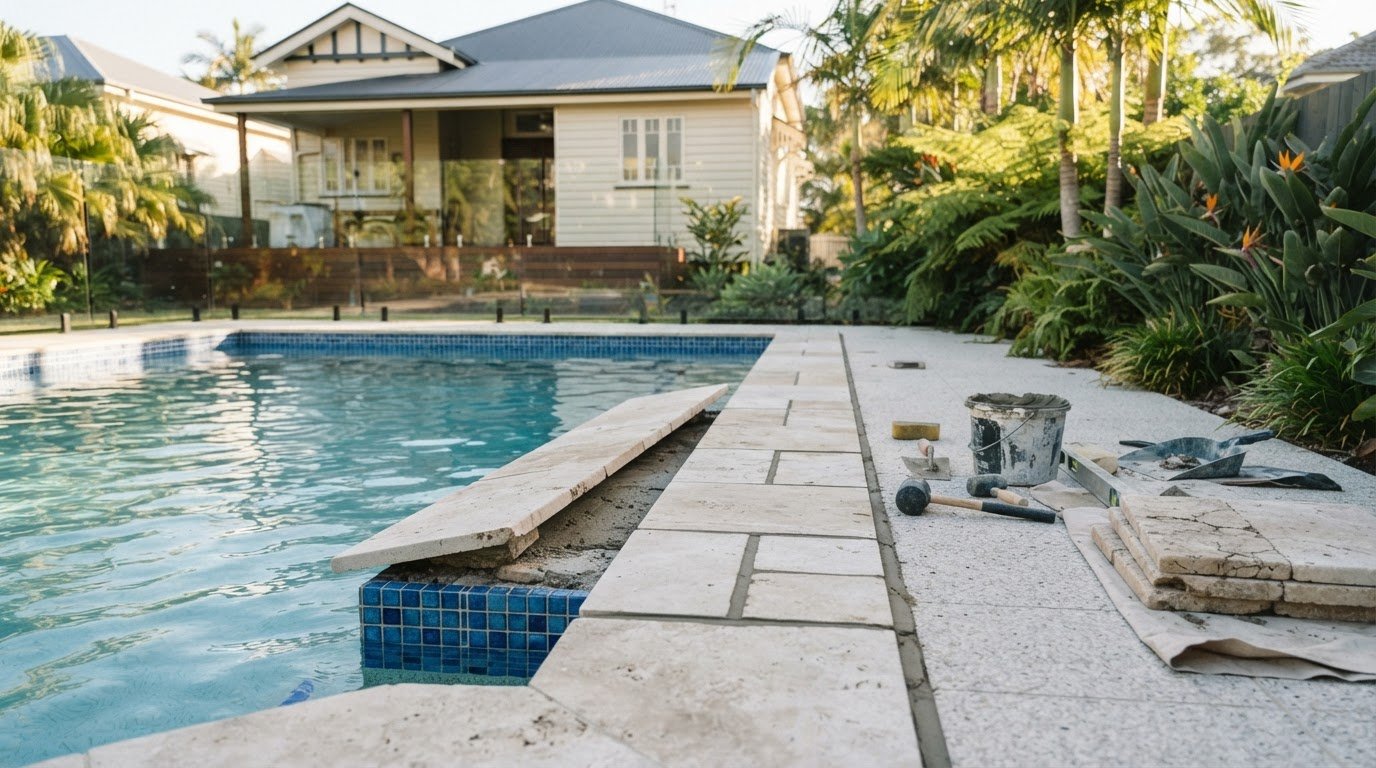
The resurfacing window is the ideal time to address your pool’s “jewellery”-the waterline tiles and header stones. We ensure the new marble surface meets the tile line with a meticulous, watertight seal, preventing water from seeping behind the finish and causing future delamination. A seamless transition here doesn’t just look better; it protects the structural integrity of the bond. For those looking to modernise their entire space, you can explore pool landscaping and tiling ideas that complement a fresh restoration, ensuring your backyard feels like a cohesive, luxury retreat.
Phase 4: Refilling and the Critical 28-Day Curing Period
The application of the finish marks a major milestone, yet the most critical stage of the pool resurfacing process step by step actually begins the moment the hoses are turned on. This is the hydration phase. Unlike paint, which dries, cementitious finishes like smooth crushed marble must cure while submerged. We follow a strict “Fill and Brush” rule because allowing a fresh surface to sit in the hot Queensland sun without water leads to check-cracking and structural weakness. You should budget approximately A$425 to A$475 for the initial refill, a small but essential investment in the longevity of your new interior.
At a molecular level, the first 28 days are transformative. According to the Pool & Hot Tub Alliance (PHTA) standards revised in 2025, approximately 86% of the cement cures during this initial window. During this time, the water chemistry is volatile. Fresh marble and cement naturally leach calcium, which spikes the pH levels. If these levels aren’t neutralized with careful acid additions, the water will become aggressive, “eating” into your new finish and leaving it rough or pitted. We recommend delaying the addition of salt or chlorine for at least two to three weeks to allow the surface to stabilize properly and avoid staining the fresh material.
The First 7 Days: Brushing and Filtering
For the first week, your pool requires a little “elbow grease” to stay pristine. You must brush the entire surface twice daily with a nylon-bristled brush to prevent plaster dust, which is fine calcium carbonate particles, from hardening onto the finish. If this dust settles, it creates a sandpaper-like texture that is incredibly difficult to remove later. Your filtration system will work overtime during this period; we’ll guide you on how to clean your cartridges or backwash your sand filter to keep the water crystal clear without clogging the pump. To ensure your equipment remains in top condition, you can find out more about Pool Maintenance and Equipment Sales for professional assistance. The 2026 startup standard requires maintaining a Langelier Saturation Index between -0.3 and +0.3 to prevent the water from leaching minerals from your fresh marble.
Managing SE Queensland Water Restrictions
In Southeast Queensland, managing water usage is both an environmental and financial priority. We suggest using a high-quality pool cover during the first month to reduce evaporation by up to 95%, which helps maintain stable water chemistry. While you might be eager to jump in, avoid turning on your salt chlorinator or heat pump until the 28-day mark. High salt levels or rapid temperature changes can interfere with the chemical hydration of the cement. If you want a partner who manages every detail of this transition, contact Rod Cameron Pools to ensure your restoration is handled with trade-qualified care and the pool resurfacing process step by step is completed to the highest standard.
Why Rod Cameron Pools is the Master of Resurfacing
Choosing a contractor to handle your backyard restoration is a decision rooted in trust and a desire for longevity. For over five decades, we’ve remained a family-owned and operated business, serving homeowners across Southeast Queensland with a level of dedication that larger corporations simply can’t replicate. We manage the pool resurfacing process step by step with a team of real tradespeople, ensuring you never have to deal with a pushy sales agent who has never stepped onto a construction site. This direct connection between the homeowner and the craftsman ensures that every detail of your project is handled with meticulous care, honesty, and integrity.
One of our most significant differentiators is the “Fixed-Price” promise. We understand the anxiety that comes with draining a pool, fearing that once the water is gone, the costs will start to climb. By conducting the thorough initial assessments described in Phase 1, we provide a transparent, upfront quote that remains solid. Whether we are performing a complex remarbling or a full restoration, you can rest easy knowing there are no hidden surprises waiting in the shell. Our goal is to provide a seamless, stress-free experience that results in a beautiful, leak-free surface built to last for twenty years or more.
Our 1968 Heritage in Brisbane
Since our inception in 1968, we’ve witnessed the evolution of Brisbane’s backyard landscapes and the specific challenges our climate presents. This deep local heritage allows us to navigate difficult site renovations, from tight inner-city blocks to expansive Gold Coast estates, with a steady and methodical hand. Our philosophy is built on the belief that quality concrete pools should be enduring assets, not temporary fixtures. We specialise in the application of smooth crushed marble, a trade skill that requires the patience and precision of a master tradesman. It is a craft we have protected for over 50 years, ensuring your pool’s finish is as comfortable as it is durable.
Start Your Transformation Today
Your journey toward a seamless restoration begins with a professional on-site assessment. During this initial consultation, we evaluate your pool’s structural health, discuss finish options, and provide a comprehensive fixed-price quote. We believe in providing you with all the information necessary to make an informed, confident decision for your home. If you are ready to master the pool resurfacing process step by step and restore your backyard’s beauty, get a fixed-price pool resurfacing quote from the experts at Rod Cameron Pools today. We take pride in our ability to design, construct, and maintain spaces that foster lifelong family memories and lifestyle transformations.
Ready to Restore Your Quality Concrete Pool?
Your pool’s transformation is a journey that requires patience, technical precision, and a deep respect for the materials involved. By mastering the pool resurfacing process step by step, you can move forward with the confidence that your backyard investment is protected by decades of local expertise. From the meticulous stripping of the old shell to the critical 28-day hydration period, every stage is designed to ensure your surface remains smooth, solid, and enduring. We take immense pride in our family-owned heritage since 1968, a legacy built on the promise of quality concrete pools that serve as the heart of your family’s summer memories.
We specialize in the meticulous application of smooth marble finishes, a craft that delivers a level of comfort and aesthetic integrity that modern alternatives often lack. Our fixed-price guarantee ensures you can plan your renovation without the fear of hidden costs, providing the peace of mind you deserve. If you’re ready to design, construct, and maintain a space that reflects your lifestyle, we’re here to guide you through every meticulous detail. Request Your Fixed-Price Resurfacing Quote Today and take the first step toward a seamless backyard restoration.
Frequently Asked Questions
How long does the pool resurfacing process take from start to finish?
The on-site construction phase typically takes between 7 and 14 days, depending on the weather and the complexity of the stripping stage. Once we apply the finish, the 28-day curing period begins. While the pool is usable for swimming sooner, the chemical stabilization of the cement is a methodical process that cannot be rushed if you want an enduring result.
Can I resurface my pool in the middle of a Queensland summer?
Yes, you can resurface during summer, but it requires the expertise of a master tradesman to manage the heat. We start work in the early morning to avoid the peak 30°C+ temperatures and begin the refilling process immediately after trowelling. This prevents the fresh marble from drying too quickly and cracking under the intense Brisbane sun.
What is the most durable pool surface for Brisbane’s climate?
Smooth crushed marble remains the gold standard for durability and comfort in quality concrete pools across Southeast Queensland. It provides a dense, non-porous finish that resists algae growth and stands up to heavy UV exposure. When you follow the pool resurfacing process step by step, this material can easily last 15 to 20 years with proper water chemistry.
Is it cheaper to resurface with pebblecrete or smooth marble?
Standard plaster or marble finishes typically cost between A$6,000 and A$10,000, while pebble aggregate often ranges from A$7,000 to A$15,000. While pebble has a higher initial price point, many homeowners find the tactile comfort and timeless aesthetic of smooth marble offers better long-term value. We focus on providing a fixed-price quote so you can choose the finish that best suits your family’s lifestyle.
Do I need to replace my pool tiles when I resurface the interior?
You don’t have to replace your waterline tiles, but the resurfacing window is the most cost-effective time to do so. Replacing tiles later risks damaging the new interior finish and compromising the watertight seal. Most of our clients choose to update their tiles and coping simultaneously to ensure a seamless, modern look for their entire backyard transformation.
What happens if it rains during the application phase?
We monitor local Brisbane and Gold Coast forecasts meticulously and will delay application if heavy rain is imminent. If a sudden tropical storm occurs after the material is applied but before it has set, we use protective covers to shield the shell. Once the finish is trowelled and the pool begins refilling, light rain is actually beneficial as it aids the hydration process.
Can you resurface a pool that has structural cracks or leaks?
We can certainly restore pools with structural issues, provided the shell is stabilized first. The pool resurfacing process step by step must include a phase for epoxy injections or steel staples to bridge any fissures in the concrete. Simply applying a new finish over a moving crack will not fix a leak; the underlying foundation must be made sound and solid before the final interior is applied.
How often should a concrete pool be resurfaced in Australia?
A quality concrete pool should generally be resurfaced every 10 to 15 years to maintain its integrity and aesthetic value. Factors like chemical maintenance, bather load, and UV exposure will influence this timeline. If you notice the surface feels rough, has visible staining, or shows signs of delamination, it is likely time to consult a professional about a restoration.